
< Expand the Menu to access our Tree Identification Pages
Syzygium Tree Species, Native Australian Tree Identification
Leaf characteristics are explained by detailed descriptions and enlarged pictures of leaf samples are shown by selecting thumbnail images. The natural distribution range and features such as; habit, bark, flower and/or fruit useful in identification are given for every specimen listed on the web page below. This free resource aims to build up the awareness to the high conservation value Australian remaining rainforest areas deserve. The Rainforest of Australia's East Coast book shows tree identification images in printed format.
Species in the following genera are listed in groups on our web pages: Australian Fig trees (Ficus spp.), Eucalypts (Eucalyptus spp.), Grevilleas (Grevillea spp.) and Syzygium species (Lilly Pillies, Satinashes or Cherries), listed below on this page. Otherwise all native Australian tree species are listed by common name in alphabetical order. Refresh the page in your browser to view updated content.
JUMP TO: Syzygium
Small-leaved Coogera Arytera microphylla
Small-leaved Coogera Arytera microphylla Other names: Small-leaf Coogera, Dwarf Coogera
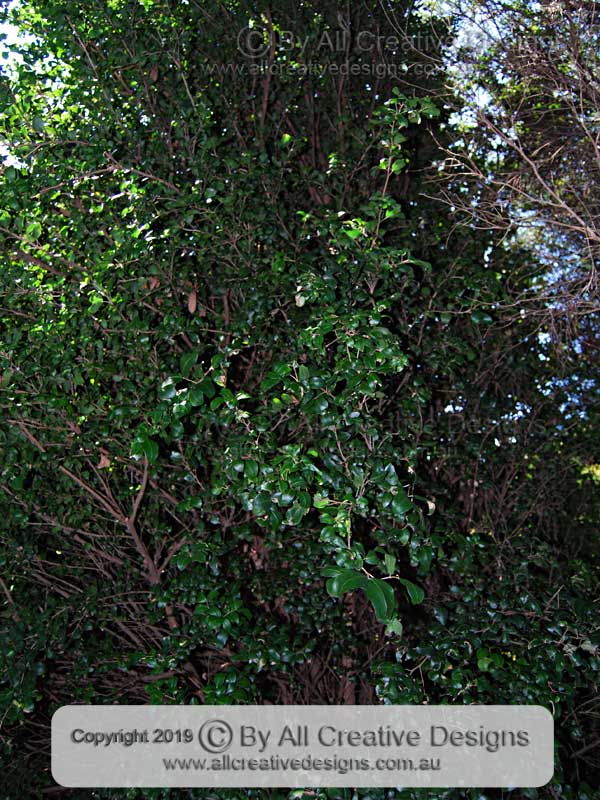
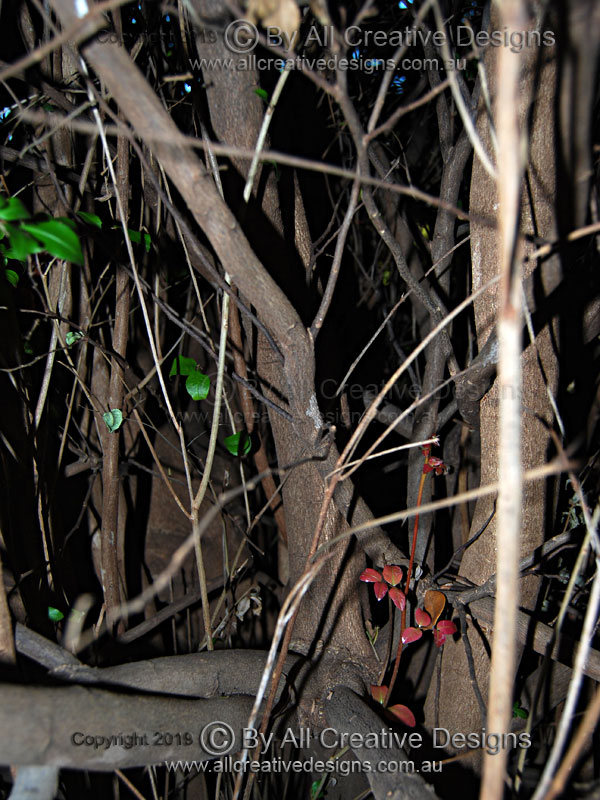
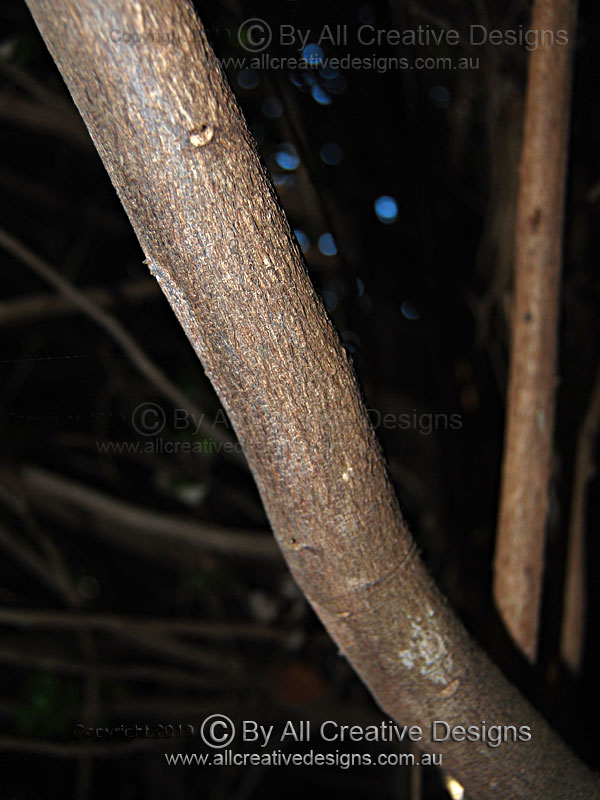
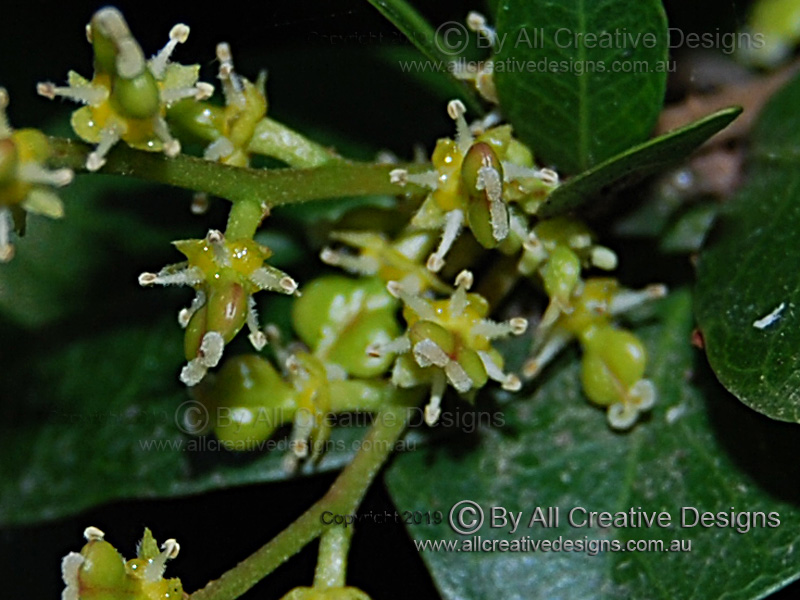
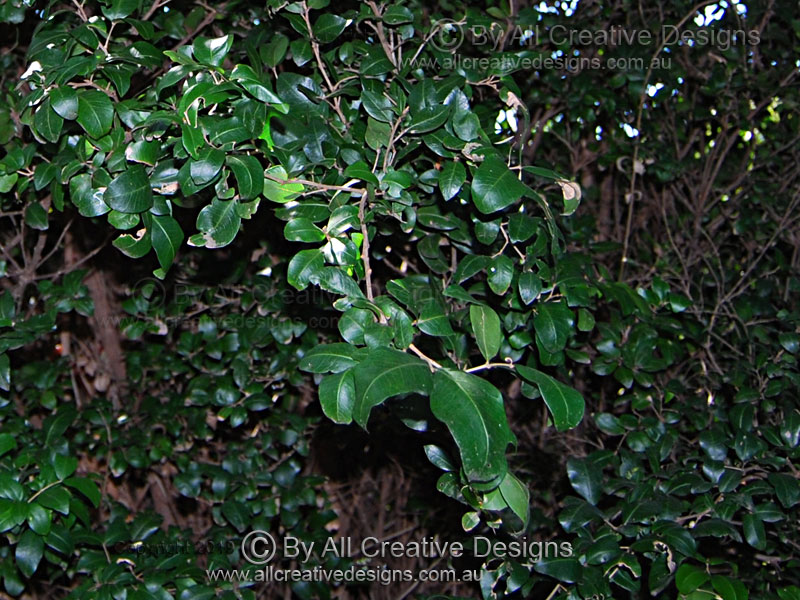
Drier forms of rainforests are habitats for this multi-stemmed and densely branched understorey species. It is normally shrub-sized but under ideal conditions may reach a height of 6m. In Australia, the genus Arytera (Coogeras) includes 7 species that are found in rainforests from subtropical to tropical areas (1 & 2). Bark on older stems is dark brown and finely rough due to small irregular vertical ridges and fissures (3).The small (flower) racemes are up to 8cm long, appear towards the end of young branches and bear up to 15 individual flowers. They are less than 10mm in diameter and feature 6 stamens with finely hairy filaments and brown coloured anthers. The 5 pointed sepals are more conspicuous than the tiny rounded petals. In the centre, the 2-lobed glabrous (hairless) ovary is crowned by a split and re-curving style (4). The compound leaf consists of 2 leaflets (bifoliolate), which are often deep salmon-coloured or red in their early development stage. Leaflets are; up to 5cm long, mostly broad elliptic in shape with entire margins, dark green when mature, hairless, firm and strong in texture. The very short and stout leaflet stalks (petiolules) are only a few millimetres long, the strong primary leaf stalk (petiole) is up to 4cm long (5). Distribution: south-eastern Qld, north of Brisbane. Use the Botanical Species List to locate other Arytera (Coogera) species.
See Leaf Characteristics and Flower Identification Page or Bark Characteristics Page for information on botanical definitions and concepts.
(1)
(2)
(3)
(4)
(5)
Green Guide Trees of Australia
How to recognise Australian tree families and genera.
A practical field guide to the identification of native species. More than 200 full colour photographs and detailed descriptions explaining leaf, bark, flower, fruit and other tree characteristics. The guide was written and illustrated by the author of these web pages.
New Holland Publishers: January 2016
Format: Paperback with PVC
Pages: 128 pp.
Size: 13 cm wide x 18 cm high
First Edition, Hand Signed Copies
CLICK HERE FOR MORE INFORMATION Small-leaved Plum Myrtle Pilidiostigma rhytispermum
Small-leaved Plum Myrtle Pilidiostigma rhytispermum
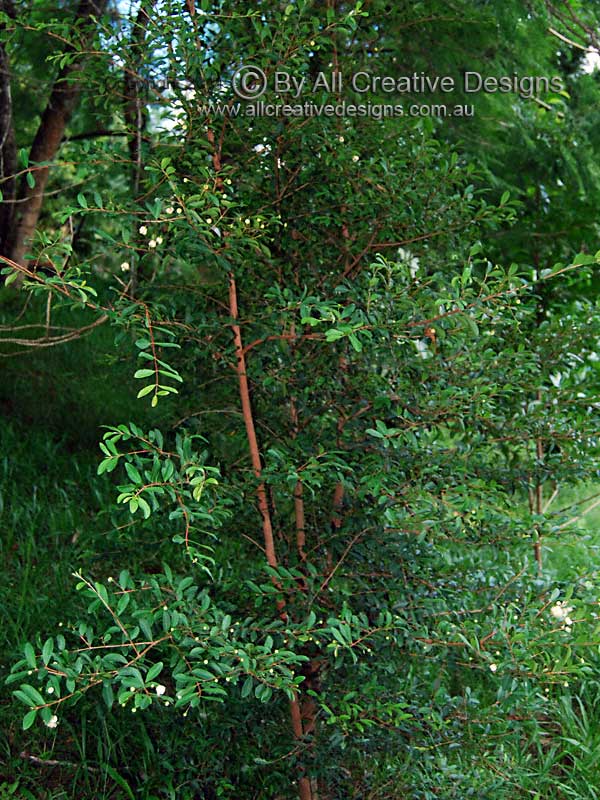
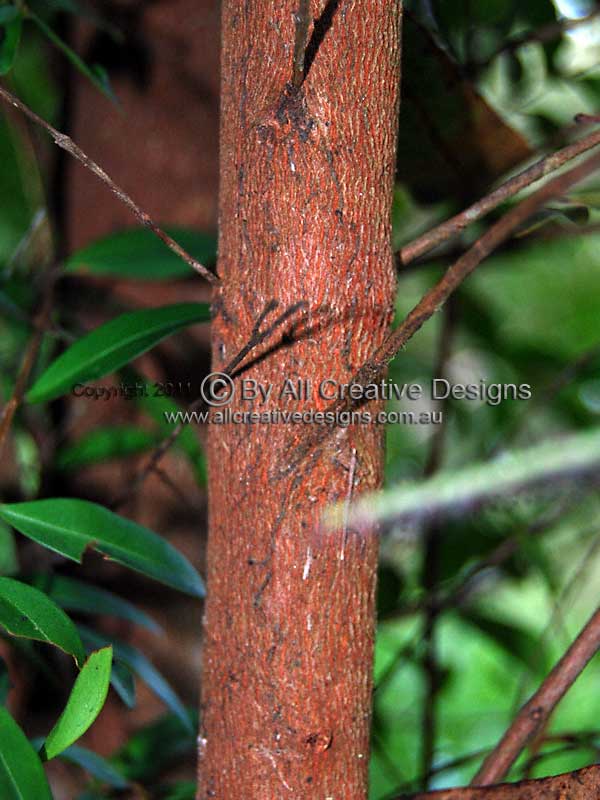
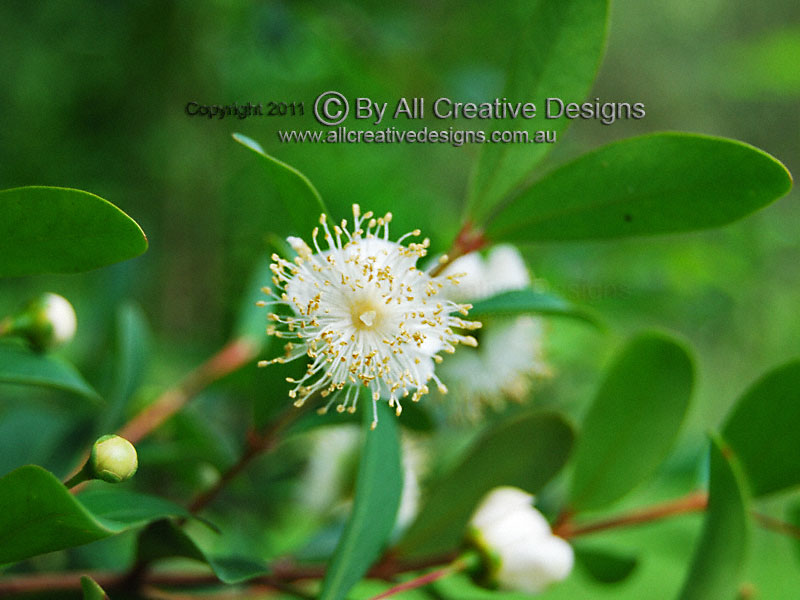
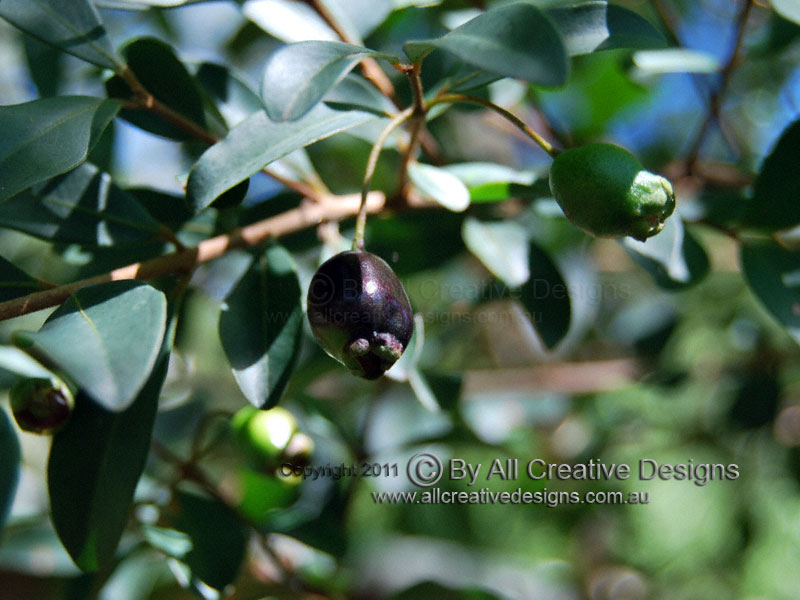
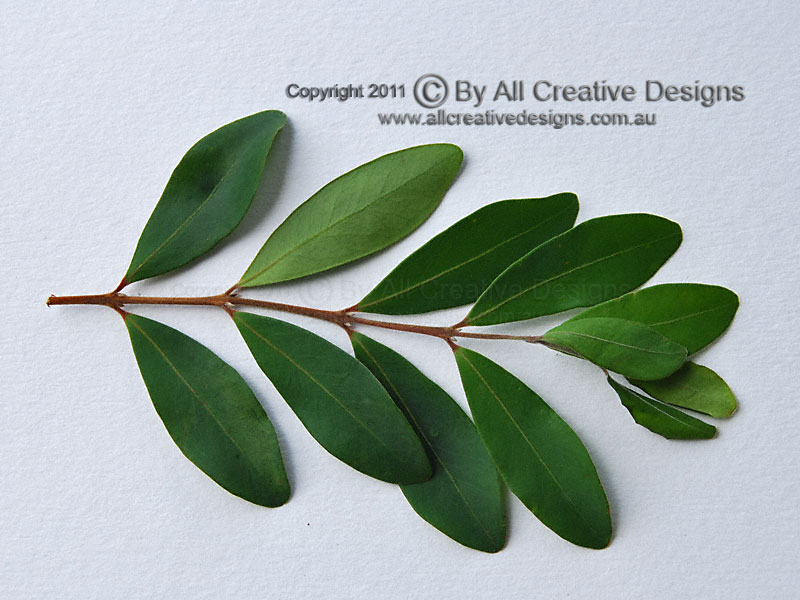
This species is very similar in appearance to its close relative the the Plum Myrtle Pilidiostigma glabrum (Page 8). It is a shrub or small tree under 10m in height and found as an understorey species within subtropical rainforests (Picture 1). Bark is a reddish brown in colour and has a typical scaly texture (2). Beautiful flowers, measuring up to 15mm in diameter, feature pure white petals and numerous stamens topped by yellow anthers. Solitary flowers are supported by a primary (single) stalk (peduncle) emerging from leaf axils and appear over spring (3). The fruit is a fleshy berry turning from green to a very dark, shiny purple colour with maturity. It is up to 20mm long and usually obovoid (pear-shaped), with the remains of the calyx showing at the top. It contains between 2 to 8 small seeds (4). Simple leaves with an opposite arrangement are; up to 5cm long, elliptic or obovate (reverse egg-shaped) with entire margins, hairy when young, mainly hairless when mature, mid-green, rather dull on top, lighter green beneath, smooth and leathery in texture. Leaf apex is rounded, base shape is cuneate (5). Distribution: Southern Qld.
See Leaf Characteristics and Flower Identification Page or Bark Characteristics Page for information on botanical definitions and concepts.
(1)
(2)
(3)
(4)
(5)
Small-leaved Spurge Phyllanthus microcladus
Small-leaved Spurge Phyllanthus microcladus Other names: Small-leaved Phyllanthus
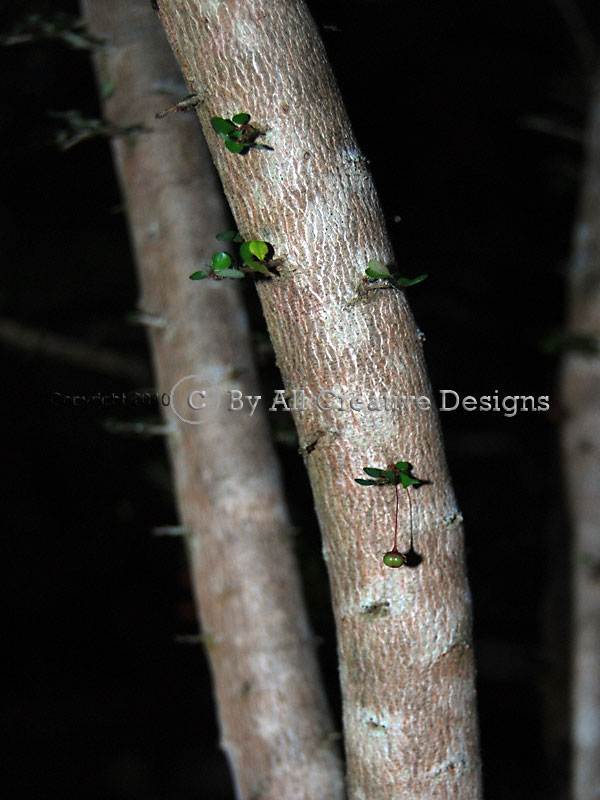
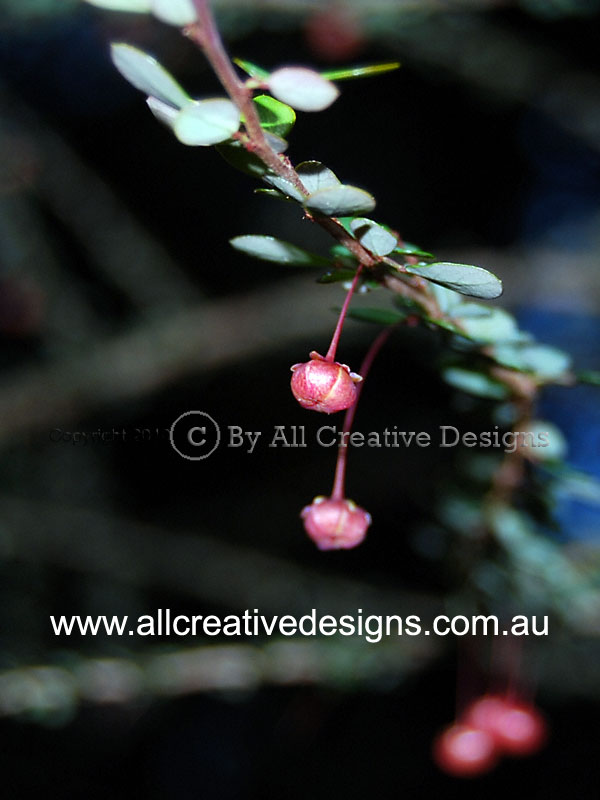
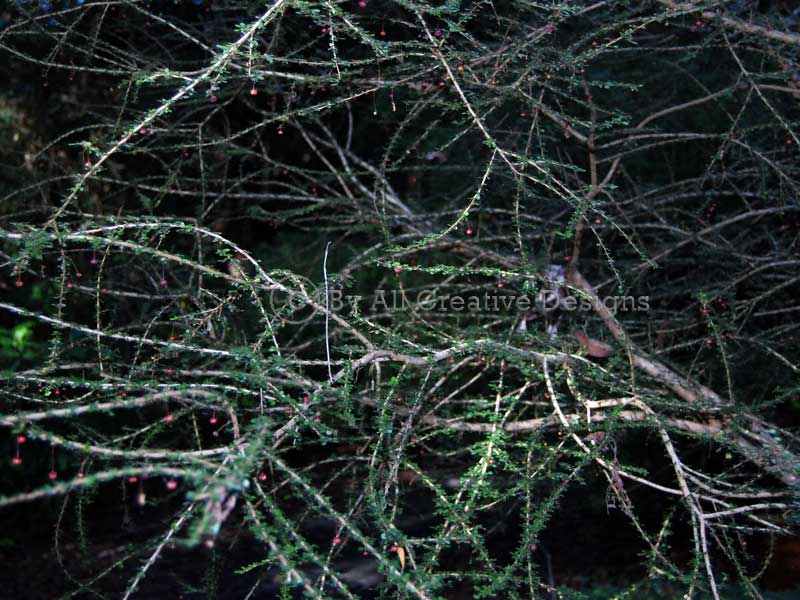
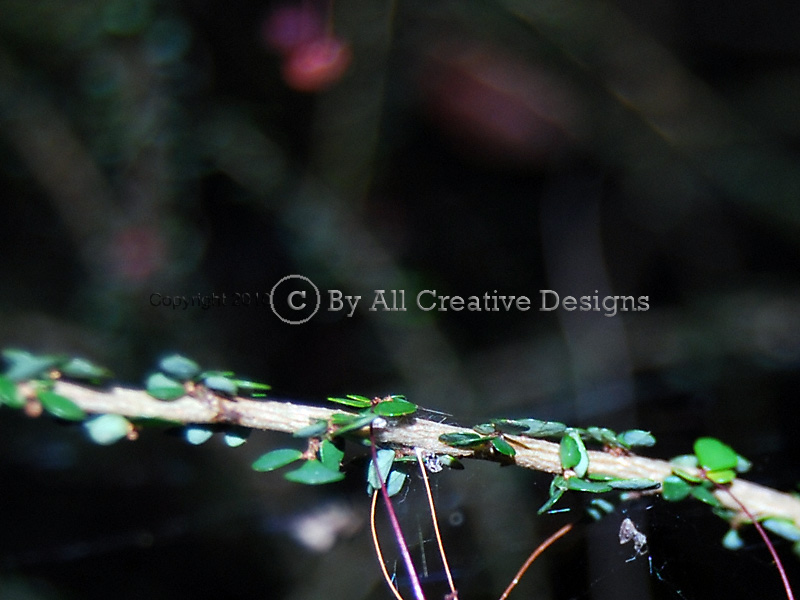
The Small-leaved Spurge or Small-leaved Phyllanthus is a multi-stemmed shrub up to 3m tall that inhabits subtropical and drier forms of rainforests (Photo 1 ). Stems and older branches are covered in spines up to 25mm long. Bark is firm, rather smooth with small fissures and grey to light brown in colour (2). The globe-shaped fruit (a capsule) is up to 5mm in diameter and vivid pinkish red in colour when fully mature. Capsules ripen in late autumn and are supported by stalks up to 2cm long (3). Very small simple leaves are borne on stems, branches and twigs over the whole shrub. They are arranged in small clusters of 5 to 6, mostly in an alternate way. Leaves are up to 15mm long, obovate (reverse egg-shaped) or oblanceolate (reverse lance-shaped) with entire margins and have a whitish, pale green underside (Photos 4 & 5). Distribution: Uncommon from the NSW north-coast to central Qld.

(1)
(2)
(3)
(4)
(5)
Smooth Tuckeroo Cupaniopsis serrata
Smooth Tuckeroo Cupaniopsis serrata
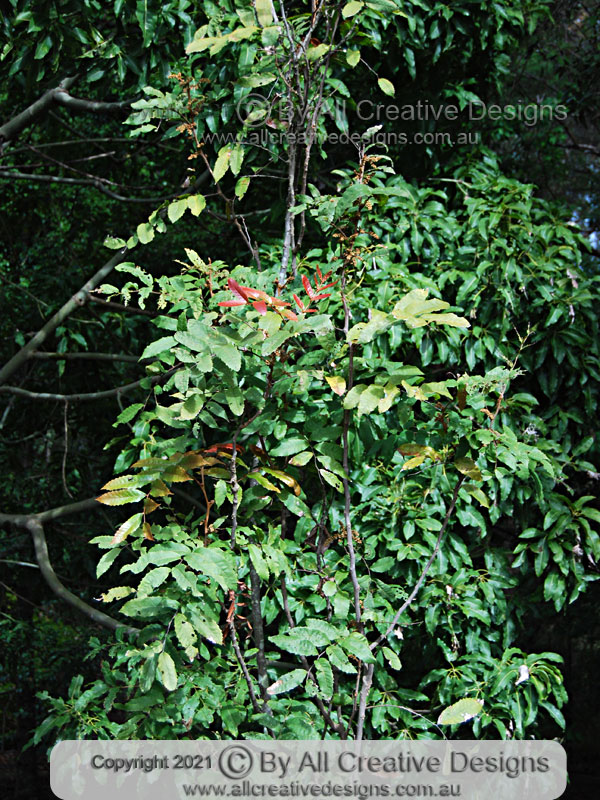
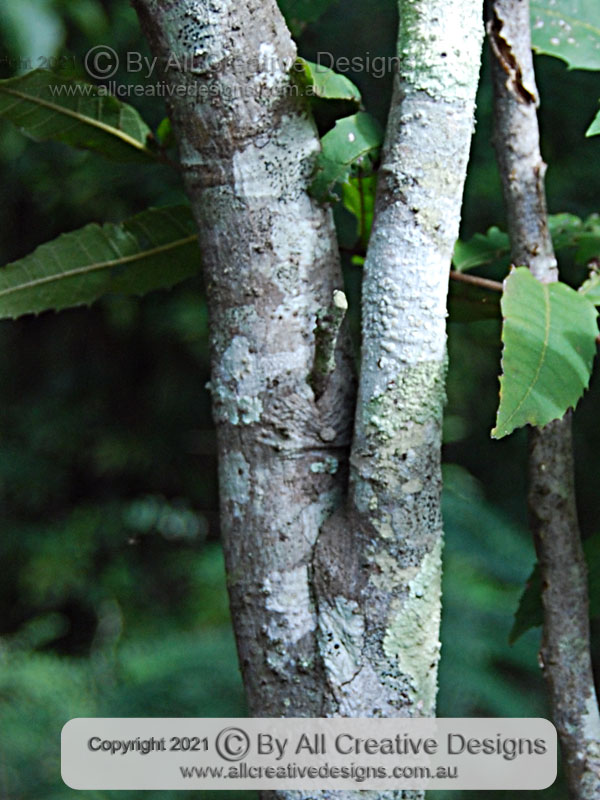
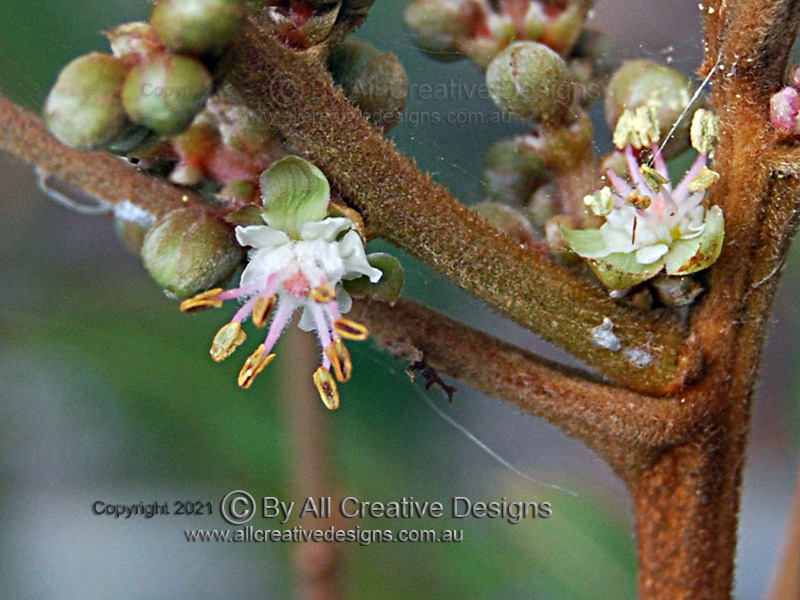
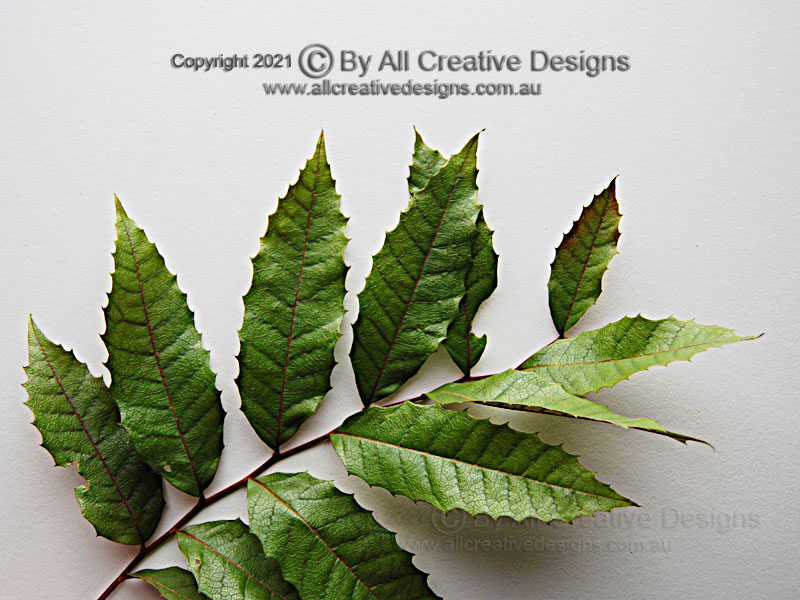
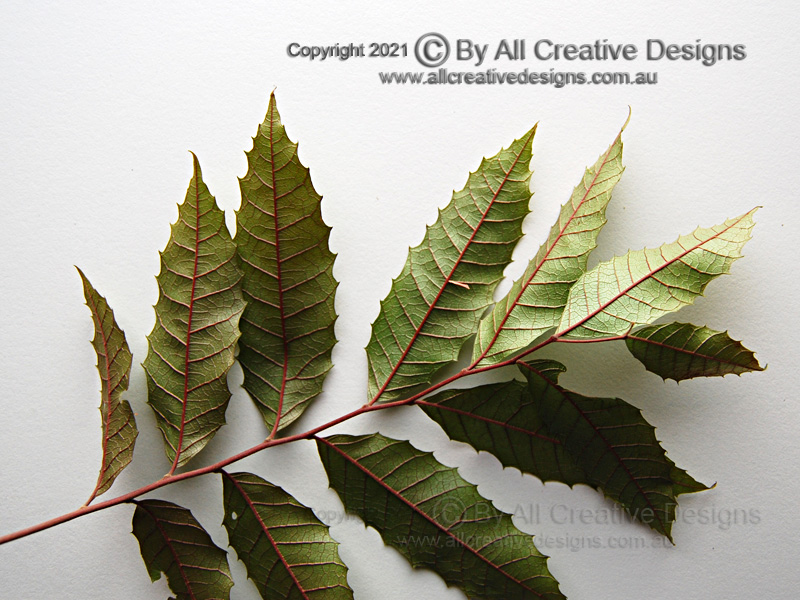
This very attractive and slender tree reaches a height of up to 10m. The smooth Tuckeroo prefers to inhabit subtropical and dry rainforests as an understorey species. It is a close relative of the Tuckeroo (Cupaniopsis anacardioides), which is widely used for landscaping purposes. The beautiful compound leaves (pinnate; once divided leaf blade) and bright red new growth are distinctive features (Image 1). Bark is dark grey to nearly black in colour and becomes rough on older trunks (2). Flowers are borne in clusters of up to 5 attached to a usually non-branching rachis (raceme-like) which is densely hairy. The nearly round and cupped sepals measure about 4mm across and surround the smaller white ovate (egg-shaped) petals. The 8 stamens feature white to pale mauve coloured filaments that are hairy and crowned by brown anthers. Bracts are present at the base of the very short individual flower stalks (pedicels) (3). The once divided (pinnate) leaf consists of up to 12 leaflets, which are; up to 13cm long, elliptic, oblong or broadly lance-shaped with sharply toothed margins, hairless on top, sparsely hairy on mid vein below, strong and rigid in texture. Leaflet base shape can be uneven (oblique). Venation on lower leaflet surface is prominently raised and a reddish brown colour (mature leaf) (Images 4 & 5). Distribution: South-eastern Qld. (May exist in border region to NSW). Note: Use the Botanical Species List and under the genus of Cupaniopsis locate related species.
(1)
(2)
(3)
(4)
(5)
Small-leaved Tamarind Diploglottis campbellii
Small-leaved Tamarind Diploglottis campbellii
Mature trees reach a height of up to 25m and develop a fluted trunk supporting a dense canopy. It is a rare species with a small natural distribution range originating in subtropical rainforests (Image 1 & 2). Bark is coloured dark brown and becomes rough and fissured at the base of older trees (3). The attractive fruit (a capsule) is up to 80mm wide and divided into 2 or 3 segments (lobes). Each lobe contains a single seed covered in an edible fleshy, bright orange-red aril (4). Pinnate compound leaves feature 4 to 8 leaflets, which are; up to 14cm long, mostly elliptic in shape with wavy margins, hairless, dark green, very glossy on top, paler but also shiny below with a smooth and soft texture. Leaflet apex is acute, base shape is cuneate and sometimes asymmetric. Venation is prominent on both surfaces (5). Distribution: From northern NSW to southern Qld.
(1)

(2)
(3)
fs.jpg)
(4)

(5)
Smooth-barked Apple Angophora costata
Smooth-barked Apple Angophora costata Other names: Sydney Red Gum
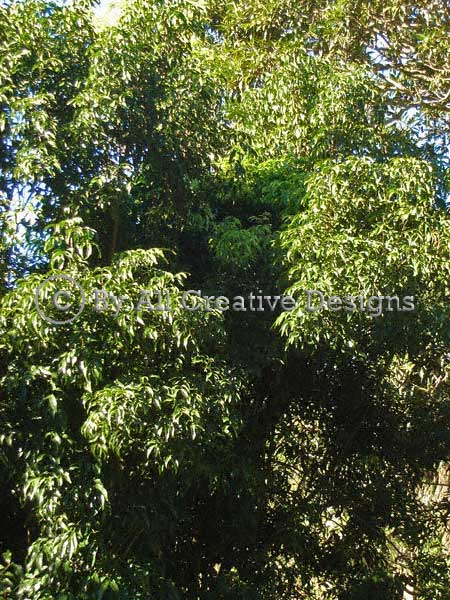
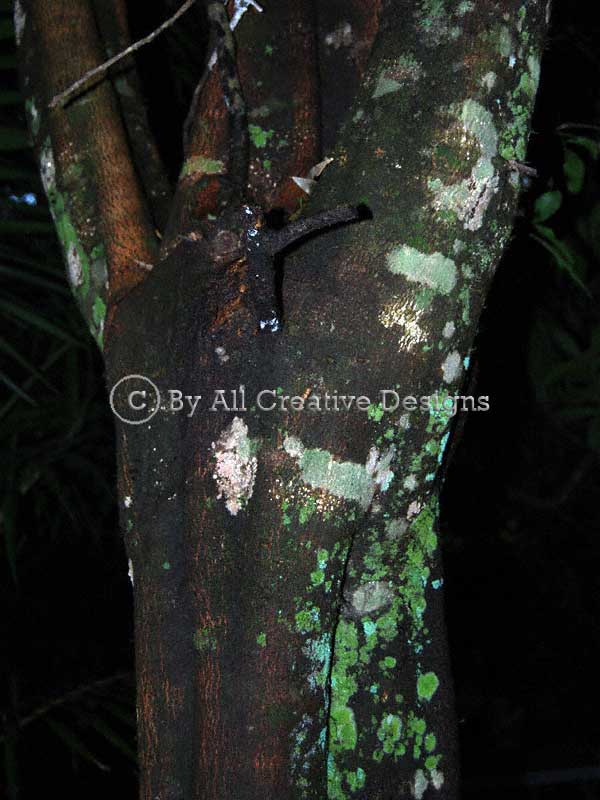
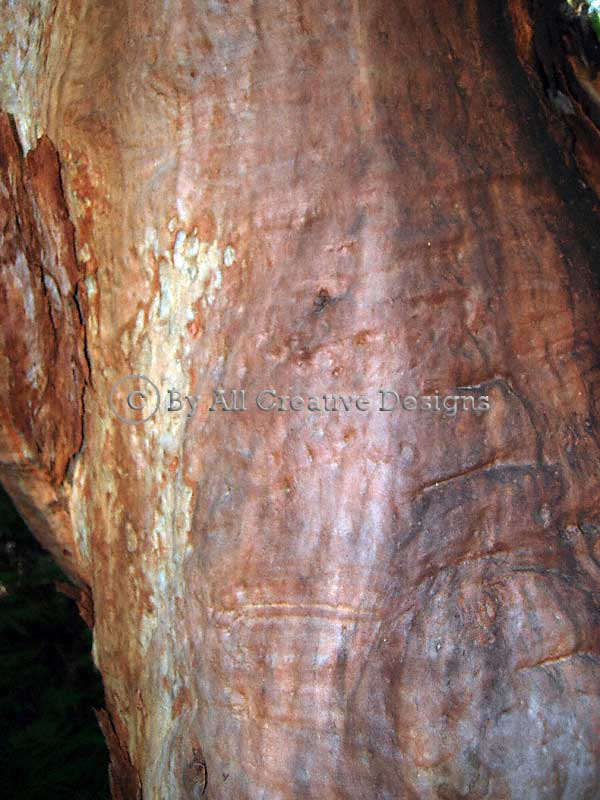
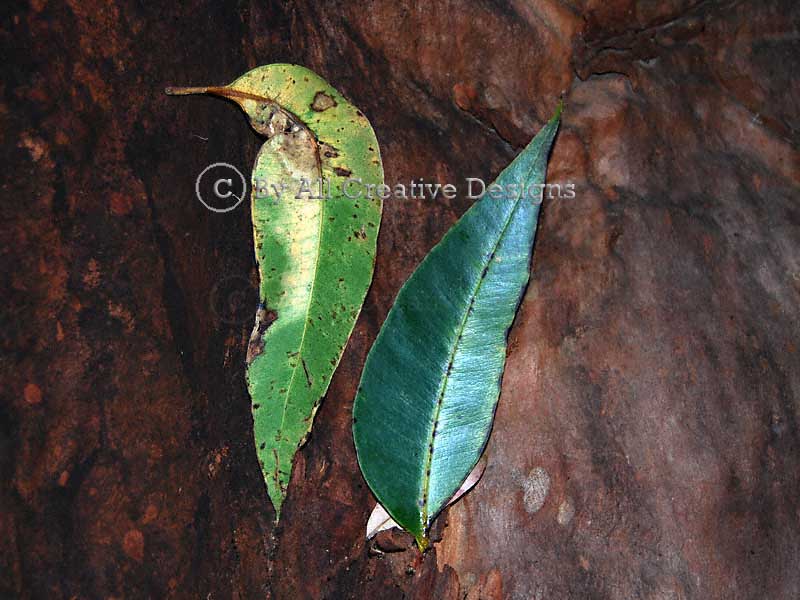
Found in a large range of different habitats, the Smooth-barked Apple or Sydney Red Gum can attain a height of 25m or more under favourable conditions. In exposed or rocky sites it has a short and twisted trunk less than 10m high (Photo 1). Bark after shedding in large patches is orange to pink in colour turning grey with age, newly exposed areas have a hard and smooth texture (2). The hard and nearly woody fruit is on average 15mm long, about 12mm wide and features normally 5 sharp ridges, which protrude past the rim level (3). Simple and mostly oppositely arranged adult leaves are; up to 10cm long, lanceolate (lance-shaped) with entire margins, sometimes curved, dark green, semi glossy on top, paler beneath, strong and firm in texture. Apex is acute ending in a fine point; base shape is cuneate or more rounded and can be asymmetric. Mid-vein is prominent on both leaf surfaces, numerous straight lateral veins are faint (4 & 5). Distribution: In coastal areas from the south coast to the mid-north coast of NSW.

(1)
(2)

(3)

(4)
(5)
Southern Corynocarpus Corynocarpus rupestris
Southern Corynocarpus Corynocarpus rupestris Other Names: Glenugie Karaka
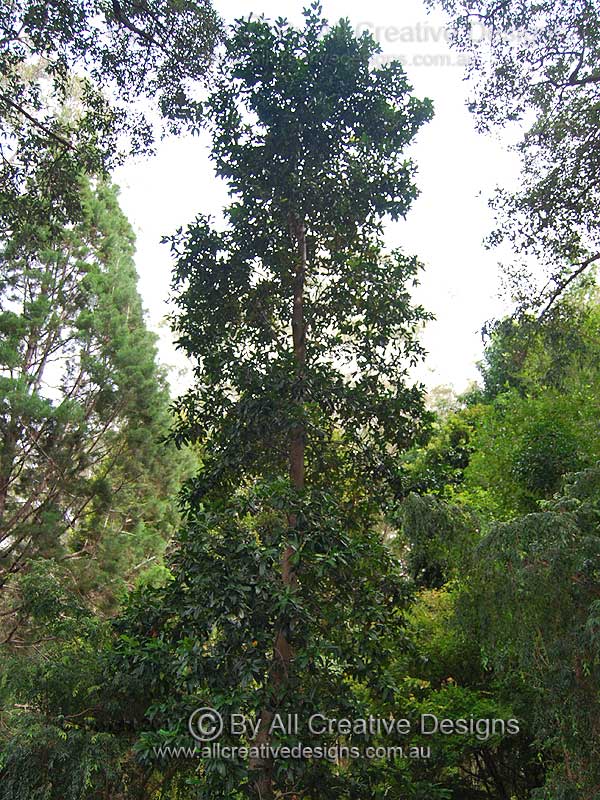
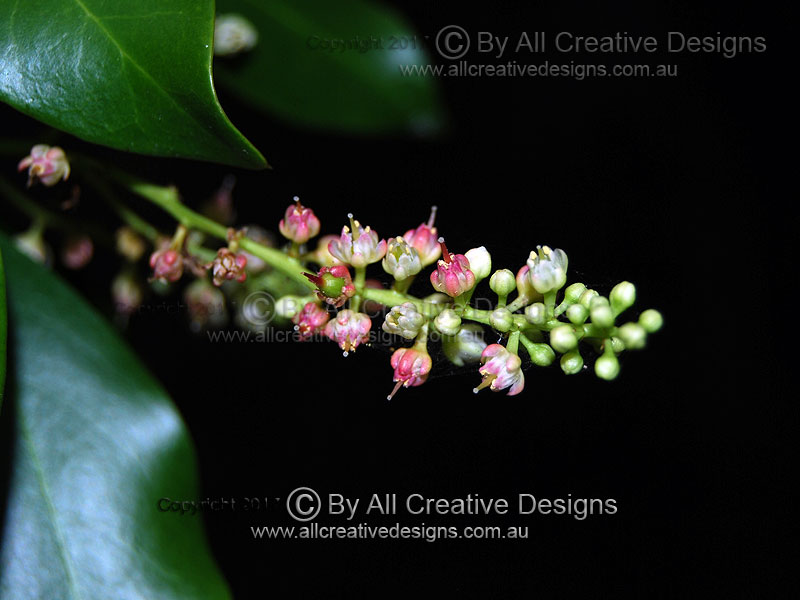
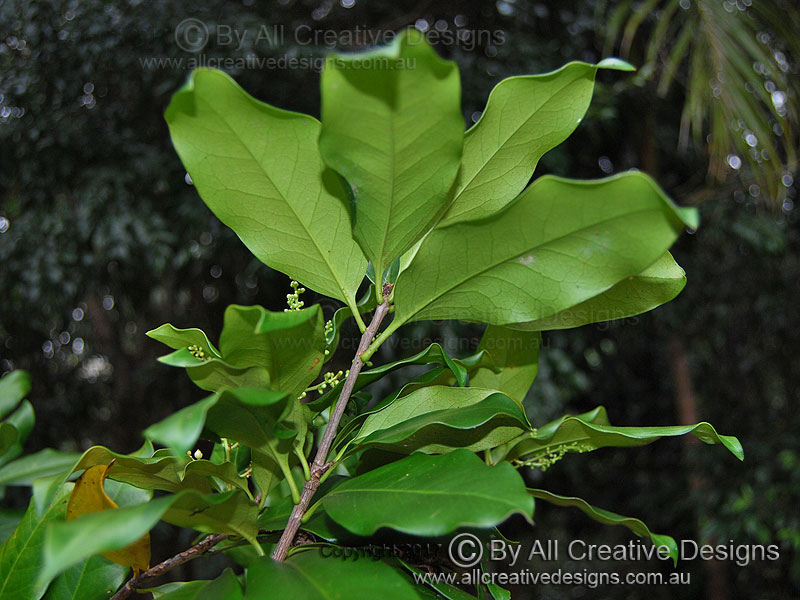
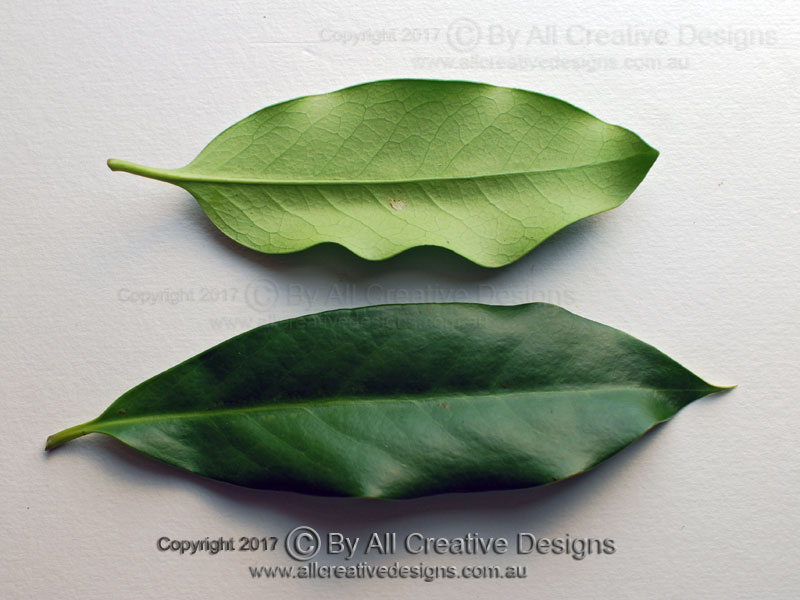
This more uncommon tall shrub or small tree prefers rocky terrain in dryer forms of rainforests. Two subspecies are recognised C. rupestris subsp. rupestris a tall shrub up to 5m high and C. rupestris subsp. arborescens (shown), which reaches a height of about 10m (1). The distinctive bark is shades of brown and grey in colour with pronounced curved fissures and raised areas of corky texture (2). Flowers of C. rupestris ssp. rupestris (shown) are borne on panicles more than 20cm long, whereas these of subspecies aborescens are considerably shorter. Individual flowers are white to pink in colour and measure circa 5mm across when fully opened. The five prominent sepals of the calyx remain after opening and surround 5 white petals. The stamens feature yellow anthers and in the centre an elongated red coloured style is topped by a small whitish stigma. Flowering period is over spring (3). The characteristic foliage consists of large leaves crowding beneath the growing tip, which upon maturing have a mainly alternate arrangement. Simple leaves of mature trees are; up to 18cm long, varied in shape from broadly oblong to more obovate (reverse egg-shaped) with entire margins, hairless, dark green, semi-glossy on top, bright green beneath, smooth and thick in texture. Leaf apex ends in a fine prickly tip. Leaf margins are conspicuously toothed on young specimens (4 & 5). Distribution: Northern NSW to Qld.
(1)

(2)
(3)
(4)
(5)
Southern Marara Vesselowskya rubifolia
Southern Marara Vesselowskya rubifolia Other Names: Mountain Marara
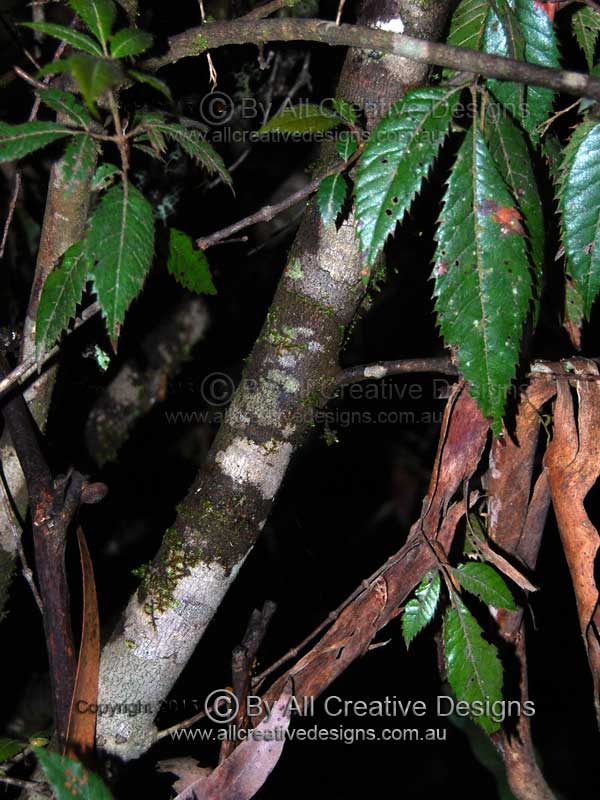
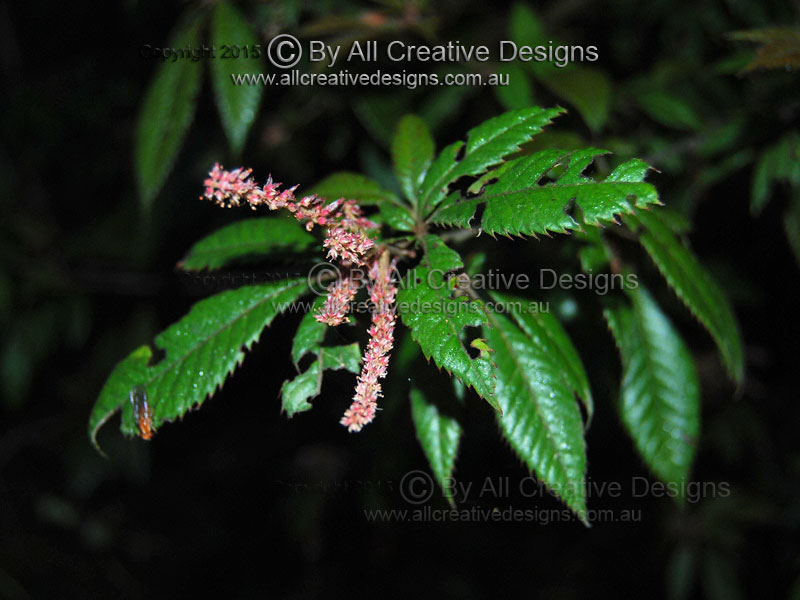
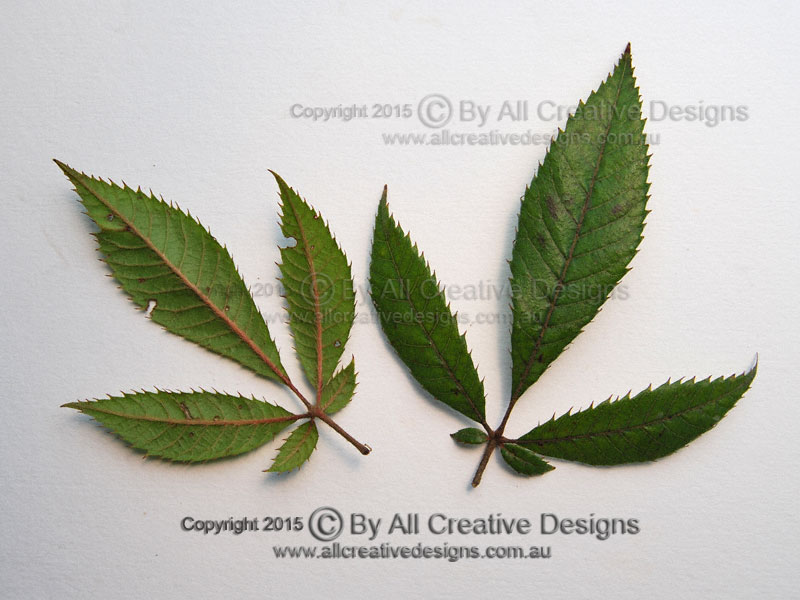
The preferred habitats of this attractive shrub or small tree are cool temperate rainforests growing at altitudes of up 1500m. The distinctive foliage has a resemblance to that of the exotic (noxious) Blackberry and is a good initial identification feature (1). Bark, if not obscured by lichen and mosses, is dark brown in colour, firm in texture with small irregular ridges (2). Small cream and reddish pink coloured flowers are borne on racemes up to 8cm long. Flowering period is over spring (3). The emerging leaf buds are enveloped in ovate (egg-shaped) and hairy stipules up to 15mm long (4). Palmate compound leaves consist of 5 leaflets, with the central one reaching 12cm in length. The two basal leaves, which are not present all the time, are only up to 2.5cm long. Leaflets are; elliptic or lanceolate (lance-shaped) with finely serrated margins, sparsely hairy, dark green on top and paler green beneath. Veins are raised on lower leaf surface and densely covered in long fine brown hair (5). Distribution: Mid-north coast of NSW at higher elevations.

(1)
(2)
(3)

(4)
(5)
Southern Salwood Acacia disparrima
Southern Salwood Acacia disparrima Other names: Hickory Wattle
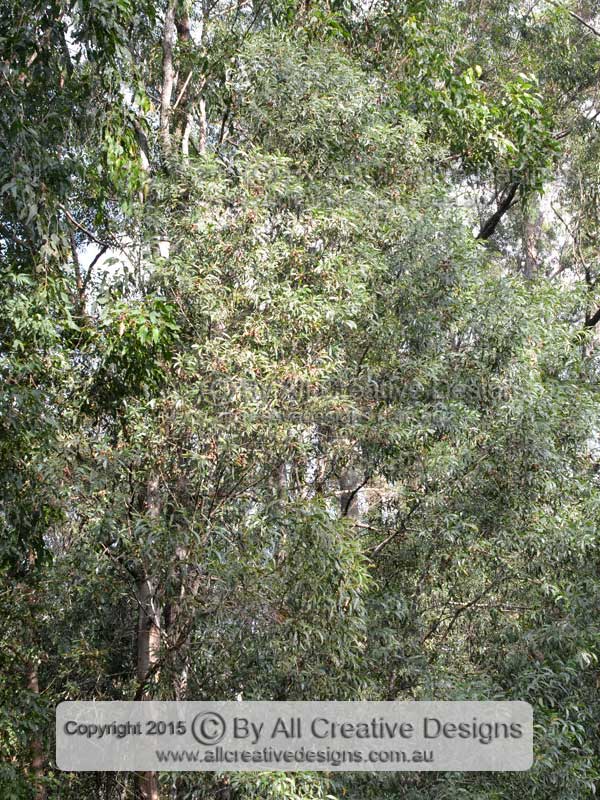
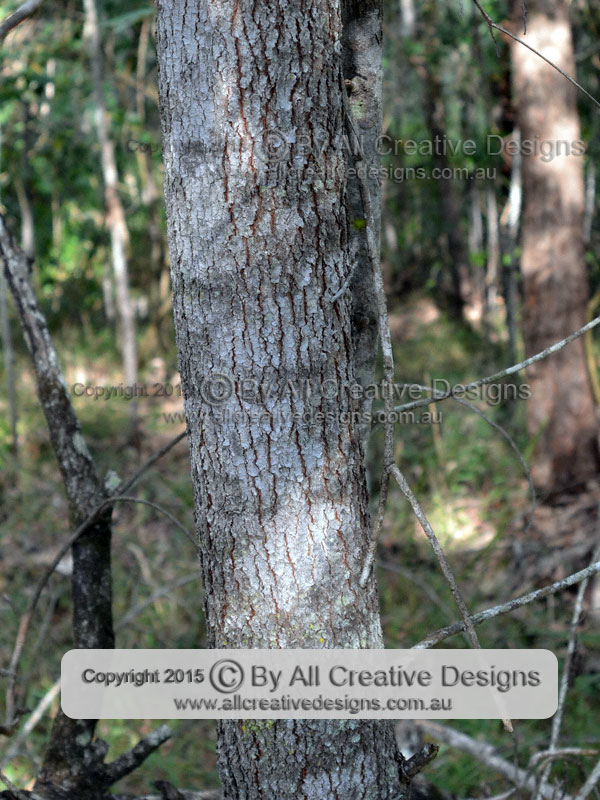
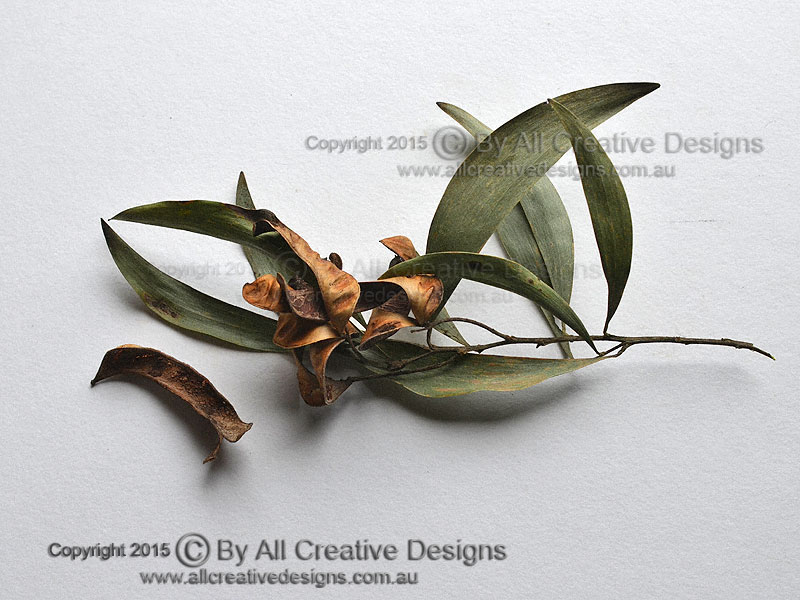
This Acacia (Wattle) species is very similar in appearance to the Brown Salwood Acacia aulacocarpa, and was formerly classified as Acacia aulacocarpa var. macrocarpa. It prefers wetter locations along stream banks or occurs on margins of rainforests and in wet tall eucalypt dominated forests. Depending on conditions it can be a tall shrub or a small tree up to 12m in high (1). Bark on the lower trunk is rough, fissured and brown, weathering to grey, in colour (2). Pale yellow coloured flowers form a cylindrical spike up to 7cm long and bloom over summer and autumn (3). The woody and twisted pod is up to 10cm long and shows distinctive raised veins on the outside surface. These veins are more delicate, i.e. not as wide and prominently raised as these of the Brown Salwood A. aulacocarpa. The woody pod is a good identification feature as it will last for a considerable time on the tree after opening or can be found on the ground beneath (4). Leaves of Acacias, Wattle trees are referred to as phyllodes. Phyllodes with an alternate arrangement are; up to 12cm long, mostly sickle-shaped (falcate) with entire margins, greyish mid-green in colour, hairless, rather thick and strong in texture. A large number of longitudinal veins are visible with up to 5 being more pronounced. Distribution: Northern NSW to North Qld.
To find related Acacia species go to: Species List Botanical, which also shows all family names.
(1)
(2)

(3)
(4)

(5)
Southern Sassafras Atherosperma moschatum
Southern Sassafras Atherosperma moschatum Other names: Black Sassafras
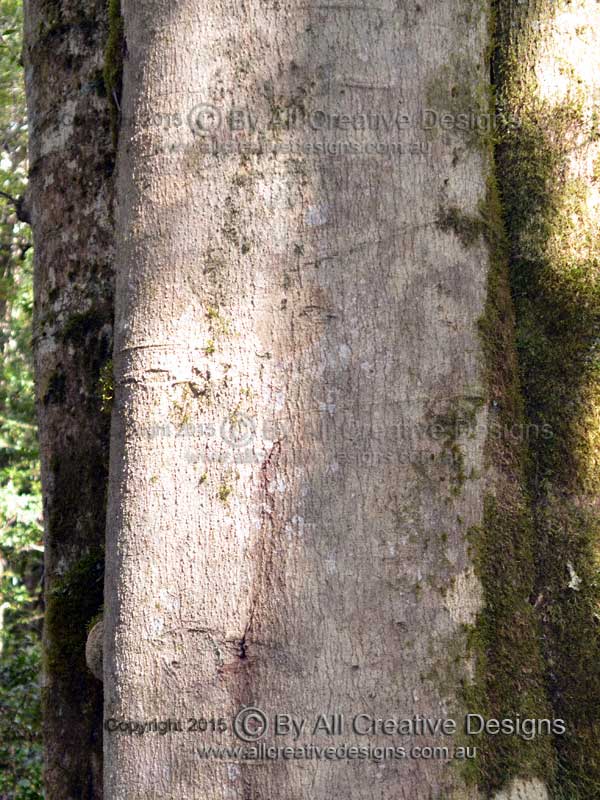
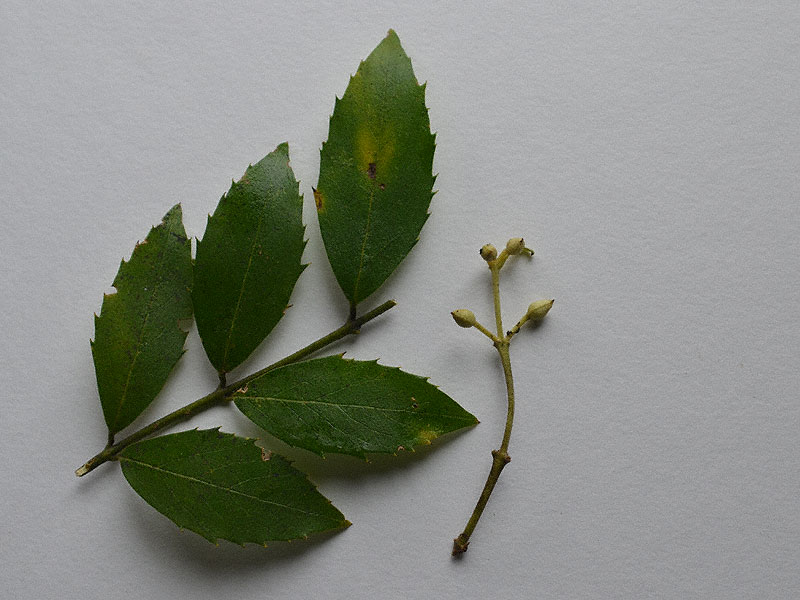
This tree prefers moist habitats and is often a dominant species in cool temperate rainforests. The name Sassafras relates to the spicy nutmeg like scent, emitted when a leaf is crushed or the bark is rubbed. It is a medium sized tree, mostly with a straight trunk and conical crown shape, able to reach 25m in height (1). Bark is grey to light brown in colour and has a firm texture. It is covered in small blisters (lenticels) and shows fine vertical and more pronounced horizontal ridges (2). The image shows floral buds of solitary flowers arising from leaf axils over the winter months (3). New shoots and young branches are covered in fine hair. Simple leaves with an opposite arrangement are spaced at regular intervals (2-ranked). There are variations in leaf margins, from nearly entire to irregular and sharply toothed. Leaves are; up to 7cm long, elliptic to lanceolate (lance-shaped), light green on top, paler beneath and sometimes whitish due to a covering of fine hair. Petiole (leaf stalk) is up to 8mm long and hairy (4 & 5). Distribution: Tasmania (widespread), Victoria and southern NSW at higher altitudes.

(1)
(2)
(3)

(4)

(5)
Strychnine Tree Strychnos arborea
Strychnine Tree Strychnos arborea
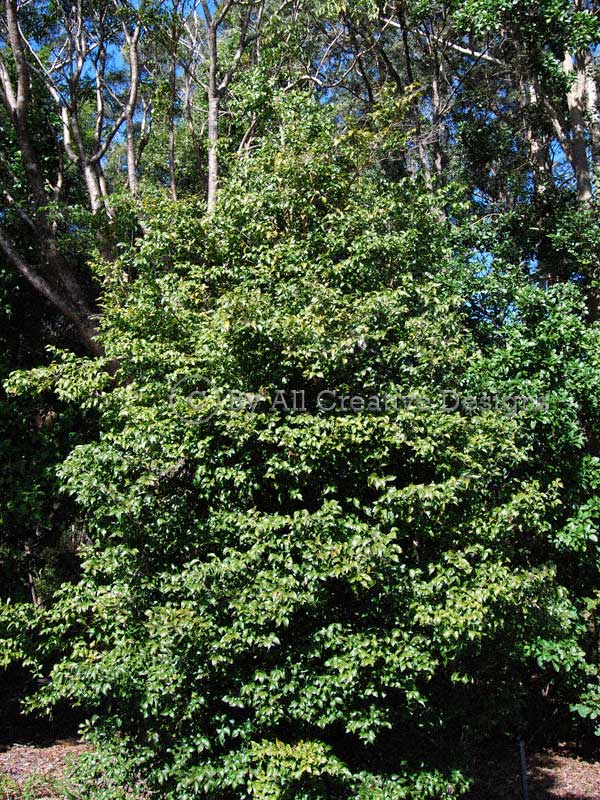
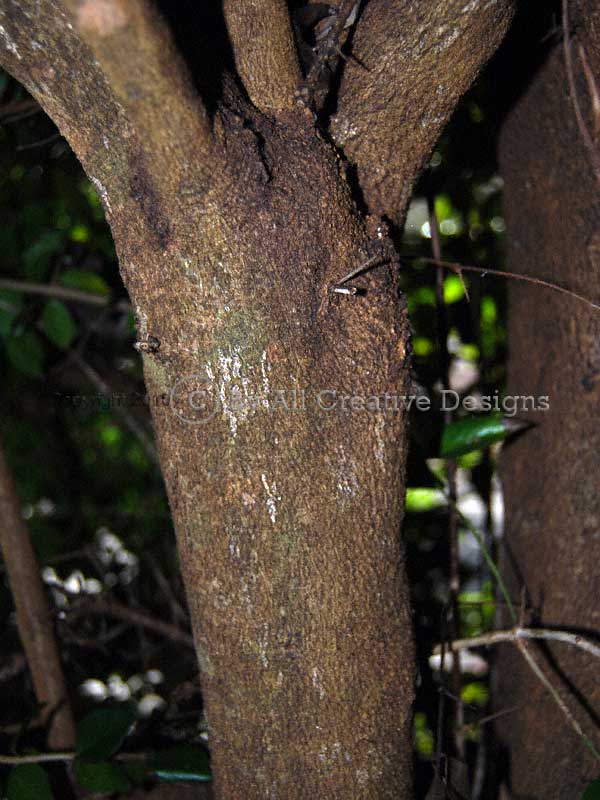
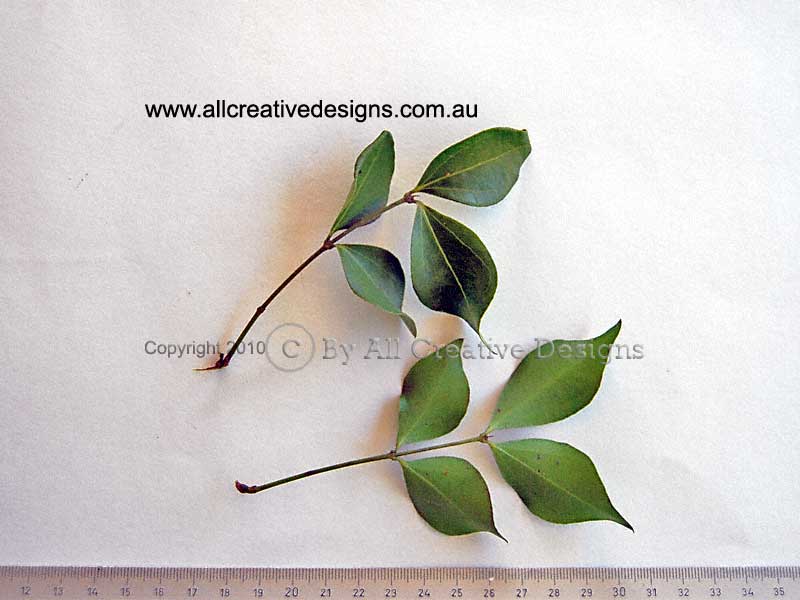
This small rainforest tree species reaches a height of up to 10m and develops a very compact and dense canopy (Photo 1). Bark is a dark brown colour with a rough and finely fissured texture (2). Small flowers are; conical in shape, whitish yellow in colour and up to 8mm long (3). The fruit is a fleshy red coloured berry, reaching up to 12mm in diameter, which ripens from late autumn into winter. It contains a single rounded seed, flattened and whitish or beige in colour (4). Simple leaves with an opposite arrangement are; up to 6cm long, varied in shape, ranging from broadly ovate (egg-shaped) to broad elliptic with entire margins, medium glossy, smooth, mid-green on upper surface, paler green beneath with very fine hair covering only the mid vein. The short petiole (leaf stalk) and young stems are covered in scattered fine hair. Venation is prominent and shows 3 pronounced veins starting at the leaf base (5). Axillary spines are absent on this specimen. Distribution: Northern NSW (uncommon) to northern Qld.
See Leaf Characteristics and Flower Identification Page for explanations of botanical terms used.
(1)
(2)

(3)

(4)
(5)
Descriptions and all images copyright ©2023 by www.allcreativedesigns.com.au world wide rights reserved.
Click or Tap Images for Full Size View (opens new browser window)
Steelwood Sarcopteryx stipata
Steelwood Sarcopteryx stipata Other names: Corduroy
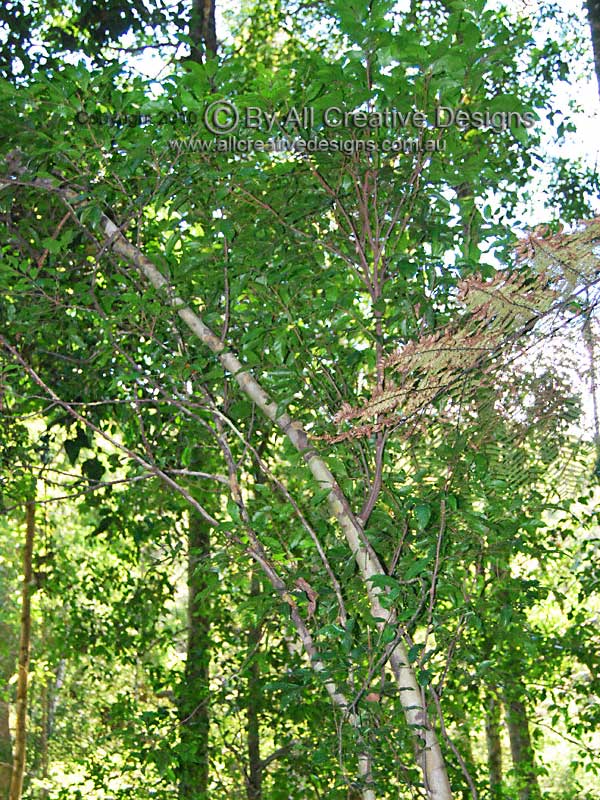
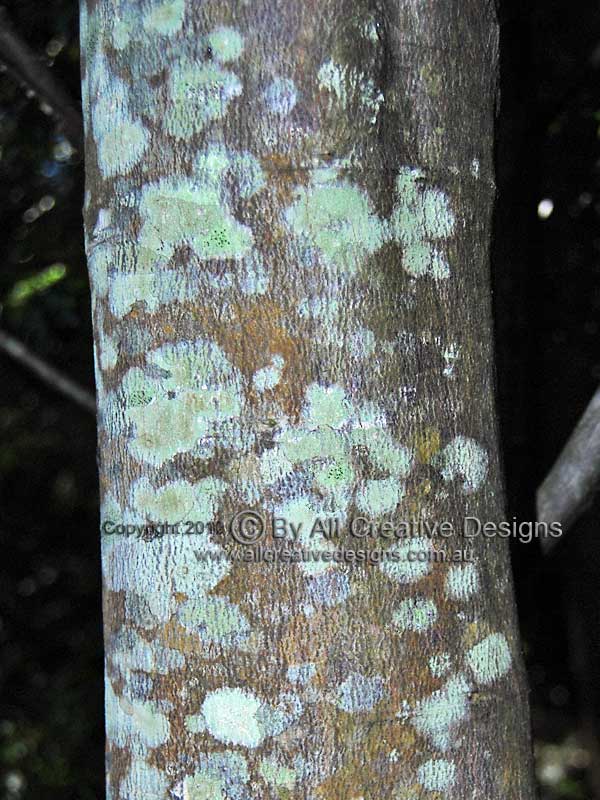
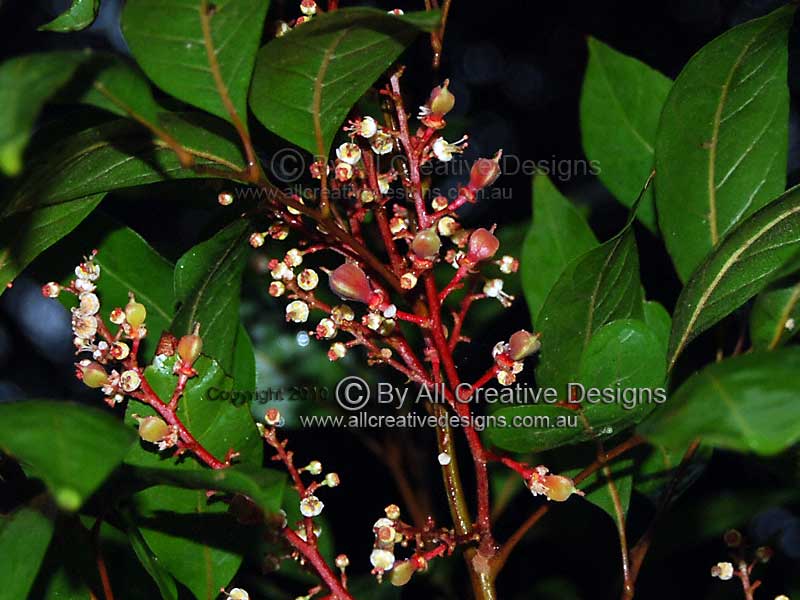
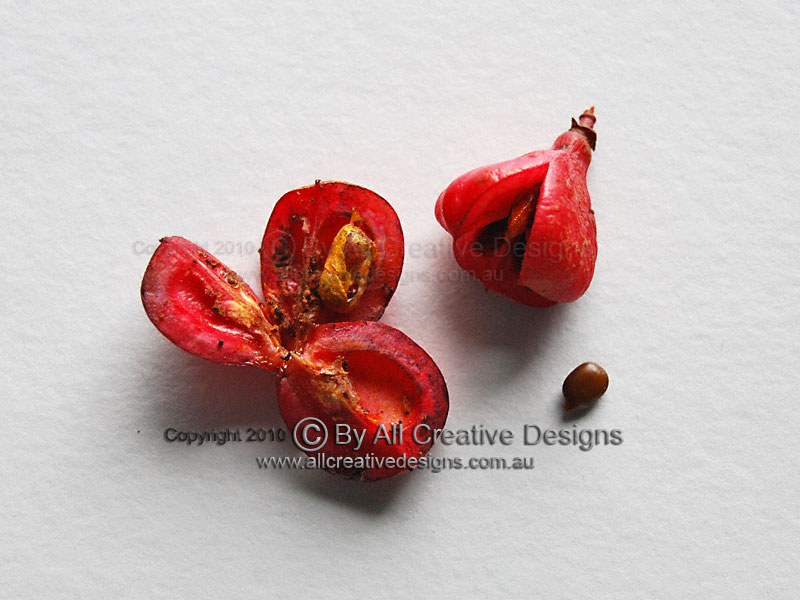
The Steelwood or Corduroy reaches a height of up to 15m and is commonly found as an understorey species in different types of rainforests (Photo 1). Bark is steely grey in colour (other colours are caused by lichen) with a very firm texture featuring raised longitudinal ridges and bumps at the base of the trunk (mature specimen Photo 2). Small white flowers are held on upright panicles which are a vivid red in colour. Flowering occurs (depending on average temperature) from late winter to spring (3). The fruit (a capsule) is up to 2.5cm long, three angled with flattened sides and contains 3 brown or blackish seeds (depending on maturity), which are covered in a thin yellow aril (skin). The capsule is often attacked by fruit flies (4). Pinnate compound leaves consist of up to 8 leaflets, which are: up to 11cm long, elliptic to lanceolate (lance-shaped) with entire margins, dark green, semi glossy, mostly hairless on top, mid-green, finely hairy below (mainly along centre vein), thin but firm and rough in texture. Leaflet apex is acute with a fine point, base shape is cuneate. Petiolules (leaflet stalks) are very prominent, finely hairy and up to 2cm long. The rachis, petiole (primary leaf stalk) and young branches are covered in fine brown hair. Venation is very apparent with mid vein and lateral veins being raised on both leaflet surfaces giving it a slightly rough texture. Domatia are visible as small bulges in vein angles along the mid-vein (5). Distribution: NSW mid-north coast to southern Qld.
(1)
(2)
(3)
(4)

(5)
Swamp Oak Casuarina glauca
Swamp Oak Casuarina glauca Other names: Swamp She-oak, Grey Sheoak
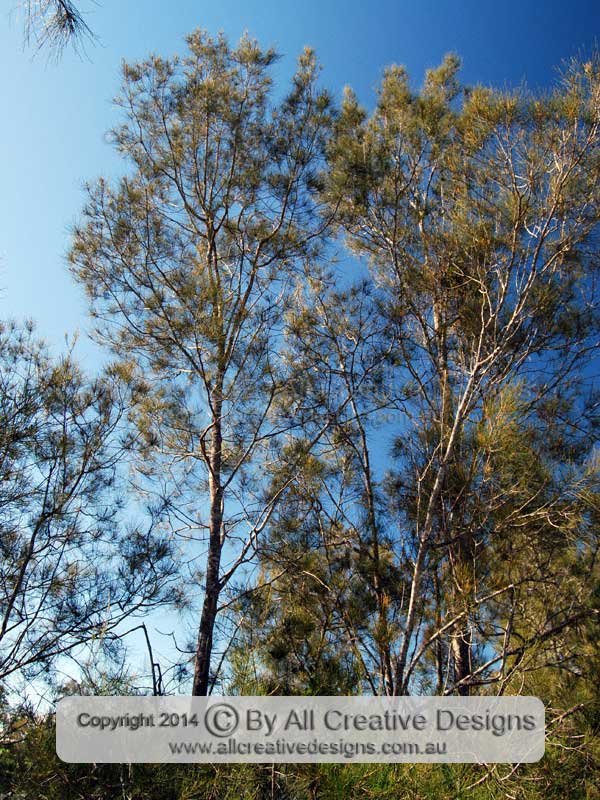
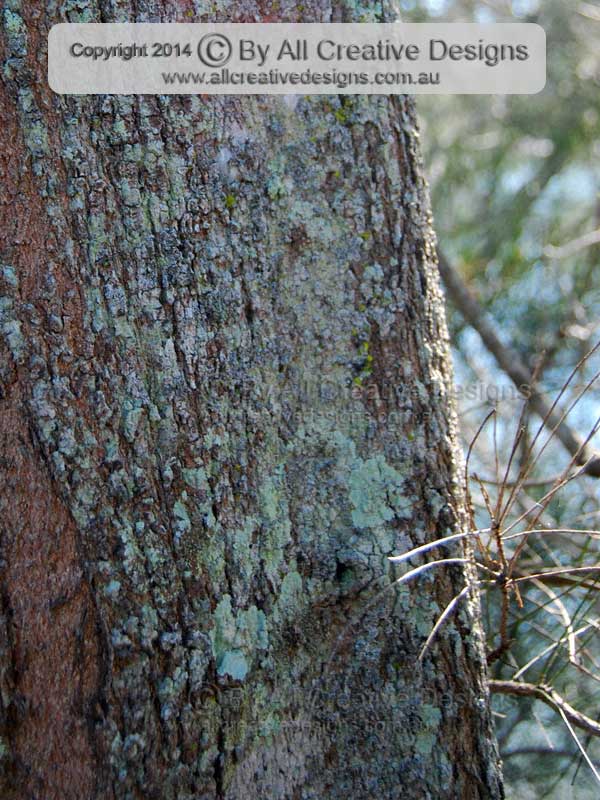
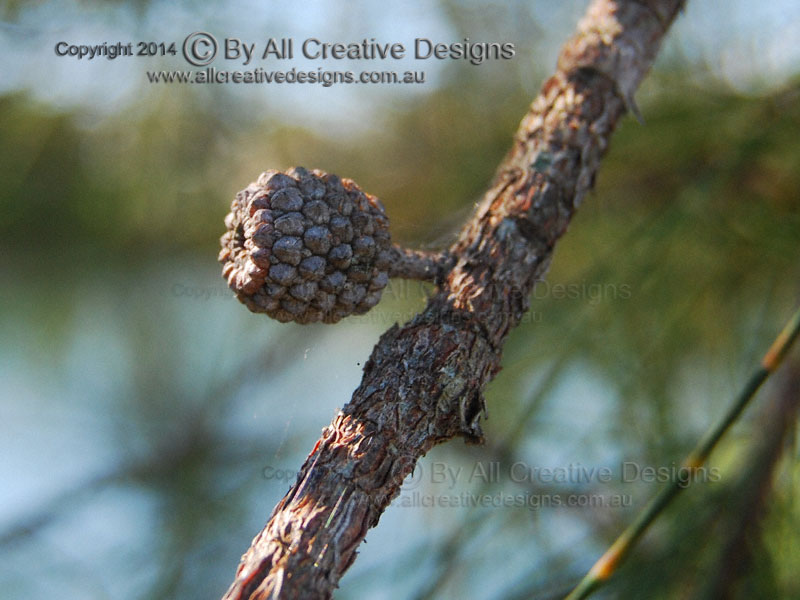
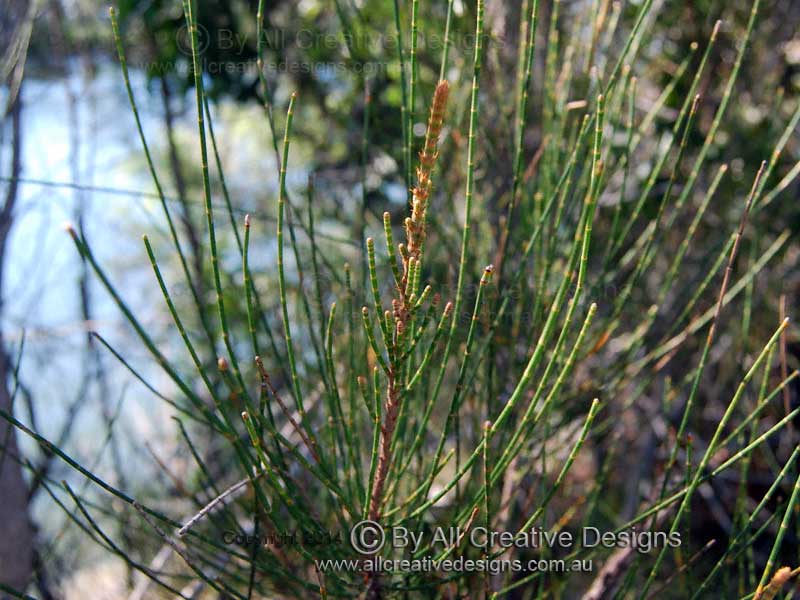
This tree is is very common on the banks of tidal waterways and in coastal swamps, where it is able to withstand prolonged flooding and can often form dense stands. It can attain a height of up to 20m with an open crown and a slender trunk (Photo 1). Bark on the trunk of mature trees is rough and vertically furrowed, colour is a light brown to grey and lichens are often present (2). The woody cone measures up to 15mm in length and is roughly globe-shaped. The image is showing a cone before valves are opening to release numerous small winged seeds (3). Thin branchlets are a grey green colour and up to 25cm long. Internodes are spaced up to 15mm apart towards the base of branchlets and decrease in length towards the tip. A lens is needed to observe 12 to 16 tiny, sharply pointed teeth-like leaves at each internode, whereas the similar Beach Casuarina (Casuarina equisetifolia) only features up to 8 leaf teeth (4 & 5). Distribution: From southern NSW to central Qld, mostly coastal, with some more isolated inland populations in the Hunter valley and around Sydney. See Flower Characteristics Page and Leaf Characteristics Page for information on botanical definitions and concepts.
(1)
(2)
(3)
(4)

(5)
Swamp Paperbark Melaleuca ericifolia
Swamp Paperbark Melaleuca ericifolia
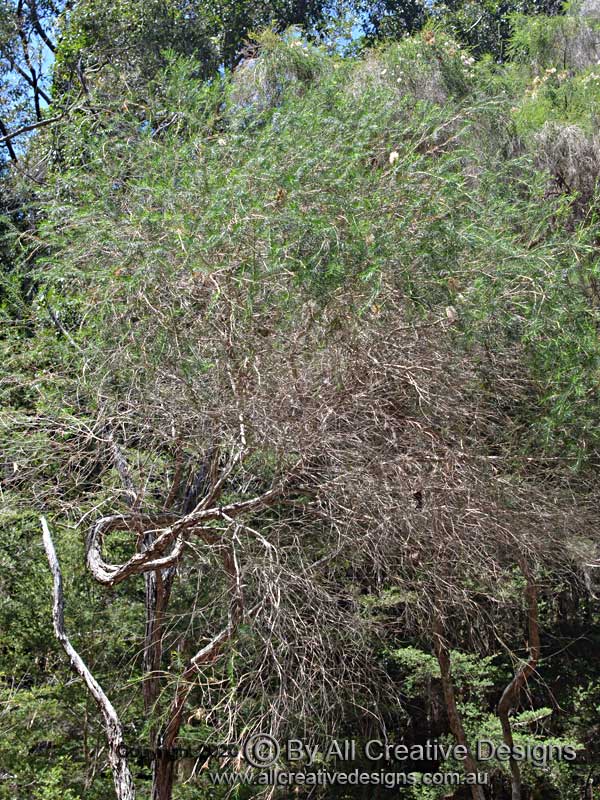
This tall shrub or small tree is found in varied habitats ranging from swampy areas and stream banks to drier and open Eucalypt dominated (sclerophyll) forests. It is able to form dense stands in water logged habitats and can reach a height of up to 9m (Image 1). Bark colour varies from whitish grey to brown. It is relatively soft and sheds in longer strips that are thicker than those of other Melaleuca species featuring a papery bark (2). The cylindrical shaped flower spikes appear at the end of young branches and reach a length of up to 3cm. Individual bi-sexual flowers feature bundles of white or more cream-coloured stamens surrounding the style in the centre. The 5 petals are; white, 2 to 3mm long, rounded and cupped (3). Simple leaves have an alternate arrangement or form uneven whorls of threes. They are up to 18mm long and only up to 2mm wide, linear in shape with entire margins, hairless, the same dark green colour on both surfaces, strong and rather rigid. Leaf apex is acute ending in a fine tip (4 & 5). Distribution: Vic., NSW and Tas. Note: This species is similar in appearance to the Narrow-leaved Honey Myrtle Melaleuca trichostachya (Page 8).
Use the Botanical Species List to locate other Melaleuca species listed on this web site.
(1)
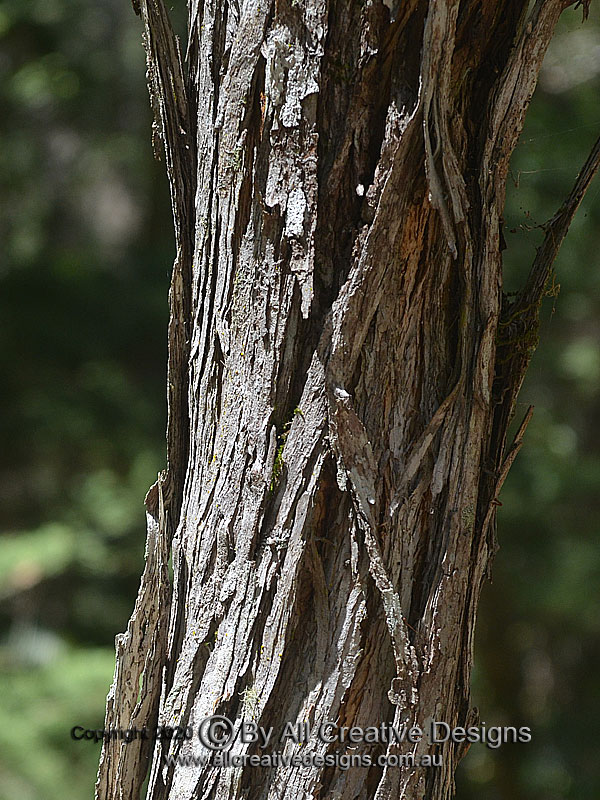
(2)
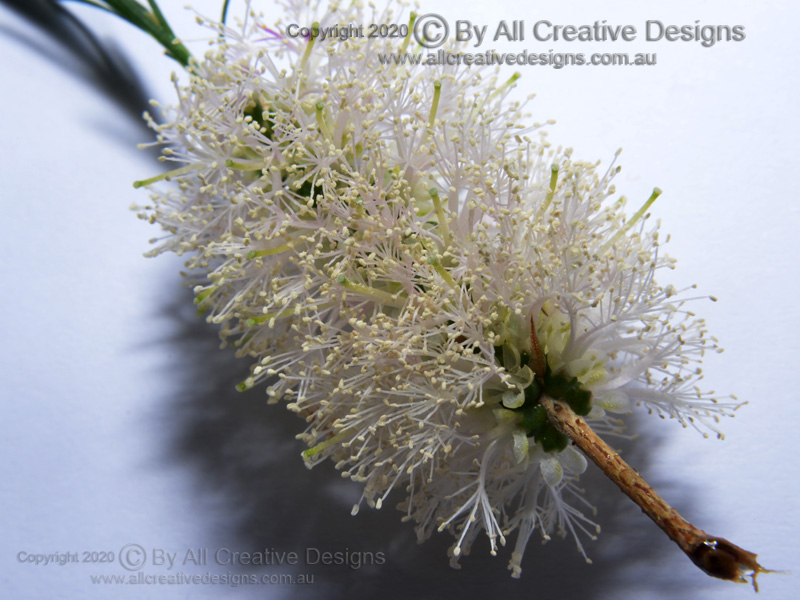
(3)
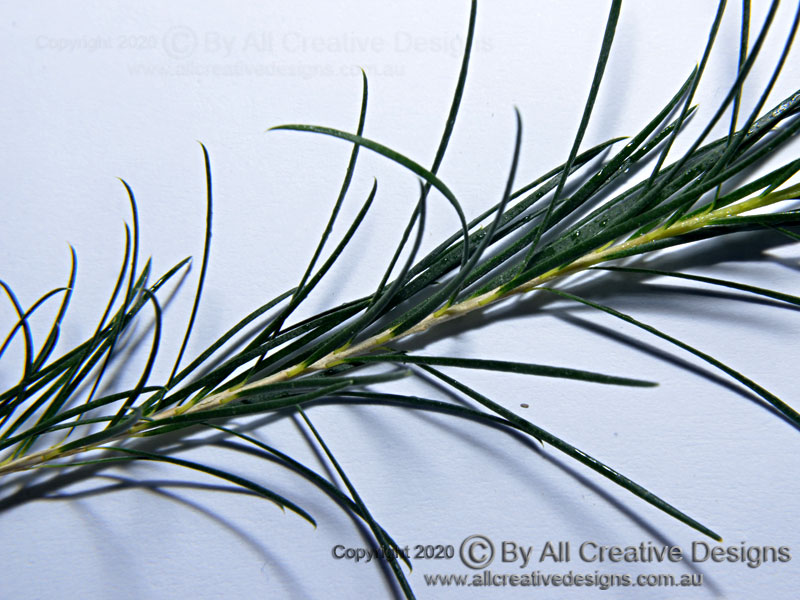
(4)
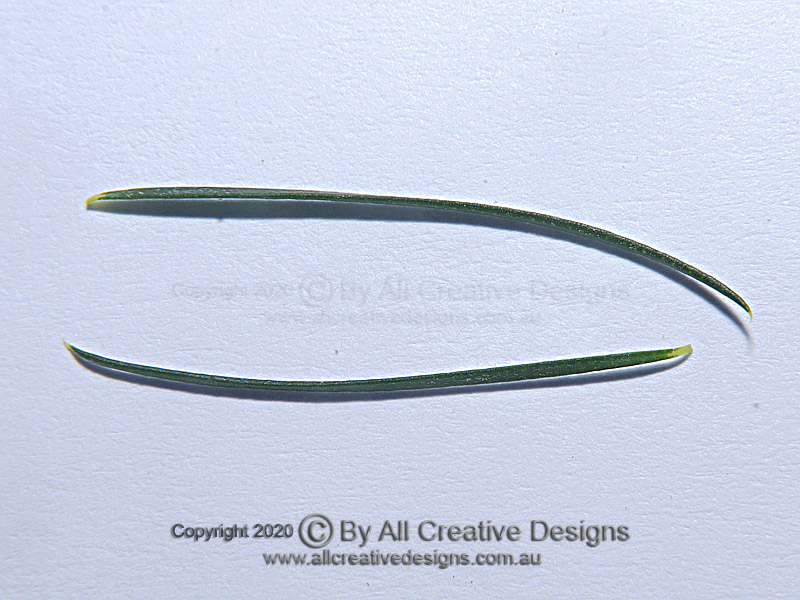
(5)
Sweet Myrtle Gossia fragrantissima
Sweet Myrtle Gossia fragrantissima Other names: Small-leaved Myrtle
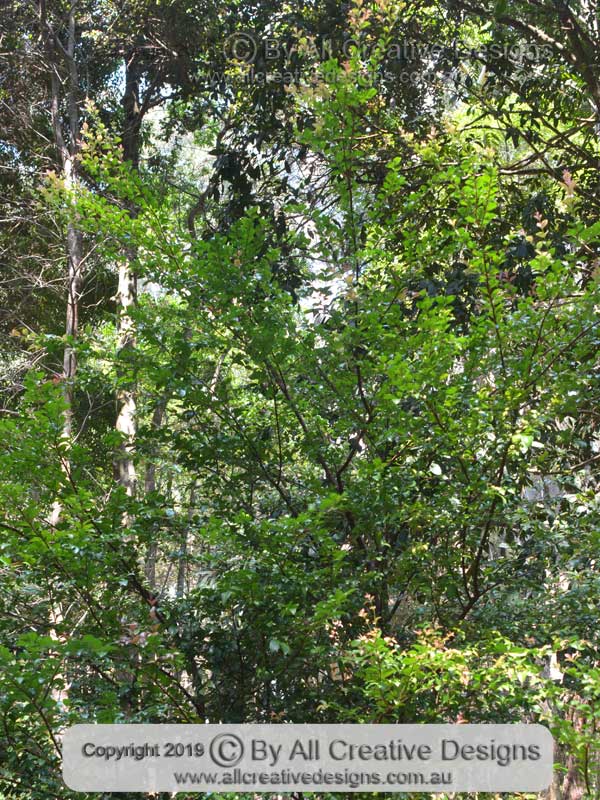
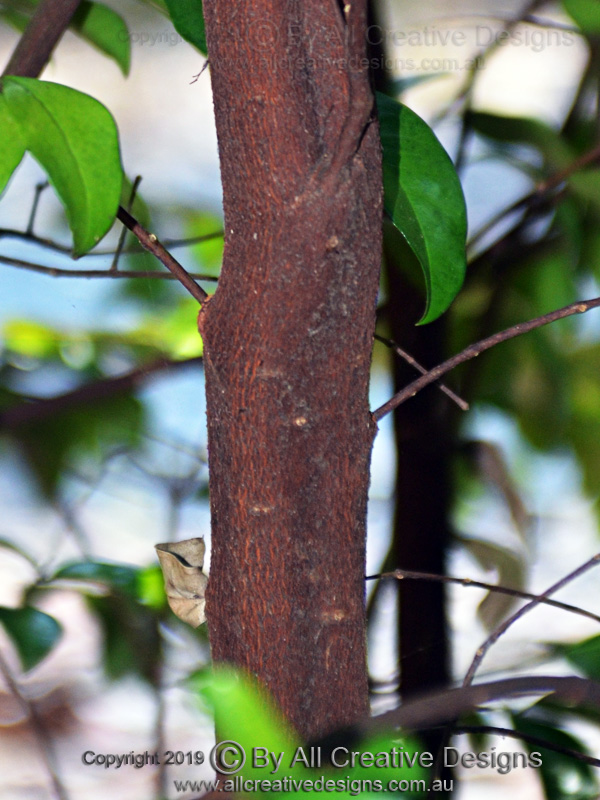
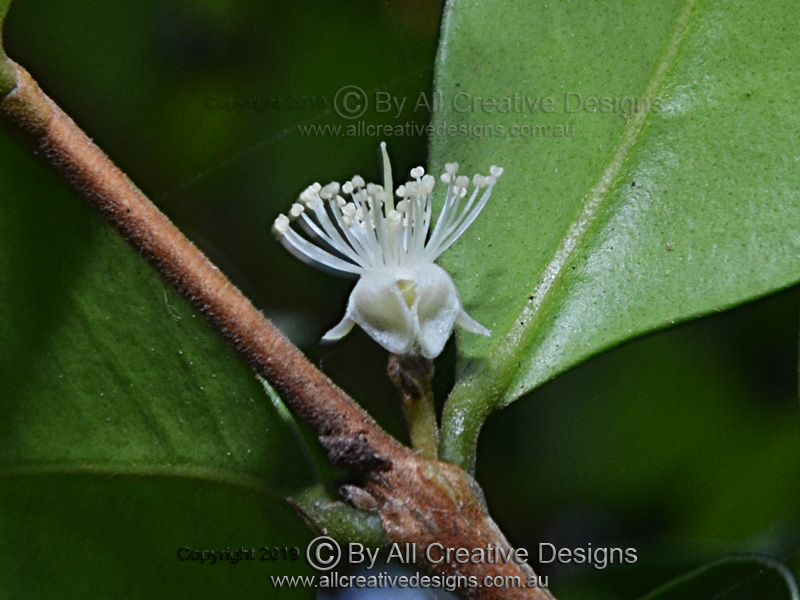
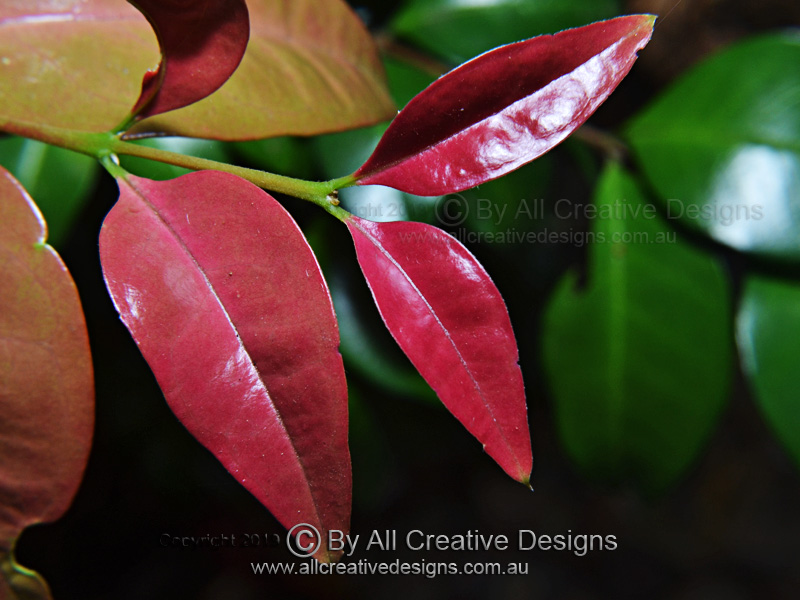
The vibrant reddish pink young leaves and very fragrant flowers are standout features of this beautiful tall shrub. It is up to 5m tall, but under suitable conditions may reach the height of a small tree. Older specimens often develop multiple trunks (stems) and a compact branching habit (Image 1). Bark is dark brown and on older stems becomes flaky, rough with fissures showing the light brown underlying fresh bark (2). Beautiful fragrant flowers emerge solitary or in small groups of up to 4 from axillary buds (leaf axils). The 4 white and re-curving petals are about 3mm long and stamens reach a length of up to 4mm (3). Simple leaves with an opposite arrangements are; up to 5cm long, elliptic or broadly lance-shaped (lanceolate) to nearly egg-shaped (ovate) with entire margins, hairless, dark green and glossy when mature, reddish when young, smooth and rather thick. A tiny tip (mucro) is visible at the apex of mature leaves. Leaves are not scented when crushed. The centre vein and up to 6 lateral veins, which form loops, are slightly raised and clearly visible on lower leaf surface (4 & 5). Distribution: Far north coast of NSW and southern Qld. Note: Due to habitat destruction this shrub/small tree has been listed as a threatened species. https://www.environment.nsw.gov.au/threatenedSpeciesApp/profile.aspx?id=10079
(1)
(2)
(3)
(4)
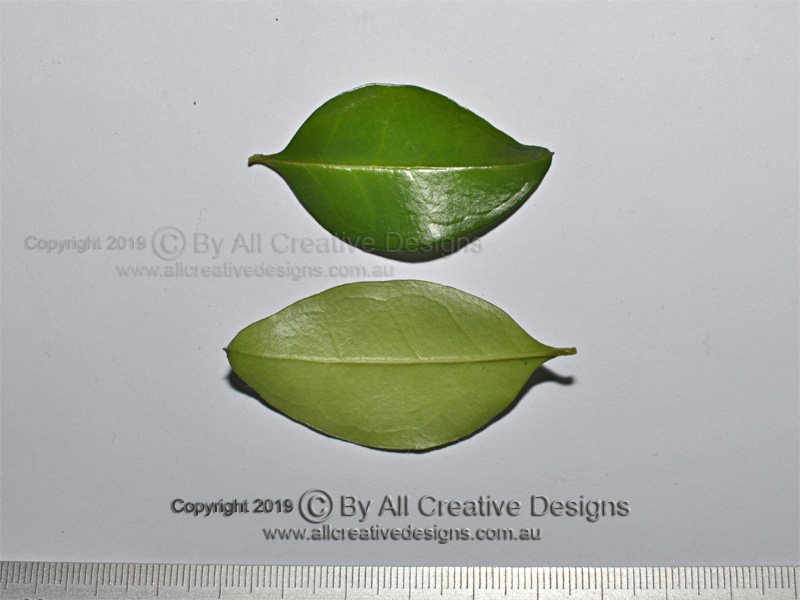
(5)
Sweet Pittosporum Pittosporum undulatum
Sweet Pittosporum Pittosporum undulatum
The Sweet Pittosporum is a very common and wide spread native tree species, which under favourable conditions can reach a height of 15m or more. It occurs in all different types of rainforests, tall open forests and frequently in regrowth areas (Photo 1). Bark on mature specimens is firm with small ridges and grey brown in colour (beneath lichens and mosses) (2). Beautiful white flowers with a yellow centre are up to 20mm across and very pleasantly scented. This is a reason for its extensive use in landscaping, which has lead to an invasive weed declaration on the species in areas outside its natural distribution range (3). Simple leaves develop in a whorl arrangement, then turn alternate and are bright yellow at first. Leaves are; up to 14cm long, mostly elliptic in shape with undulating (wavy) margins, dark green and glossy on top, mid-green below, hairless and smooth. Apex is acute, base shape is attenuate. Petiole (leaf stalk) is up to 20mm long. Venation is more visible on upper leaf surface with fine, raised lateral veins (Picture 4 & 5). Distribution: Vic, NSW & Qld.
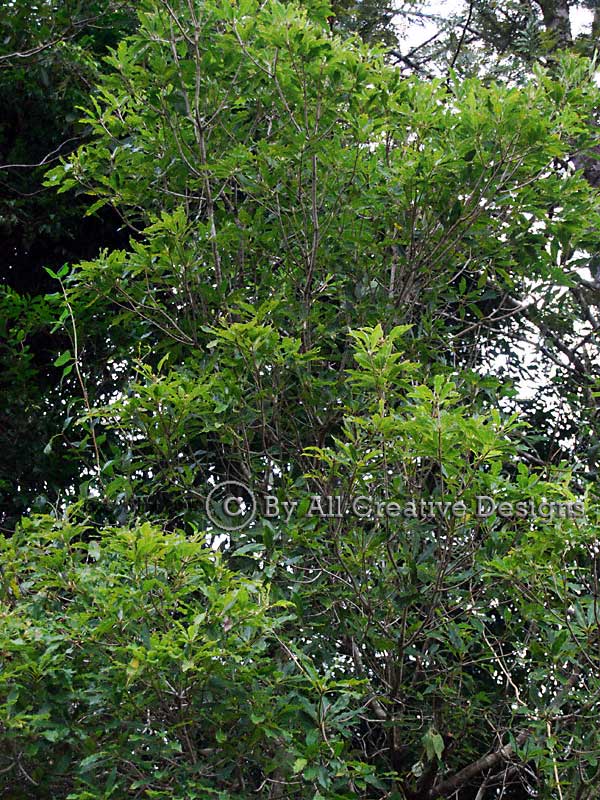
(1)
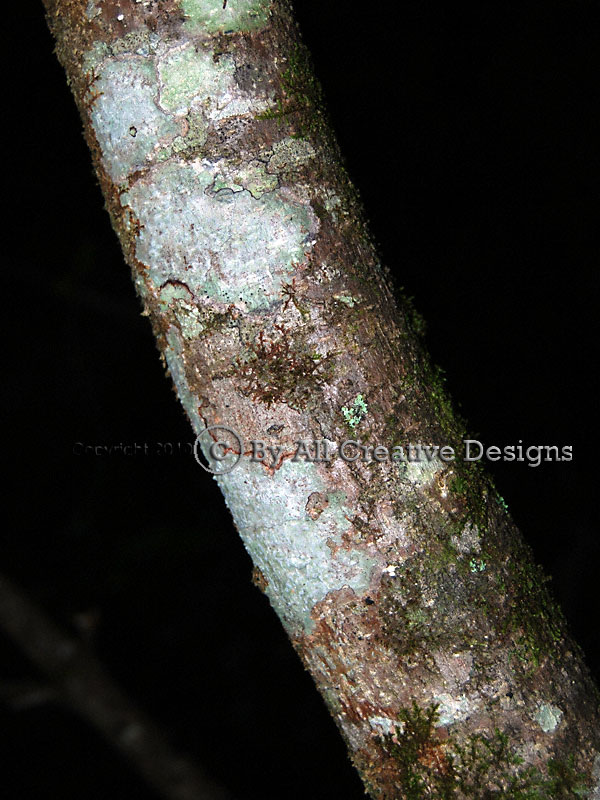
(2)

(3)

(4)
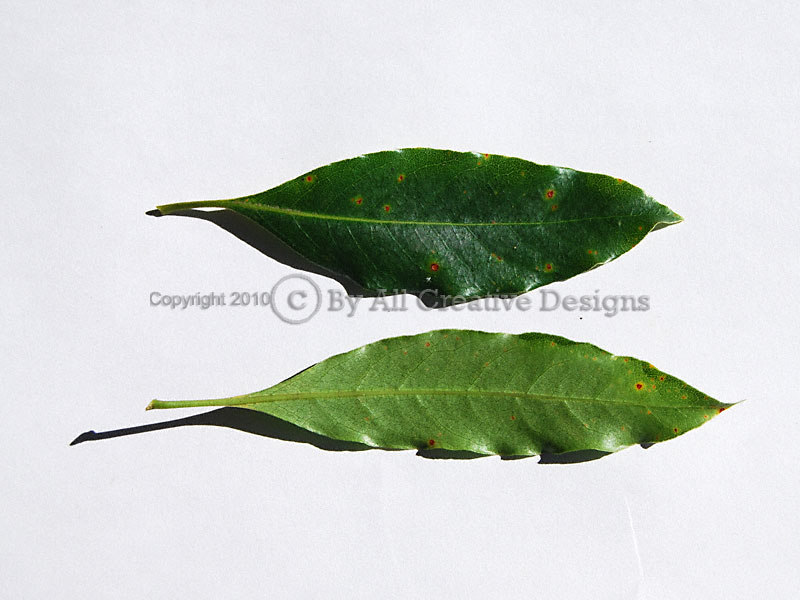
(5)
See
Leaf -
Flower - Fruit - and Bark Identification Web Pages for explanations of botanical definitions and concepts.
Select images for Full Size View. (Opens new browser window).
Use the Key to Species, which is based on leaf characteristics, to identify native trees and shrubs found on Australia's east coast.
Sydney Golden Wattle Acacia longifolia
Sydney Golden Wattle Acacia longifolia subsp. longifolia Other names: Golden Wattle, Sallow Wattle, Coast Wattle
In exposed coastal conditions this species may only reach 3 to 4m in height, whereas growing under an open canopy within tall Eucalypt dominated forests, it can develop into a small tree less than 10m high. It is an endemic plant with a large, natural distribution range, including coastal plains and the foothills of the Great Dividing Range. This species is also widely used for landscaping purposes, often planted along roads (Photo 1). Bark is grey to brown in colour with firm and slightly rough texture, due to flaky patches, small ridges and fissures (2). Over late winter into spring, this species becomes very noticeable with abundant golden yellow coloured flower spikes appearing. Flower spikes are cylindrical in shape and up to 5cm long (3). The thin pods are rounded and reach up to 15cm in length, changing from green to a light brown in colour when fully mature. They are straight in shape, but can curl and twist when drying before splitting to release the seed (4). Leaves of species in the Acacia genus are referred to as phyllodes, which for the Sydney Golden Wattle are; alternatively arranged, up to 20cm long, narrow elliptic, straight or slightly curved in shape with entire margins, hairless, dark green, dull on top, only marginally paler beneath, thick, strong and leathery in texture. Phyllode gradually narrows into a broadly rounded or pointed apex showing a fine tip (mucro), base shape is attenuate to more cuneate. Up to 4 longitudinal veins are raised and more conspicuous on both surfaces, a small gland is visible at the base (5). Distribution: SA, Vic, NSW & south-east Qld. Note: Acacia longifolia subsp. sophorae has shorter and broader phyllodes. Sometimes classified as a separate species Acacia sophorae.

(1)
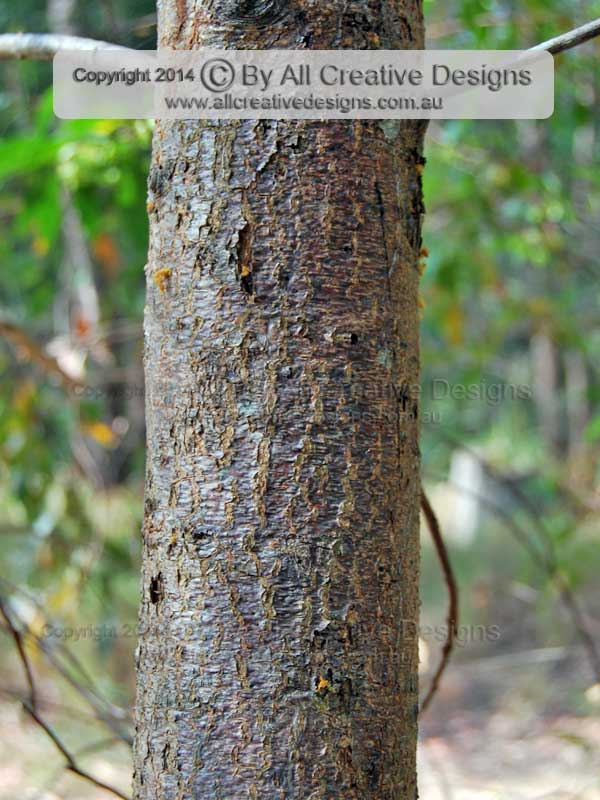
(2)
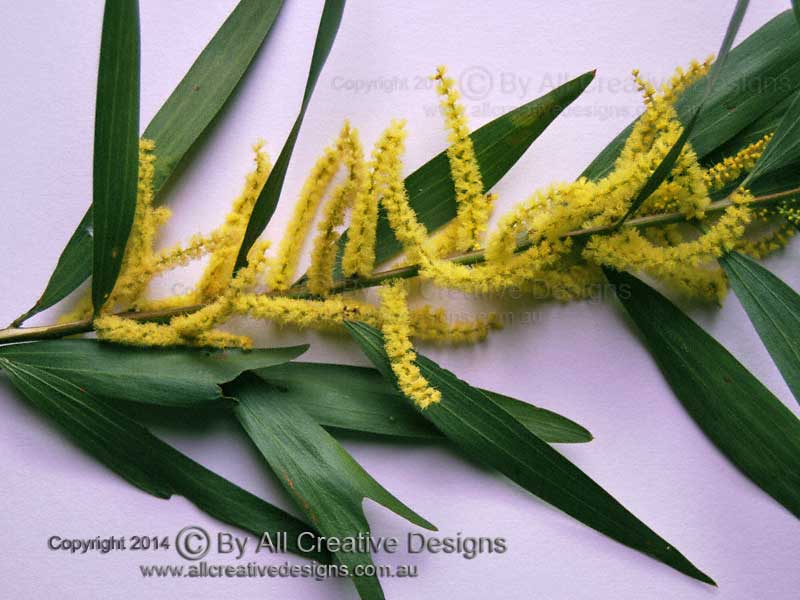
(3)
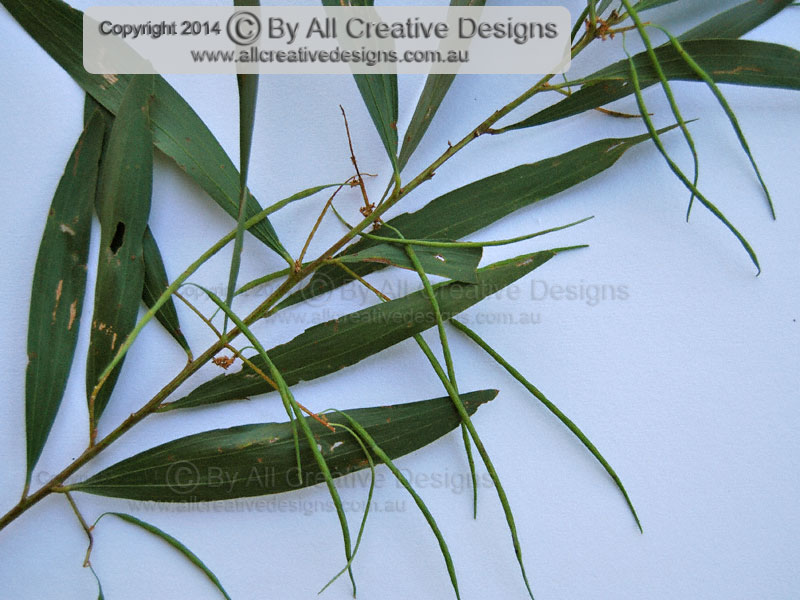
(4)

(5)
Syzygium Species Family: MYRTACEAE
Species belonging to this genus are referred to as fleshy fruited Myrtles, Subfamily: Myrtoideae. Except for cool temperate rainforests at high altitudes, Syzygium species exist in all other types of rainforests, with the highest diversity found in tropical regions. The distribution range extends from Victoria (one species; Lilly Pilly S.smithii) to northern Queensland and the Northern Territory. Species in this genus range from shrubs to tall trees forming the uppermost canopy in rainforests. Typical characteristics include; an opposite leaf arrangement, fleshy fruits with the remnant calyx usually present at the apex and flowers featuring prominent stamens. Many Syzygium species will readily hybridise with each other and there are many cultivars in existence.
Blue Lilly Pilly Syzygium oleosum
Blue Lilly Pilly Syzygium oleosum Other names: Blue Cherry, Scented Satinash, Coastal Cherry, Oily Satinash
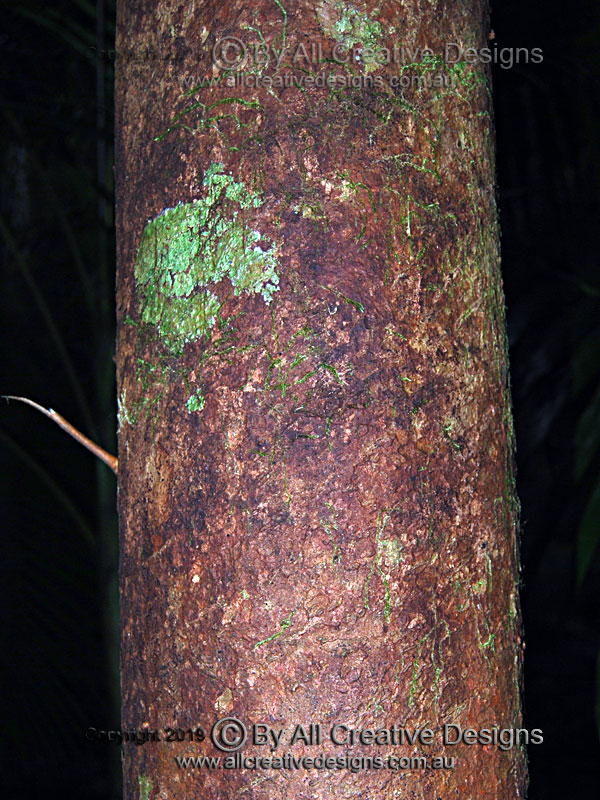
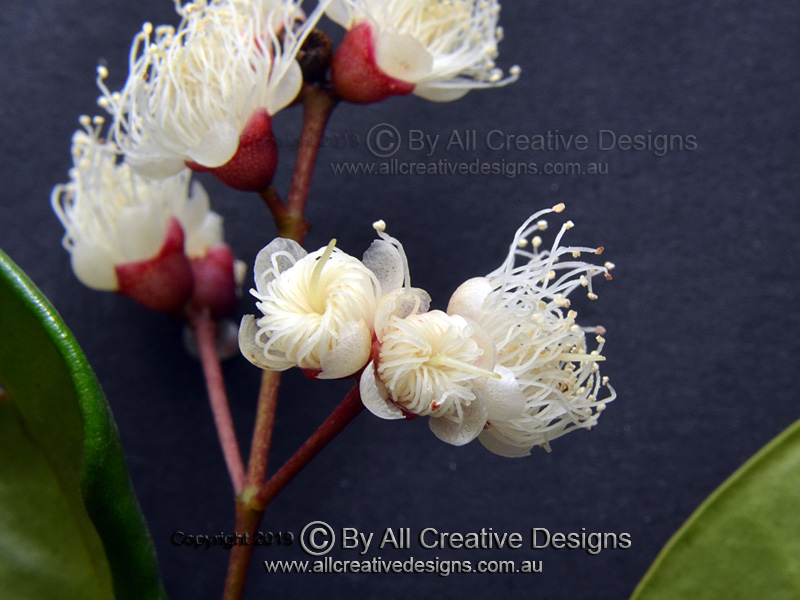
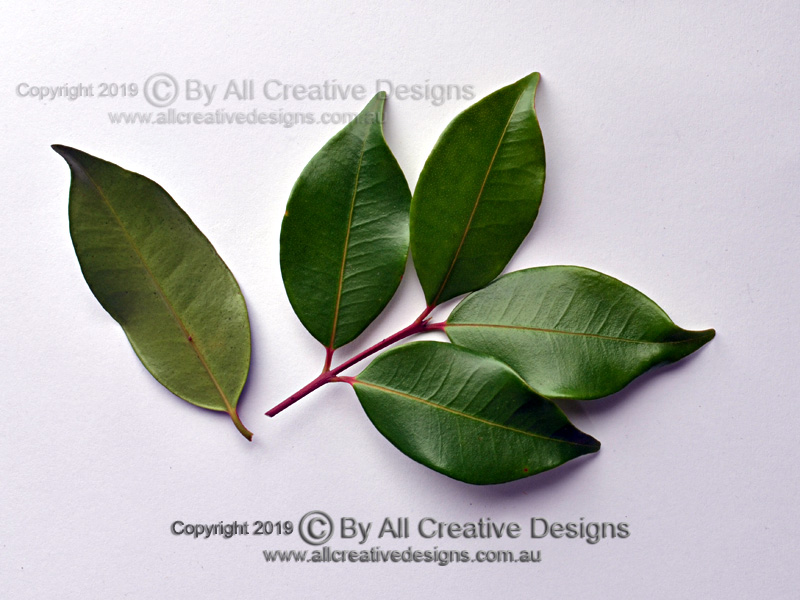
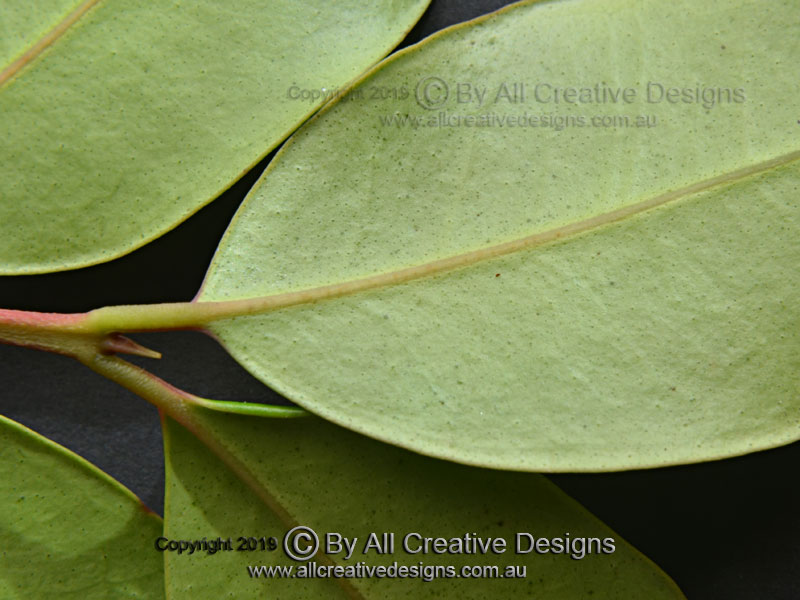
The Blue Lilly Pilly is a common understorey tree that inhabits warm temperate to tropical rainforests and wet Eucalypt forests from coastal to mountainous regions. The specimen shown is growing on nutrient rich soil within subtropical rainforest and about 15m tall, whereas a height of less than 10m is more usual (Image 1). Bark on the trunk of mature trees is reddish brown, firm and to some extent scaly (2). Handsome flowers are borne on small panicles that appear towards the end of young branches over summer and autumn. The flower calyx (base) is a distinctive reddish colour and features 4 pointed calyx lobes (sepals). The 4 petals are rounded (cupped), 3 to 4mm in diameter, translucent white and marked by oil dots. Numerous white stamens are about 15mm long when fully extended and surround the prominent style in the centre (3). The distinctive fruity scent, emitted when a leaf is crushed, distinguishes the Blue Lilly Pilly from other similar related (Syzygium) species. Branchlets (twigs) bearing young leaves are reddish on the upper surface. Simple leaves with an opposite arrangement are; up to 11cm long, varied in shape from broadly elliptic to lanceolate (lance-shaped) or ovate (egg-shaped) with entire margins, hairless, dark green, very glossy on top, paler green beneath, smooth and leathery in texture. Venation is only faintly visible on lower leaf surface. Oil dots are conspicuous (4 & 5). Distribution: From central (coastal) NSW to northern Qld.
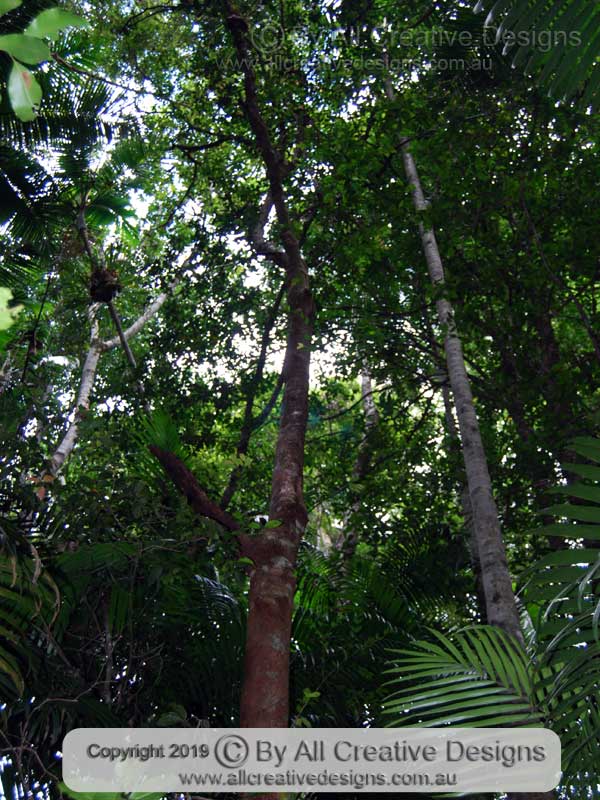
(1)
(2)
(3)
(4)
(5)
Rainforests of Australia's East Coast, HAND SIGNED BOOKS; (Out of Stock) A practical and informative field guide to the identification of native rainforest species. More than 800 colour photographs, informative graphics, maps and detailed description of more than 300 species.
This book is a valuable information source for bushwalkers, students, gardeners and anyone with an interest in Australia’s native flora.
The book was written and illustrated by the author of the tree identification web pages.
New Holland Publishers: May 2019
ISBN: 9781925546293
Format: Paperback with PVC
Pages: 304 pp.
Size: 23 cm high x 15 cm wide
Full Colour Photography
Rainforests: Identification - Evolution - Reproduction
Dedicated photography of rainforest species including; mosses, mushrooms, lichens, slime moulds, ferns, conifers, flowering trees, climbing plants, orchids and palms enable the reader to identify commonly encountered species.
CLICK HERE FOR MORE INFORMATION
Brush Cherry Syzygium australe
Brush Cherry Syzygium australe Other names: Creek Satinash
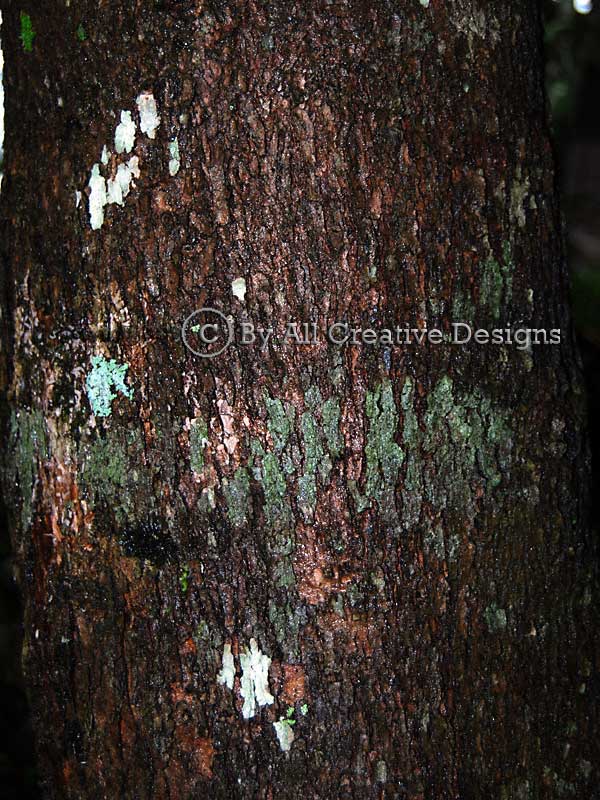
The Brush Cherry is a common widespread tree species growing in a range of different forest types including rainforests and can reach a height of 25m or more. New growth in the densely foliated canopy will flush in salmon colours (Photo 1). Bark on mature specimens is brown in colour with a rough, flaky and fissured texture at the base of the trunk (2). Gorgeous white flowers bloom over summer and reach up to 2.5cm in diameter (3). The edible fruit is; pink to red in colour, pear shaped, up to 25mm long and matures in autumn. It contains a single seed, which when squeezed will divide into multiple segments each capable of germinating (4). Simple leaves with an opposite arrangement are; up to 7cm long (sometimes longer), varied in shape from obovate (reverse egg-shaped) to elliptic with entire margins, hairless, dark green, glossy on top, lighter green and shiny below, strong and firm in texture. Leaf apex is short acuminate, base shape is cuneate. Venation featuring straight lateral veins and an intramarginal vein (a vein running parallel to the leaf edge) is only faintly visible (5). Distribution: From the south coast of NSW to northern Qld.
fs.jpg)
(1)
(2)

(3)
fs.jpg)
(4)

(5)
Cassowary Satinash Syzygium graveolens
Cassowary Satinash Syzygium graveolens
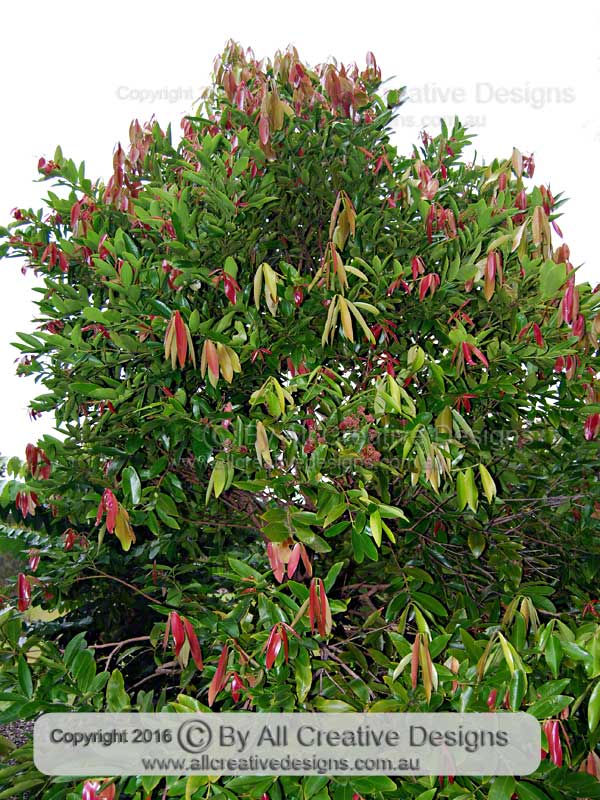
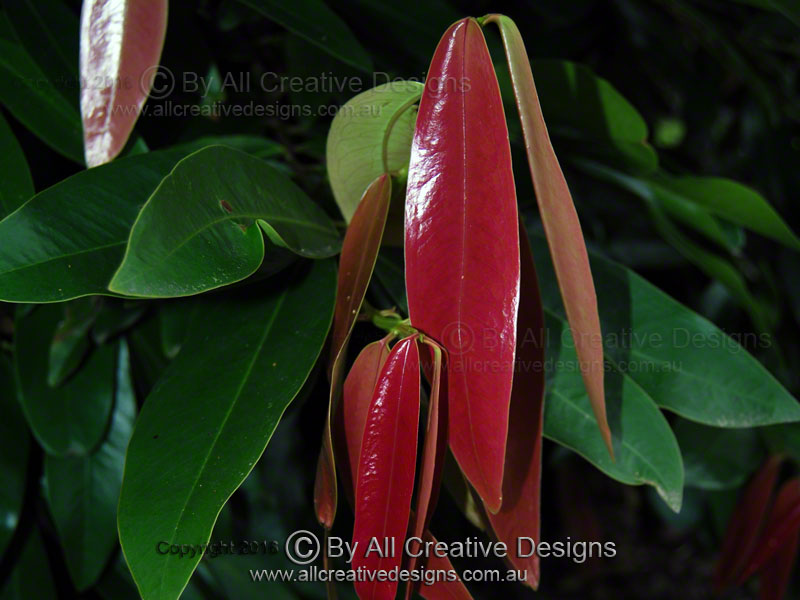
Tropical lowland rainforests are the exclusive habitat of this attractive tree, able to reach a height of more than 25m. It has a restricted natural distribution range and is a food source for the Cassowary, reason for its common name (Photo 1). Bark on older trunks becomes rough and orange brown in colour, whereas bark on younger branches is rather smooth and grey (2). The abundantly produced fruit is globe-shaped with a flattened apex surrounded by a characteristic rim (immature fruit is shown). It is pinkish red in colour and reaches up to 6cm in diameter when fully mature (3). New growth of the very ornamental foliage flushes in bright pink to salmon coloured tones. Simple leaves with an opposite arrangement (characteristic for the genus) are; up to 20cm long, elliptic (widest at the middle) or more oblanceolate (reverse lance-shaped) with entire margins, hairless, dark green, glossy on top, paler green beneath, firm, very smooth and leathery in texture. The stout petiole (leaf stalk) is up to 10mm long and grooved on the upper side. Venation is fine but clearly visible on both surfaces (4 & 5). Distribution: North Qld.
(1)

(2)

(3)
(4)
(5)
Coolamon Syzygium moorei
Coolamon Syzygium moorei Other names: Durobby, Rose Apple, Watermelon Tree
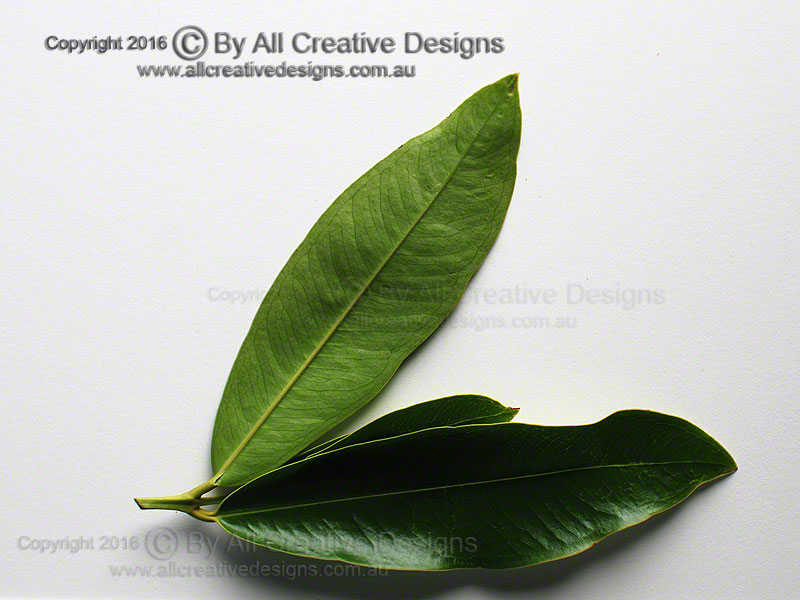
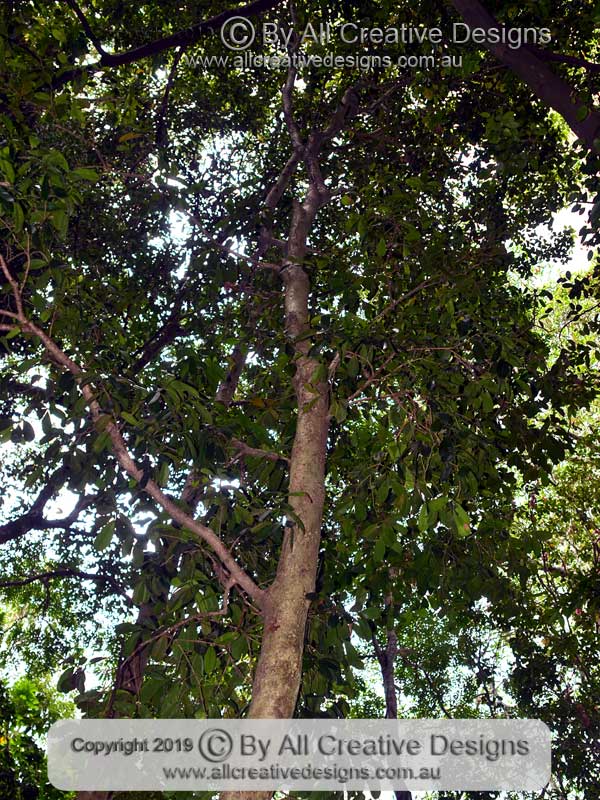
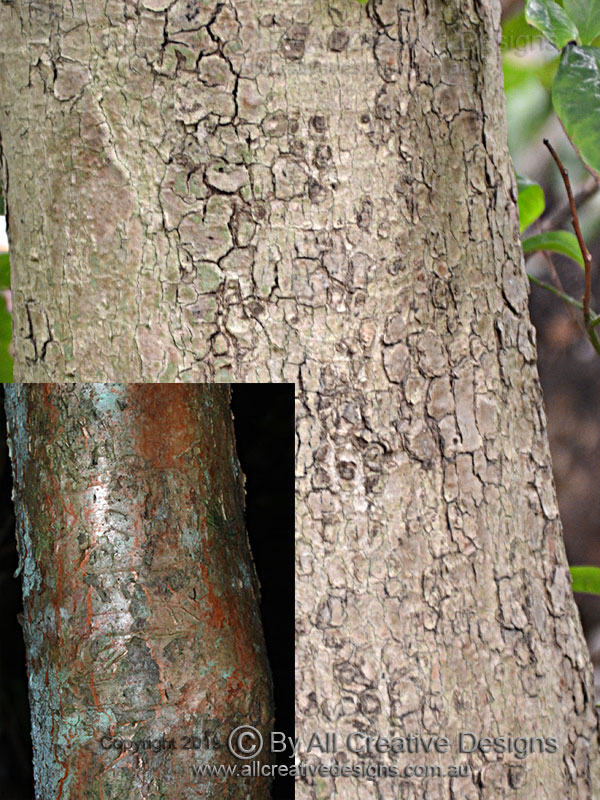
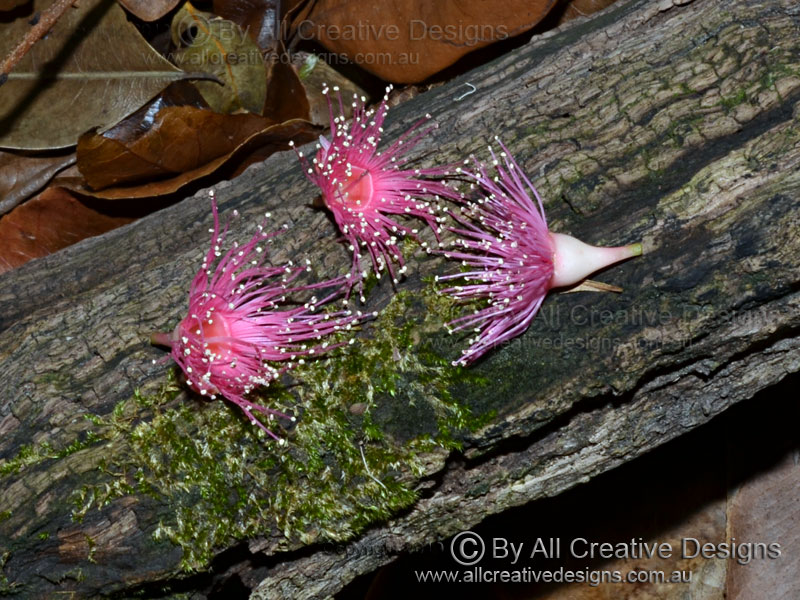
Under favourable conditions, this very attractive tree reaches a height of more than 30m and develops a densely foliated canopy. It is relatively slow growing and has a life expectancy of 200 years or more. This tree has been declared a vulnerable species, due to the extensive habitat destruction of littoral subtropical rainforests (Photo 1). Bark on younger trees (inset) is reddish brown, hard with smooth and some flaky areas, whereas bark of mature trees becomes softer, scaly and weathers to grey (2). The handsome flowers are borne on panicles that appear along older branches (ramiflorous) over late spring and summer. Flowers are dominated by dense bundles of pink or orange red coloured filaments that are crowned by cream or pale yellowish anthers. Stamens are about 15mm long. A prominent style is visible in the centre. The pink petals are shed in the early development phase of the flower (3). The foliage is made up of large simple leaves that have an opposite arrangement, which is typical for the genus. Leaves are; up to 20cm long, varied in shape from elliptical to broadly lanceolate or oblanceolate (reverse lance-shaped) with entire margins, hairless, dark green and glossy on top when mature, paler green beneath, relatively thick and leathery in texture. The stout petiole (leaf stalk) rarely exceeds 8mm in length and is grooved on top (4 & 5). Distribution: Lowlands of far northern NSW and southern Qld.
(1)
(2)
(3)
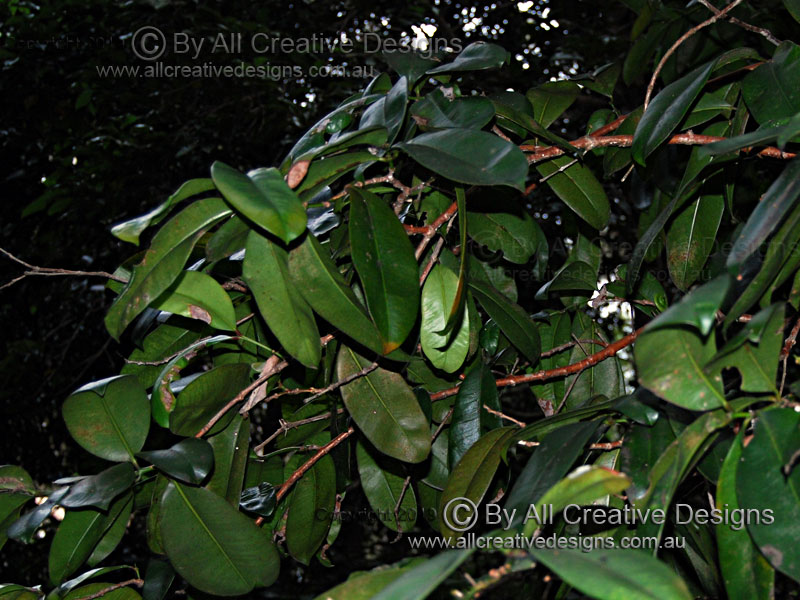
(4)

(5)
Fibrous Satinash Syzygium fibrosum
Fibrous Satinash Syzygium fibrosum Other names: Small Red Apple
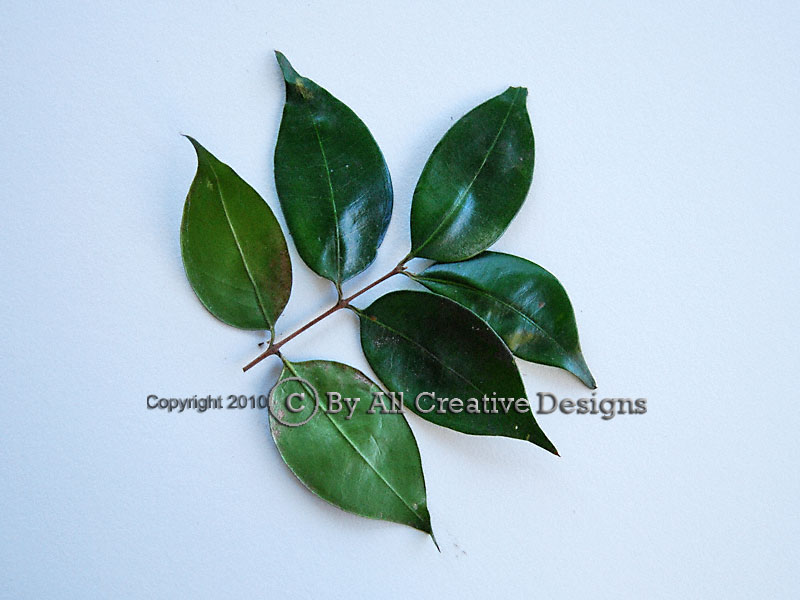
As an understorey species within tropical rainforests, this small native tree species reaches a height of up to 10m (Photo 1). Bark is reddish brown in colour with fine longitudinal fissures (2). Numerous stamens with white, cream or pale yellow coloured filaments are the prominent feature of attractive flowers, whereas petals are rather inconspicuous. They are arranged on panicles, blossom over winter and measure up to 5cm in diameter when fully opened (Photos 3 & 4). Simple leaves with an opposite arrangement are; up to 10cm long, mostly elliptic in shape with entire and slightly incurved margins, hairless, smooth, dark green and glossy on top, lighter green below with a firm and rather leathery texture. Apex is short acuminate ending in a blunt point, base shape is rounded. Strong petiole (leaf stalk) is up to 10mm long. Venation is faint overall, but mid-vein is raised on both leaf surfaces (5). Distribution: Northern Qld & NT.
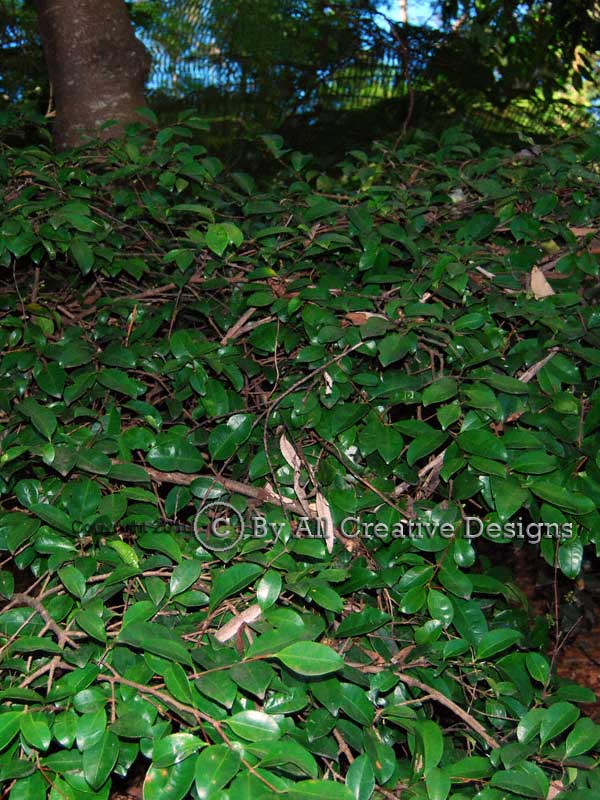
(1)
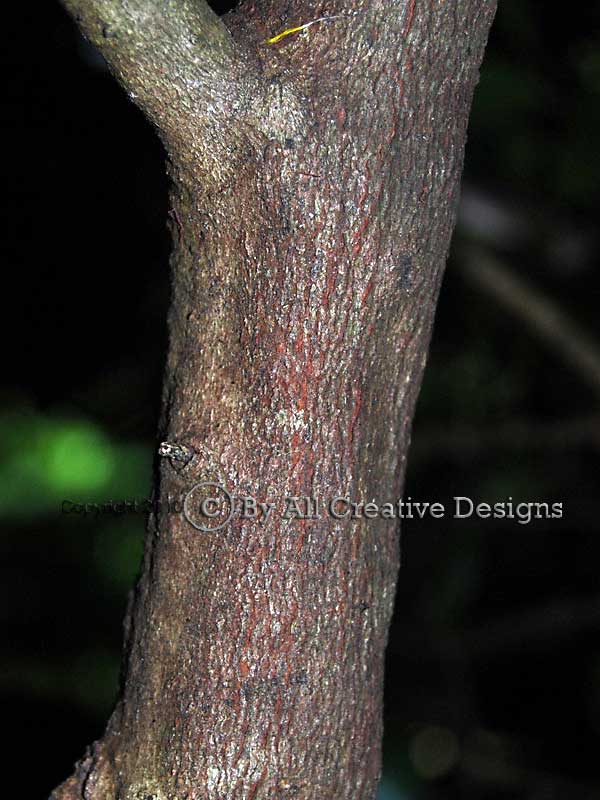
(2)

(3)
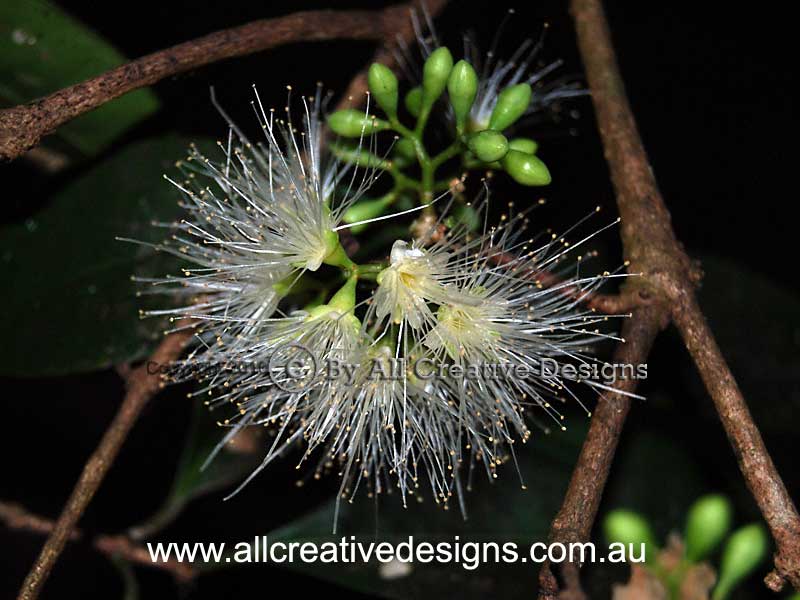
(4)
(5)
Johnstone River Satinash Syzygium erythrocalyx
Johnstone River Satinash Syzygium erythrocalyx Other names: Scarlet Satinash, Red Bud Satinash, Daintree Satinash
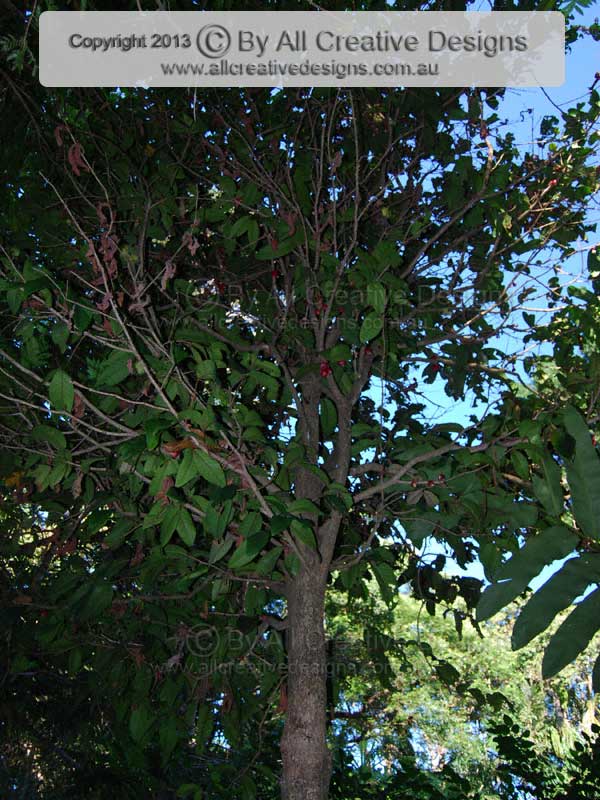
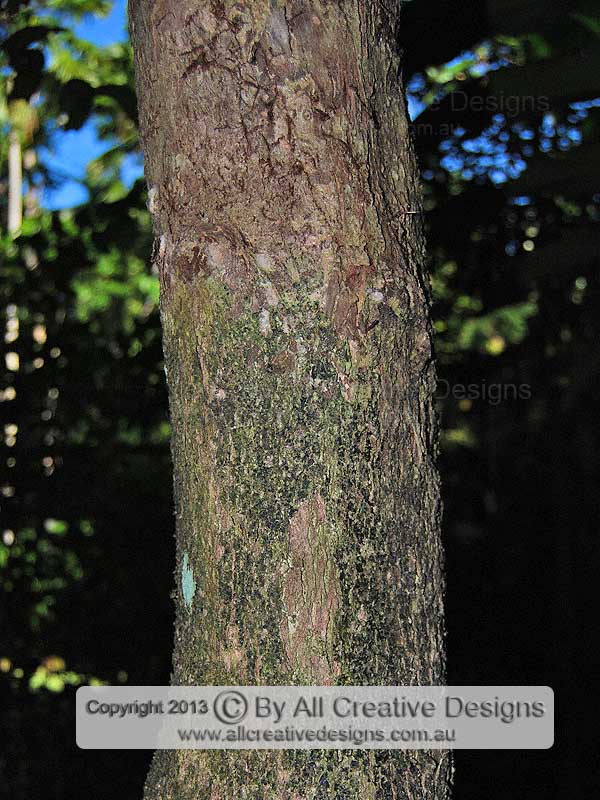
This beautiful small tree naturally occurs as an understorey species in tropical rainforests and rarely reaches more than 10m in height (Photo 1). Bark on the often bumpy trunk is grey to cream coloured with a rough texture due to irregular ridges and small fissures (2). Large pale yellow flowers are dominated by numerous stamens up to 4cm long, which obscure the small and rounded petals. They are seated on top of the reddish calyx supported by a short flower stalk and appear along older branches (ramiflorous), from axillary buds and also on the trunk (cauliflorous). Emerging flowers and mature fruit are present over late winter and spring (3). There are variations in the colour of the fruit at full maturity, from white or pink to a scarlet red. It is bell shaped and fleshy (edible), reaching up to 6cm in length and 4 to 5cm in diameter. The fruit contains only one or up to 4 hard seeds, which measure up to 2.5cm in diameter and have an irregular grooved surface. The remaining rim-shaped base of the flower (calyx) can be seen at the apex of the fruit (4). Simple leaves with an opposite arrangement are: up to 20cm long (larger on young trees), elliptic in shape with entire (in-rolled) margins, hairless, dark green, dull on top, light green beneath, thick and firm in texture. Leaf apex is rounded, base shape is cordate or obtuse. The mid rib and prominent lateral veins are sunken to the upper and strongly raised on the lower leaf surface. The strong petiole (leaf stalk) is only a few millimetres long and reddish in colour. Distribution: Tropical North Qld.
(1)
(2)

(3)

(4)

(5)
Lilly Pilly Syzygium smithii
Lilly Pilly Syzygium smithii [Acmena smithii] Other names: Lillipilli Satinash
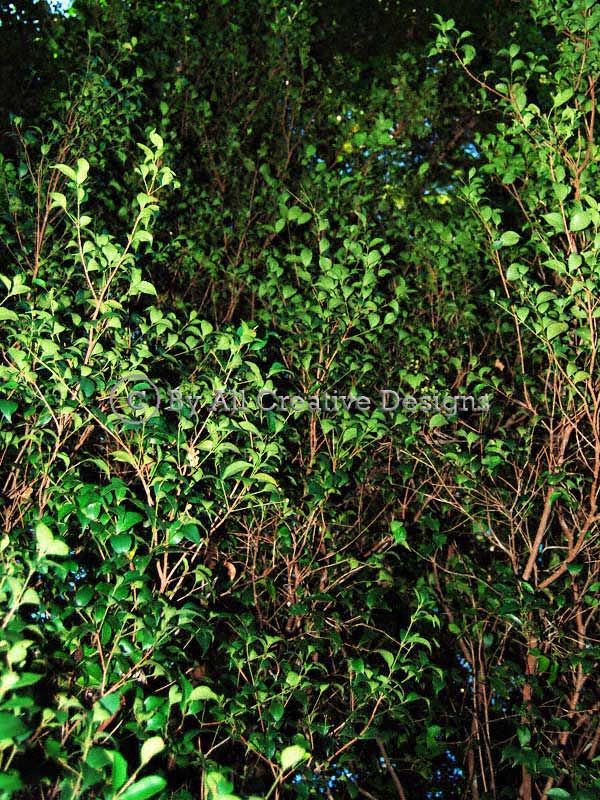
This wide spread small tree species occurs within different rainforest types and in wetter tall Eucalypt forests. Three different forms may be recognised; the species shown here is the small-leaved form (Photo 1). Bark is reddish brown, relatively smooth and hard in texture (2). The small fruit reaches up to 8mm in diameter and turns a whitish pink to pale purple colour when ripe. It is produced abundantly in late summer to autumn and features a circular rim (the remaining calyx) at the apex (Photos 3 & 4). Simple leaves with an opposite arrangement are; from 1 to 5cm long, obovate (reverse egg-shaped) to broadly oblanceolate (reverse lance-shaped) with entire margins, hairless, semi glossy or dull, firm and smooth in texture. Leaf apex is short attenuated, base shape is cuneate. Venation is only faintly visible on both surfaces (5). Distribution: Along Australia's east coast, from Victoria to north Qld. Widely used as an ornamental species.
(1)
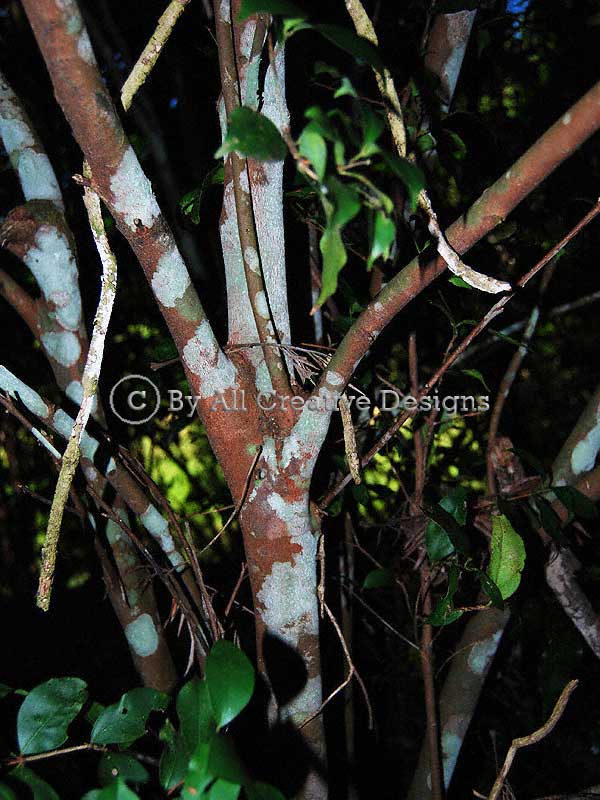
(2)
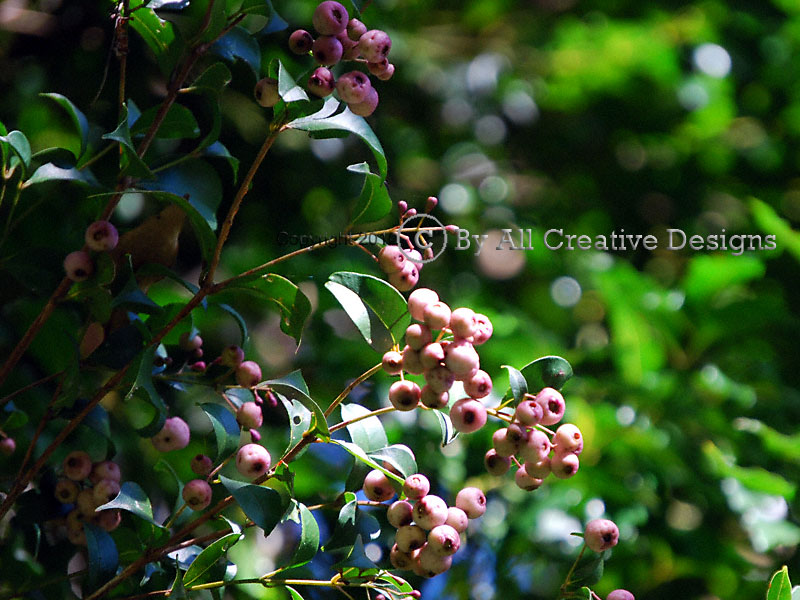
(3)
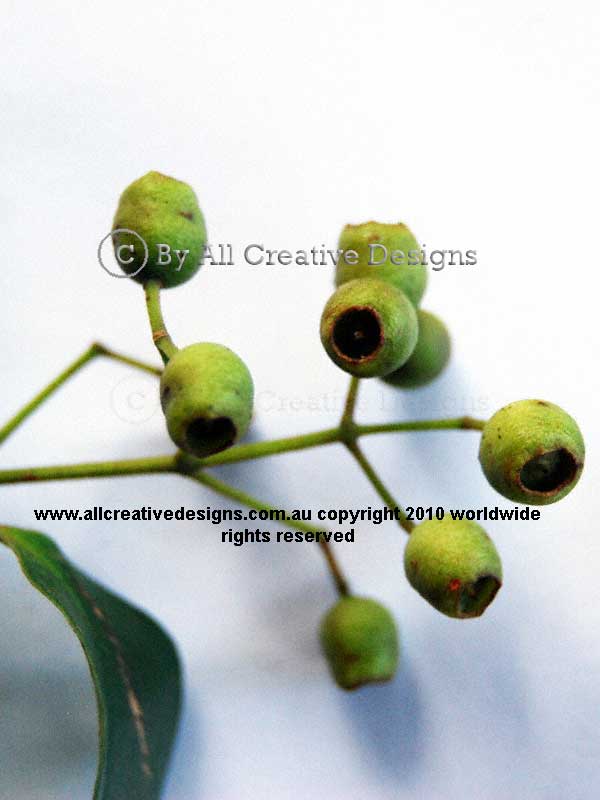
(4)
fs.jpg)
(5)
Magenta Lilly Pilly Syzygium paniculatum
Magenta Lilly Pilly Syzygium paniculatum
The beautiful Magenta Lilly Pilly is a small to medium sized tree reaching a height of more than 15m under favourable conditions. It is relatively rare in its diminishing habitat of subtropical and littoral (in proximity to the coast) rainforests (Photo 1). Bark is brown in colour, hard and rough in texture featuring numerous longitudinal fissures (2). Beautiful flowers are borne on panicles and measure up to 3cm in diameter when fully opened. Numerous stamens with white coloured filaments are a prominent feature and 5 white and rounded petals are present (3). The magenta or sometimes pink coloured fruit is up to 2cm long and contains a single white coloured seed. The fruit is edible and one of the more palatable of Syzygium species (4). Simple leaves with an opposite arrangement are; up to 9cm long, mostly broad elliptic or obovate (reverse egg-shaped) with entire margins, dark green and glossy on top, paler and glossy beneath, hairless, smooth and soft in texture. Leaf apex is short acuminate, base shape is cuneate. Mid vein is raised on lower surface and angular in shape, laterals veins are more visible beneath (Photo 5). Distribution: Naturally occurring from the south coast to the mid-north coast of NSW, more wide spread as an ornamental tree.
See Flower Identification and Leaf Identification Page for information on terms used.

(1)
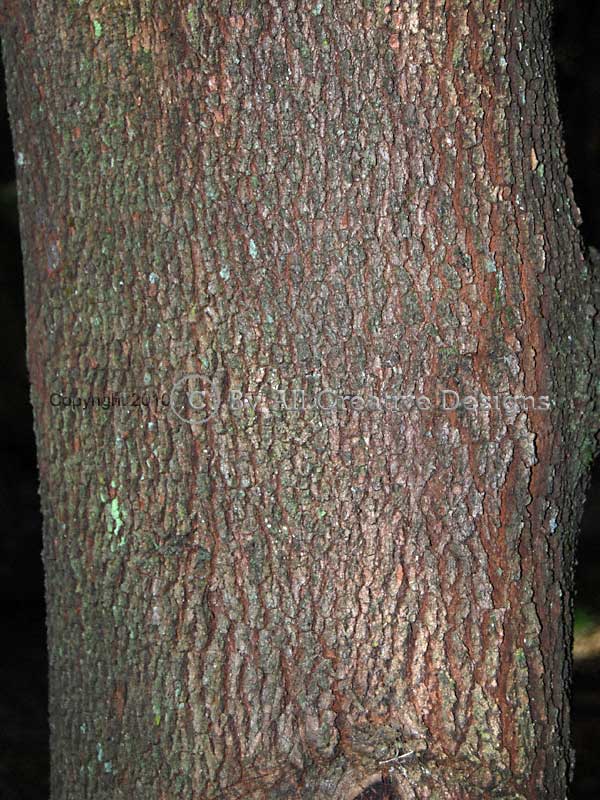
(2)
(3)

(4)

(5)
Mulgrave Satinash Syzygium xerampelinum
Mulgrave Satinash Syzygium xerampelinum
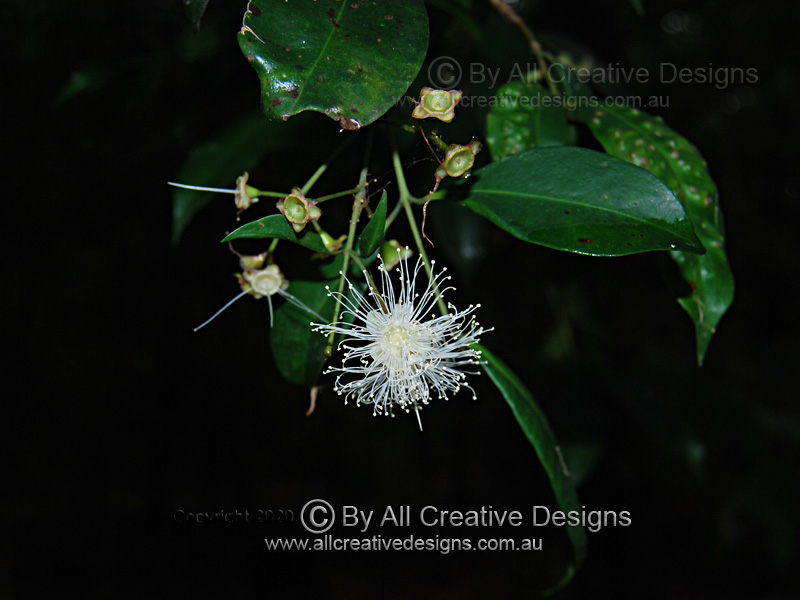
Stream banks within tropical rainforests are the preferred habitat of this small tree less than 10m tall. It is an understorey species and has the ability to withstand flooding (Picture 1). Bark is brown in colour and on older trunks is relative smooth despite fine irregular ridges, which are more prominent on younger trees (inset) (2). Gorgeous flowers dominated by stamens with white filaments and pale yellow anthers are typical for the genus. The calyx tube is about 1cm and stamens are up to 2 cm long (3). New growth in the attractive foliage flushes in pink and salmon colours. Simple leaves with an opposite arrangement are; up to 11cm long, mostly elliptic in shape with entire margins, dark green, glossy on top, mid green beneath, hairless, strong and firm in texture. Mid rib is raised on both surfaces and intramarginal veins (a vein running parallel to the leaf edge) are visible. Distribution: Northern Qld. Note: A handsome small tree, flowering and fruiting at a young age, which is suitable for landscaping in subtropical regions. See Flower Identification and Leaf Identification Page for information on terms used.

(1)
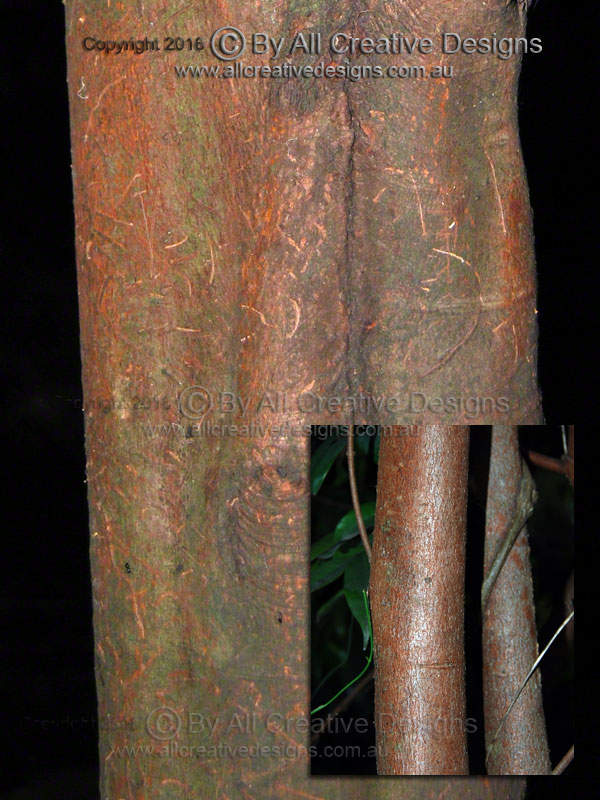
(2)

(3)

(4)
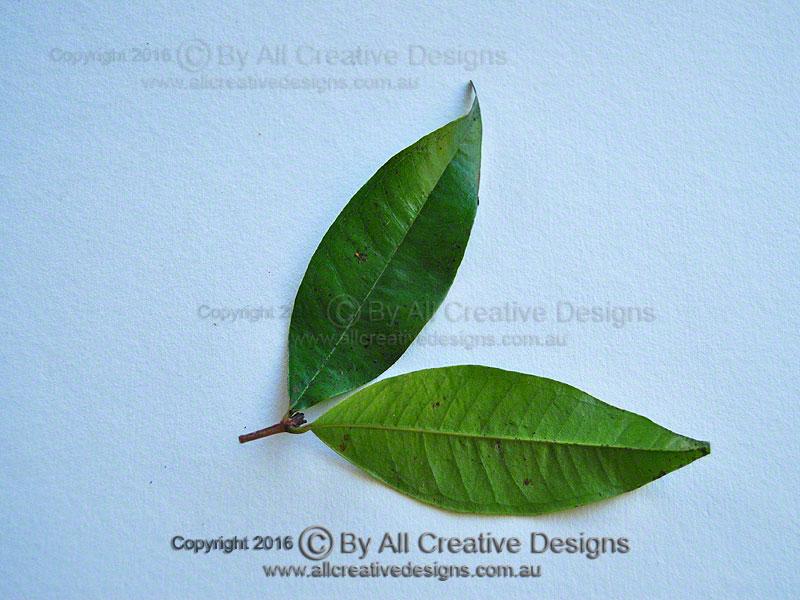
(5)
Onionwood Satinash Syzygium alliiligneum
Onionwood Satinash Syzygium alliiligneum Other names: Paper-barked Satinash, Bark in the Wood, Puddenwood
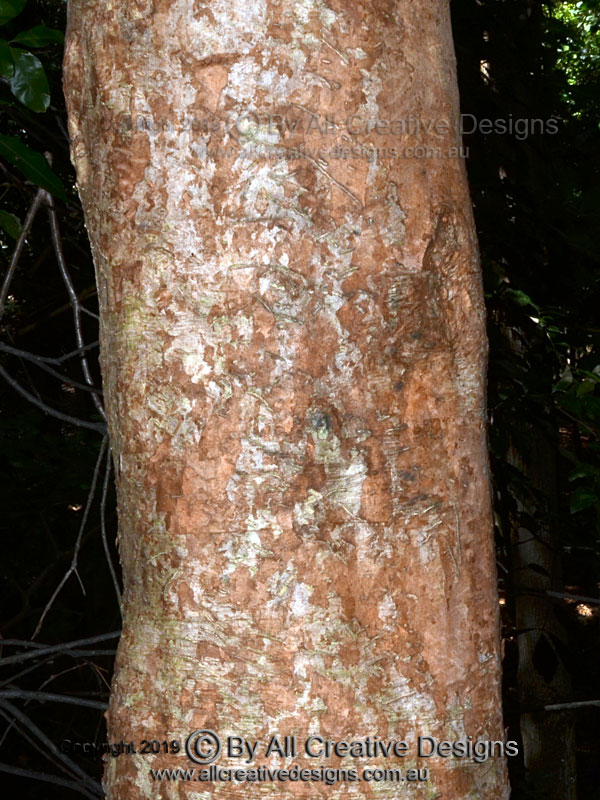
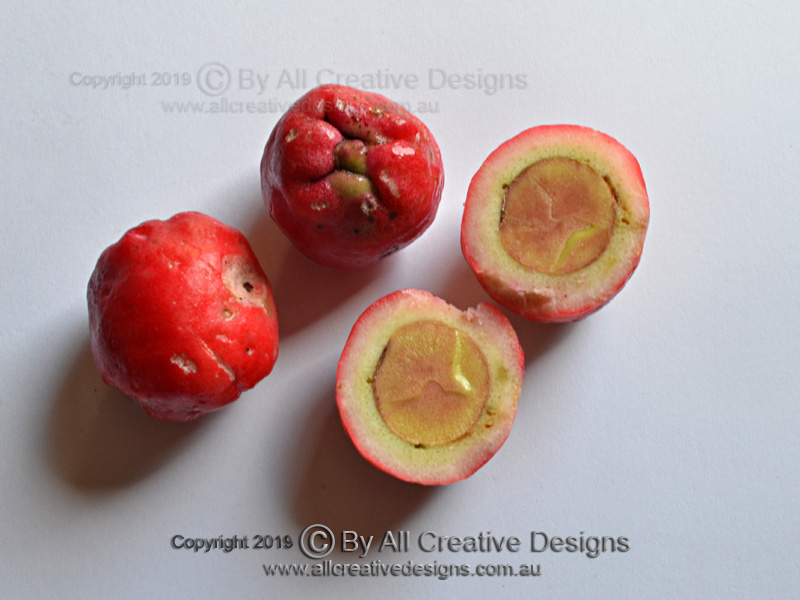
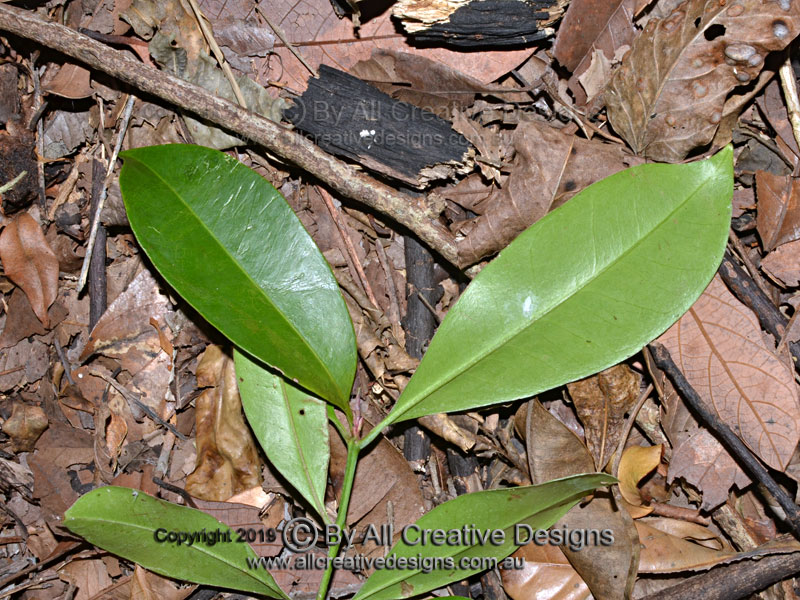
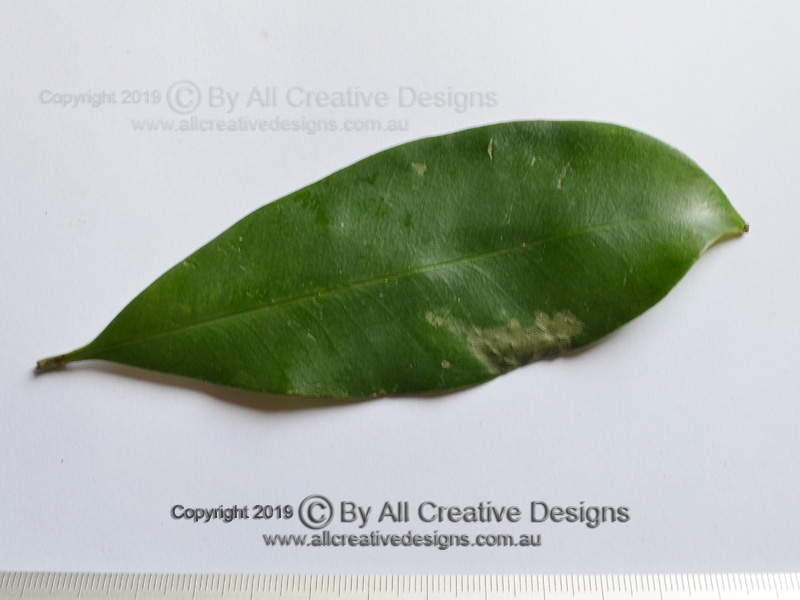
The reddish or pinkish brown coloured bark is an eye-catching and distinguishing feature of the Onionwood Satinash. It inhabits tropical rainforests at lower elevations and has the potential to reach a height of 30m (image 1). Bark is firm and relatively smooth on the lower trunk but has a flakier, papery texture on branches (2). The red coloured and succulent fruit, a berry, is globe-shaped or barrel-shaped and up to 45mm long. The firm and white fruit flesh encases a single seed, which is covered by a thin brownish skin and up to 20mm long. The fleshy calyx (persistent part of the flower) is visible at the top of the fruit. The fruit is edible but sour (3). Simple leaves with an opposite arrangement are; up to 13cm long, broadly oblanceolate (reverse lance-shaped) with entire margins, hairless, glossy on both surfaces, relatively thick and smooth. Mid rib is prominently raised on lower leaf surface, otherwise venation is faint (4 & 5). Distribution: North east Qld. Note: The common name Onionwood refers to the concentric rings in cut cross section of the trunk, not to the scent of the wood.
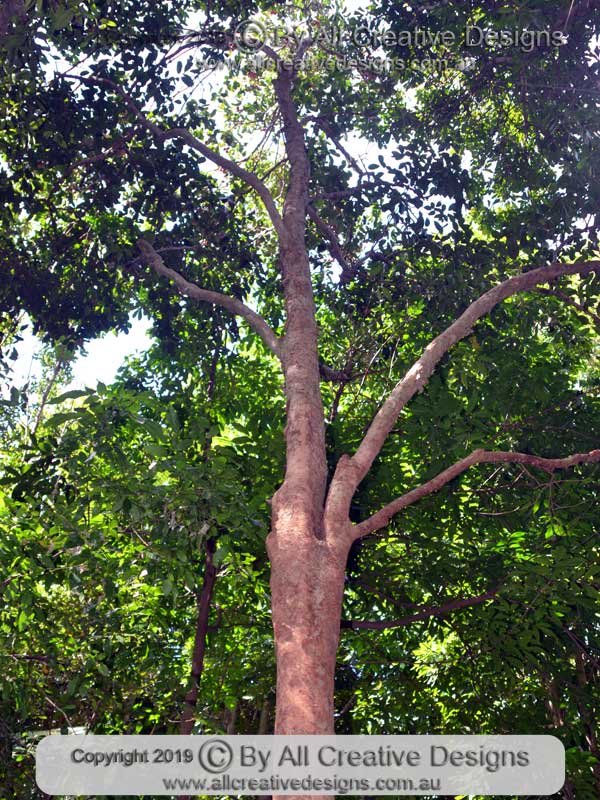
(1)
(2)
(3)
(4)
(5)
Powderpuff Lilly Pilly Syzygium wilsonii
Powderpuff Lilly Pilly Syzygium wilsonii ssp. wilsonii Other names: Wilson's Satinash
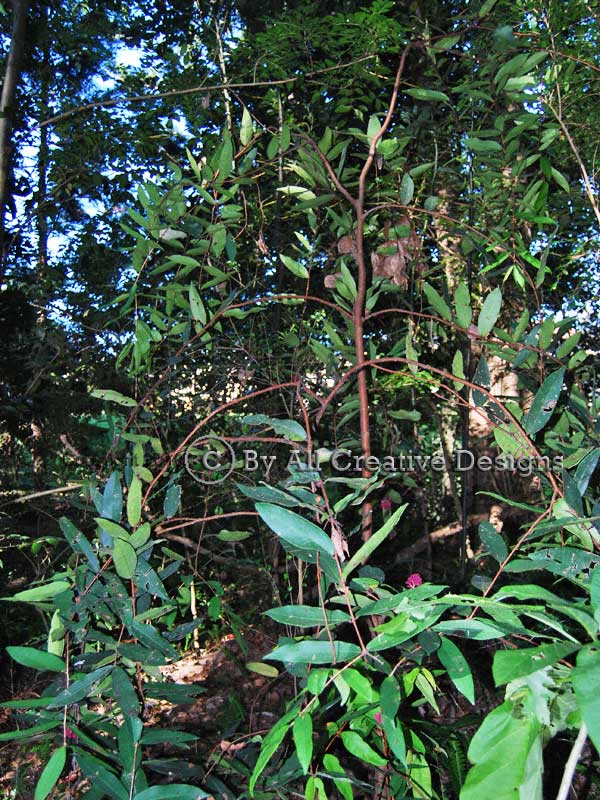
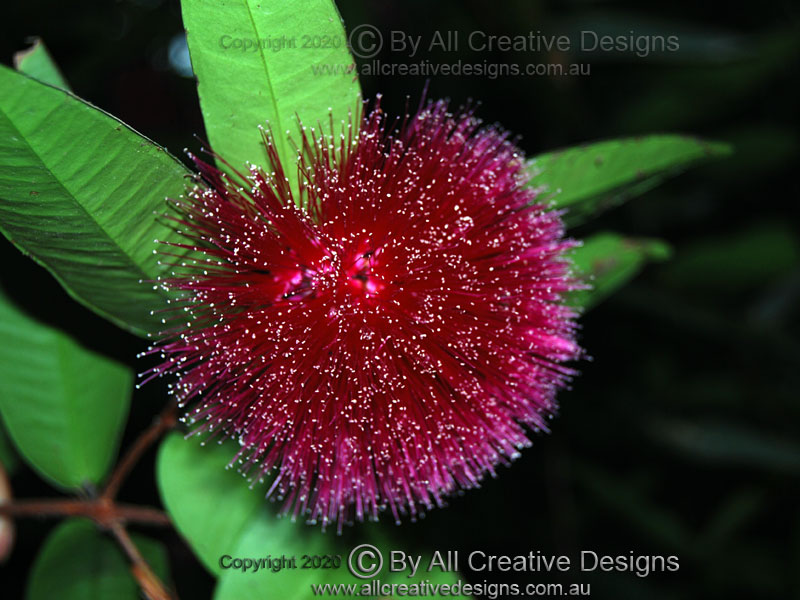
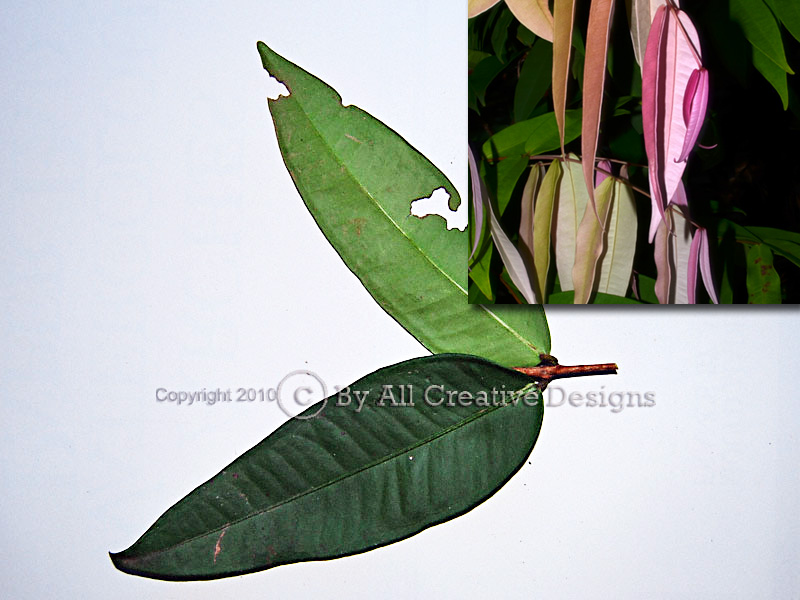
This well known native shrub has its origin in tropical rainforests and as an understorey species reaches a height of up to 5m (Photo 1). Bark is reddish brown in colour with a firm and slightly rough texture (2). The striking powder puff shaped flower heads are a deep crimson red or dark pink in colour and can measure up to 7cm in diameter (3). The pure white or cream-coloured and fleshy fruit (a berry) reaches a length of 15mm. It varies in shape from ovoid (egg-shaped) to obovoid (reverse egg-shaped) or can be ellipsoid (broadest at the middle; olive-shaped). The single brown coloured and soft shelled seed is up to 8mm long. The persistent (flower) calyx is visible at the apex. The fruit is edible and rather palatable (4). New growth with a weeping (cascading) habit flushes in different tones of pink, red and purple (inset image 5). Simple leaves with an opposite arrangement are; up to 20cm long, mostly lanceolate (lance-shaped) with entire and incurved margins, dark green and rather dull on top, paler beneath, hairless, firm and strong in texture. Leaf apex is acute, base shape is rounded. The very short petiole (leaf stalk) is only up to 3mm long. Overall venation is faint, straight laterals and an intramarginal vein running parallel to the leaf edge are more visible on upper leaf surface (5). Distribution: Tropical north-eastern Qld, widely used as an ornamental shrub in frost free areas.
(1)

(2)
(3)

(4)
(5)
Purple Cherry Syzygium crebrinerve
Purple Cherry Syzygium crebrinerve Other names: Rose Satinash
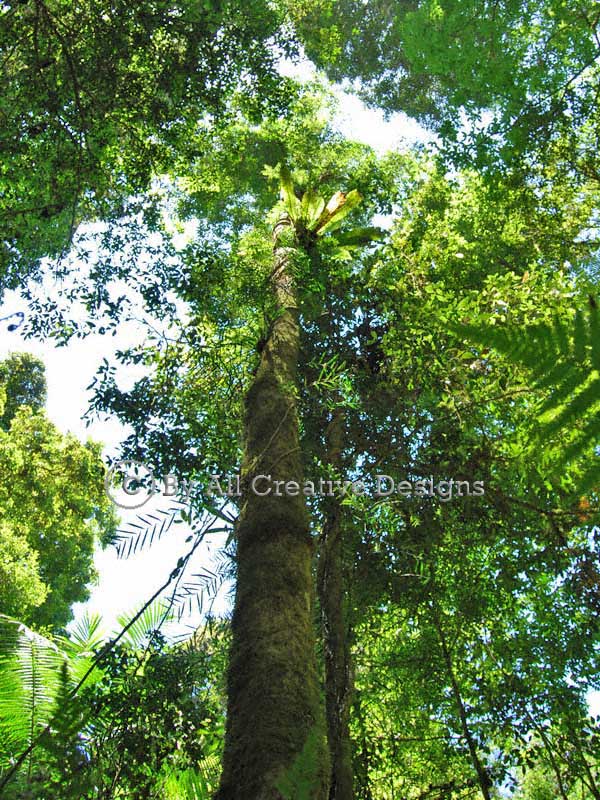
This impressive tree is up to 40m tall and often part of the highest canopy in subtropical rainforests (Photo 1). Older specimens develop large buttress roots and a solid upright trunk that is often covered in epiphytic ferns, lichens and mosses. Bark is olive grey in colour and marked by fissures (cracks) and flaky patches (3).
The gorgeous shiny purple fruit (a berry) is globe-shaped, if not disfigured by insect larvae, and reaches up to 25mm in diameter. A single seed (if present) is surrounded by a flowery pulp, which is edible but rather bland (4). Simple leaves are; up to 12cm long, broad elliptic or lanceolate (lance-shaped) with entire margins, hairless, dark green, glossy on top, paler green beneath, strong and firm in texture. Leaf apex gradually narrows to a fine tip, base shape is cuneate. Mid rib is sunken on top and raised on lower leaf surface. Numerous fine and straight laterals veins are visible (5). Distribution: Mid-north coast of NSW to southern Qld.
(1)

(2)

(3)

(4)

(5)
Descriptions and all images copyright ©2023 by www.allcreativedesigns.com.au world wide rights reserved.
Click or Tap Images for Full Size View (opens new browser window)
Red Apple Syzygium ingens
Red Apple Syzygium ingens Other names: Southern Satinash
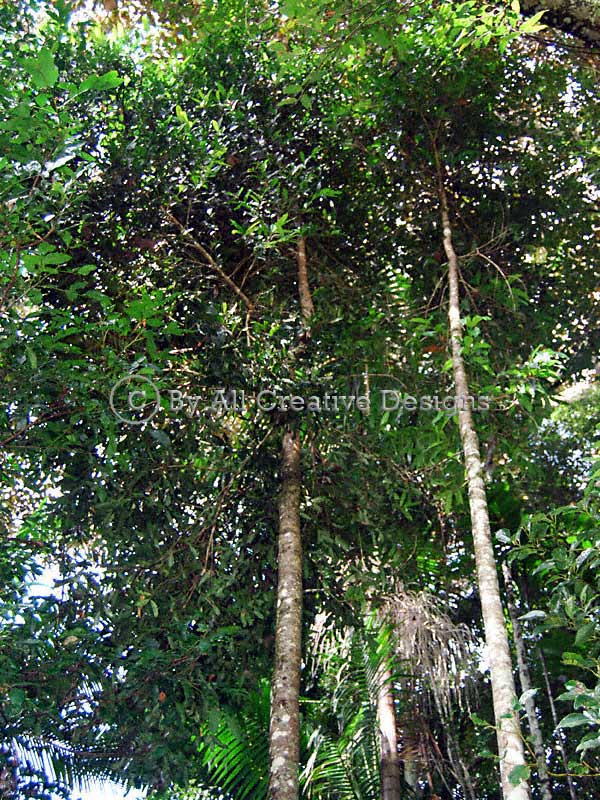
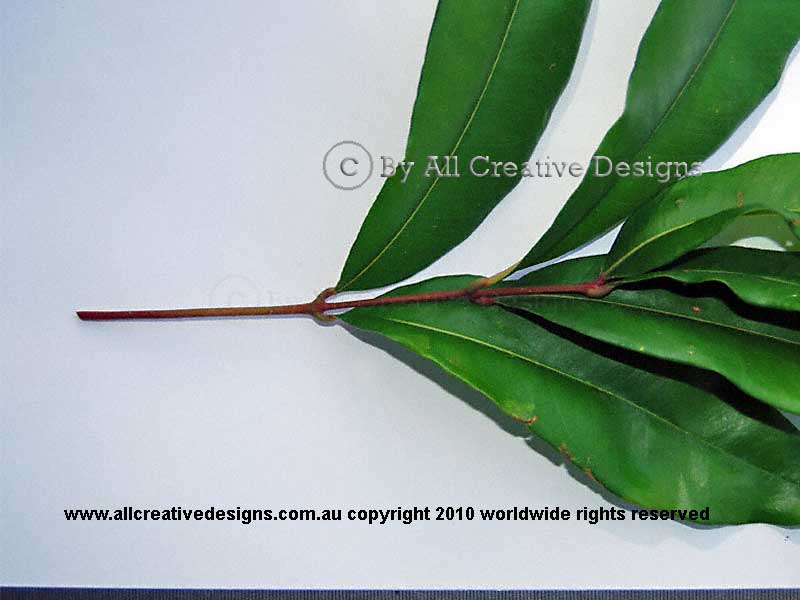
Subtropical rainforests are the natural habitat of this tall tree species with the potential to reach a height of 40m (Photo 1). Older specimens develop a fluted trunk with a smooth, firm, grey and light brown coloured bark (2). The semi-fleshy fruit has a tough red skin, is globe-shaped or more obovoid (3-dimensional reverse egg-shaped) and up to 4cm in diameter. It contains a large single seed embedded in a thin layer of white pulp (3). Young stems are coloured red (4). Simple leaves with an opposite arrangement are; more than 20cm long, elliptic or oblong in shape with undulating (wavy) and incurving margins, hairless, dark green, semi-glossy on top, firm and stiff in texture. Leaf apex shape is acute ending in a fine tip, base shape is cuneate (wedge-shaped) (5). Distribution: From northern NSW to southern Qld.
(1)

(2)

(3)
(4)
fs.jpg)
(5)
Riberry Syzygium luehmannii
Riberry Syzygium luehmannii Other names: Small-leaved Lilly Pilly
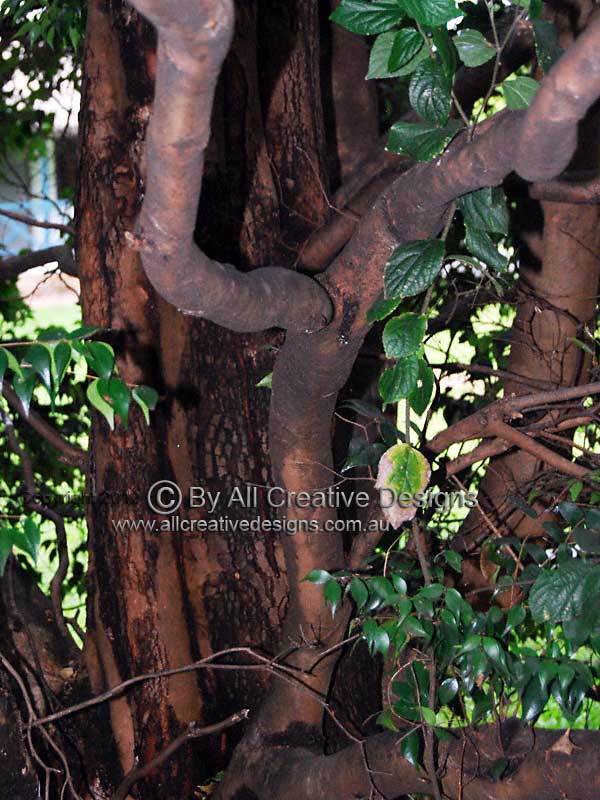
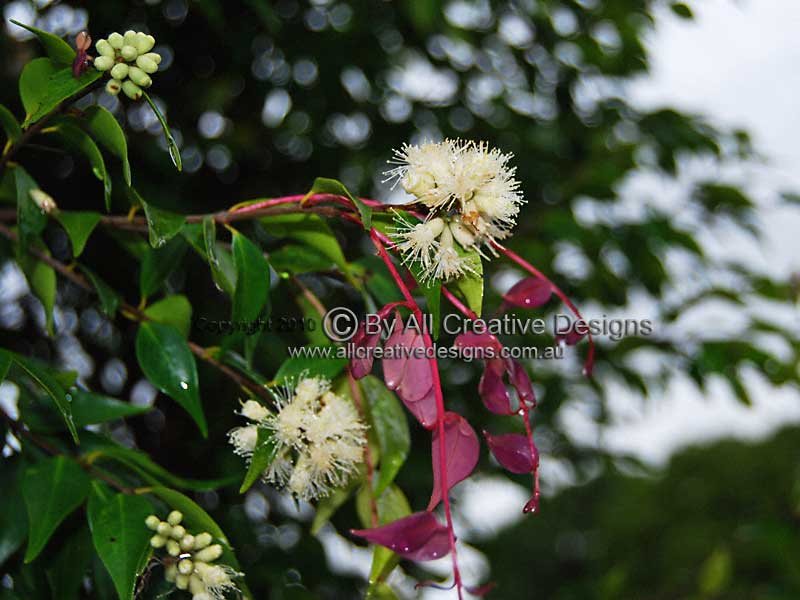
This well known native tree species is widely used in cultivation for its beautiful weeping foliage, stunning flower and fruit display. It can reach a height of more than 30m in its natural habitat of subtropical and littoral rainforest, but is normally encountered as a tall shrub or small tree in suburban gardens (Photo 1). Bark on older specimens is rough, fissured and a reddish brown in colour towards the base of the trunk. Whereas branches feature a relative firm and smooth bark (2). Flowers with relative short white stamens are clustered in small panicles appearing at the end of young branches. Flowering times depend on climate zones and can occur over a long period throughout the year. New growth flushes in stunning pink and purple shades (3). The abundantly produced fruit (berries) are pinkish white to crimson red, mostly pear shaped and about 10mm long. The fruit contains a small single seed covered in whitish flesh (4). Simple leaves with an opposite arrangement are; up to 6cm long, obovate or broadly lanceolate (lance-shaped) with entire and slightly incurved margins, dark green and very glossy on top, paler but also shiny beneath, hairless, smooth and rather firm in texture. Leaf apex is very long acuminate, base shape is rounded. The broad mid vein is apparent on the upper leaf surface; straight lateral veins (10 - 12 pairs) are faintly visible. The petiole (leaf stalk) is up to 5mm long and often a yellowish green colour (5). Distribution: From the NSW mid-north coast to tropical Qld.

(1)
(2)
(3)
(4)

(5)
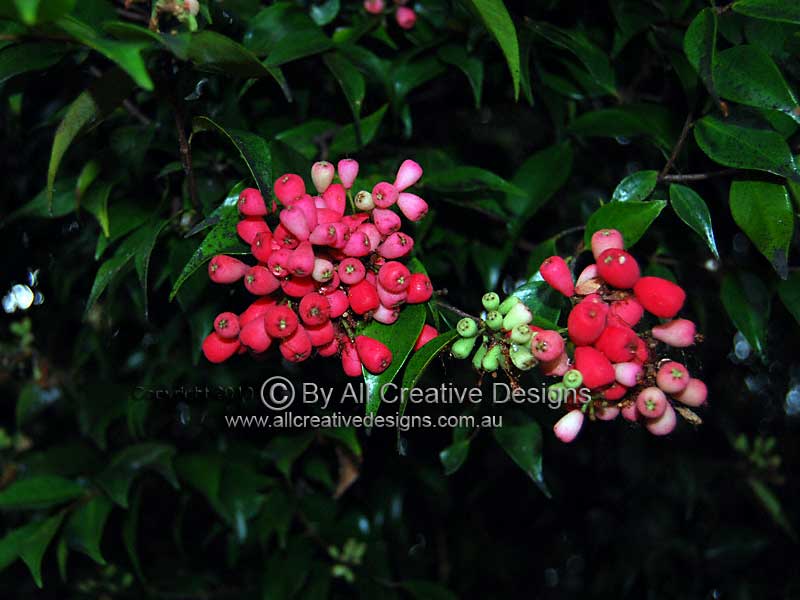
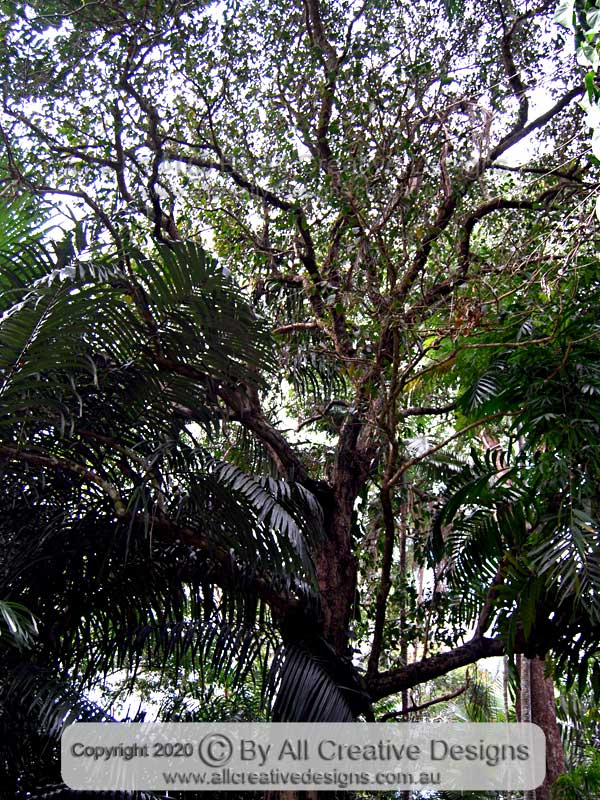
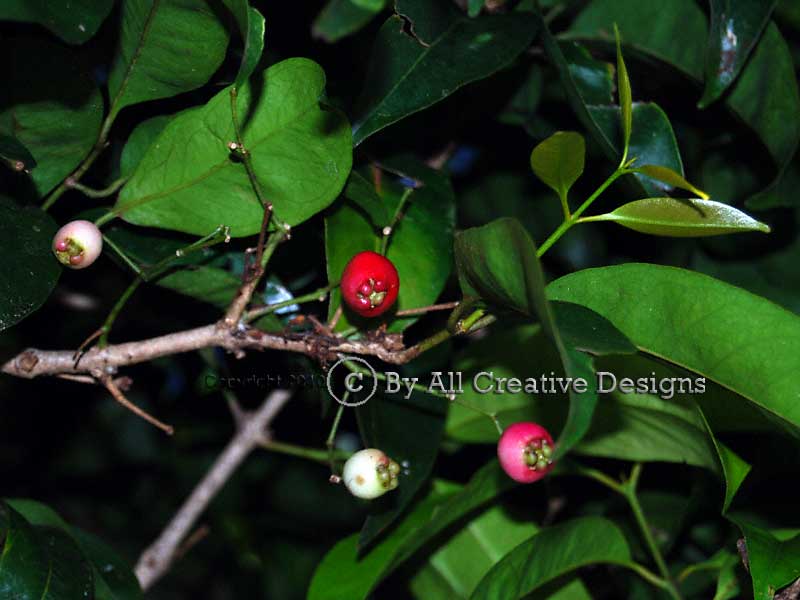
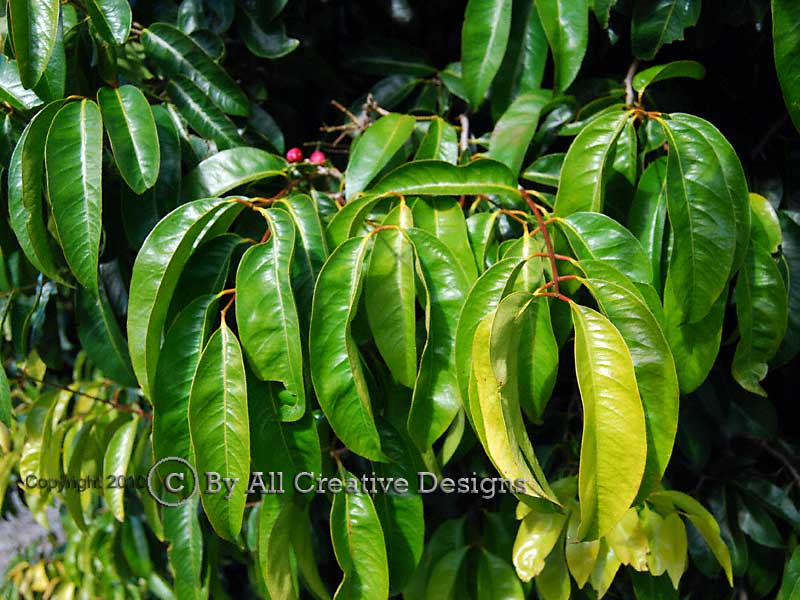
River Cherry Syzygium tierneyanum
River Cherry Syzygium tierneyanum
The River Cherry is a small to medium sized tree species that inhabits tropical rainforests, where it prefers locations along or near water courses (Photo 1). Bark on the trunk is papery and flaky in texture with newly exposed areas being pinkish brown in colour (2). The fruit changes from white over pink to a deep red colour when fully mature. It is obovoid or sometimes globular (globe-shaped) and up to 25mm long (3). Foliage has a weeping habit and young twigs are very smooth and reddish brown in colour (4). Simple leaves with an opposite arrangement are; up to 20cm long, oblong to elliptic in shape with entire margins, hairless, scented, smooth, medium thick and rather leathery in texture. Apex is acute to long acuminate, base shape is varied from rounded to cuneate (wedge-shaped). Mid-vein is yellow on both sides, lateral veins are visible on top, but faint on underside of the leaf. The petiole (leaf stalk) is grooved on top, orange brown and up to 10mm long. Distribution: Tropical Qld. (Used as an ornamental species)
(1)

(2)
(3)
(4)
(5)
To locate trees by botanical name or to find related species go to:Species List Botanical, which also shows all family names.
Roly Poly Satinash Syzygium unipunctatum
Roly Poly Satinash Syzygium unipunctatum
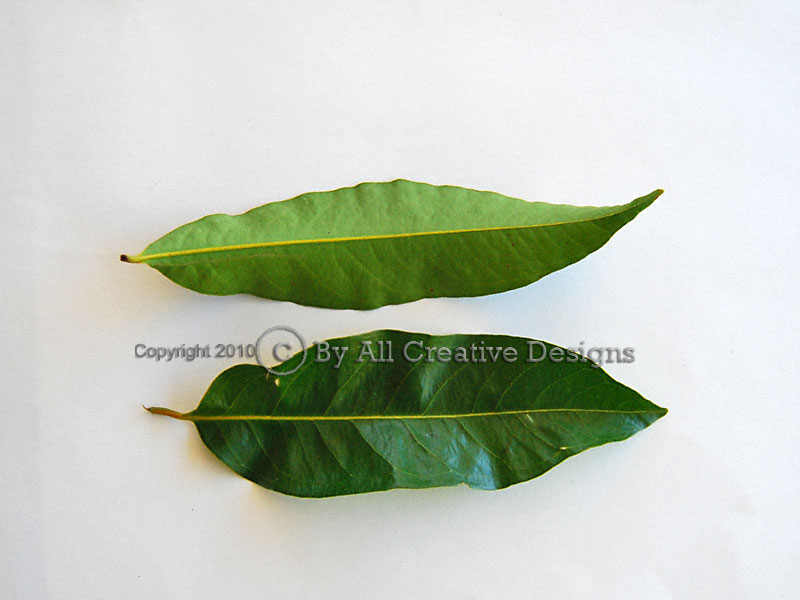
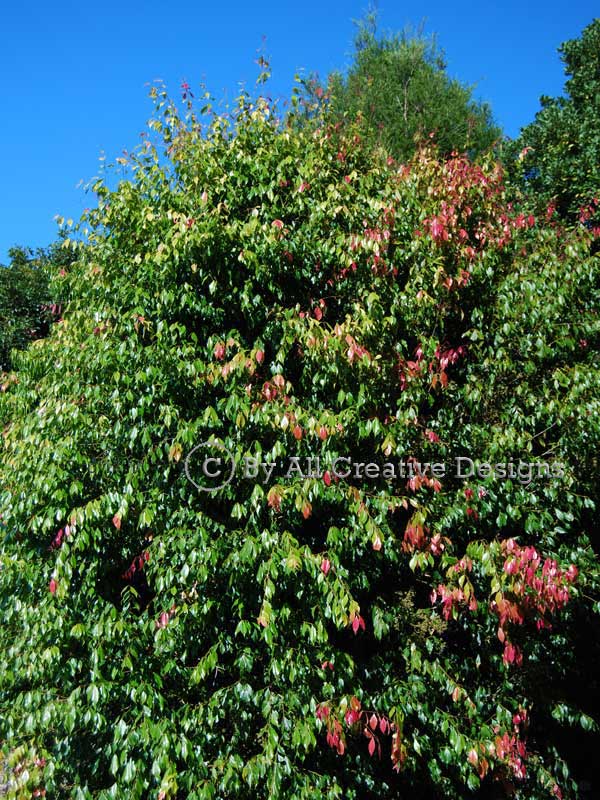
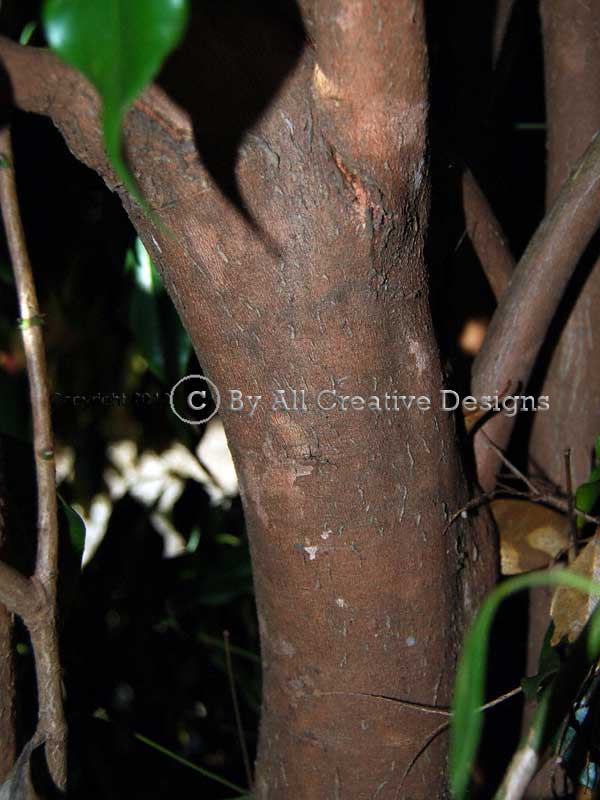
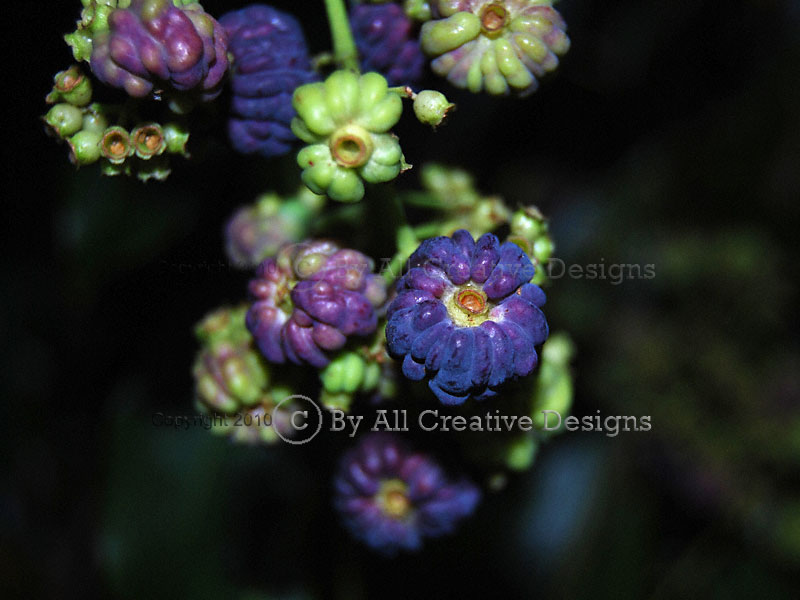
Up and lowland tropical rainforests are the natural habitat for this eye-catching shrub or small tree up to 6m tall, which is also widely used in cultivation (Photo 1). Bark is reddish brown in colour and except for very small longitudinal ridges has a fairly smooth and firm texture (2). New growth changes from a deep pink to a salmon colour with maturity (3). The globose (globe-shaped) fruit with a ribbed surface reaches up to 2.5cm in diameter and turns a striking purple and indigo colour when ripening (4). Simple leaves with an opposite arrangement are; up to 11cm long, elliptic to ovate (egg-shaped) with entire margins, hairless, glossy on both surfaces, smooth and rather soft in texture. Apex is acuminate ending in a very fine point, base shape is cuneate. Mid vein is raised below and numerous straight lateral veins are faintly visible, (more so on upper leaf surface). Natural distribution: Tropical north Qld, south to Townsville.
(1)
(2)

(3)
(4)
(5)
Satinash Syzygium glenum
Satinash Syzygium glenum Other names: Coopers Creek Satinash, Water Gum
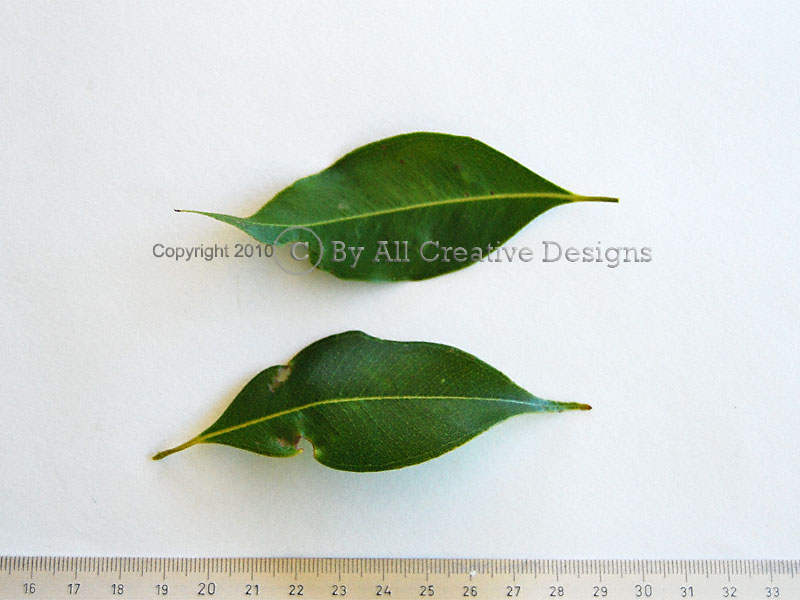
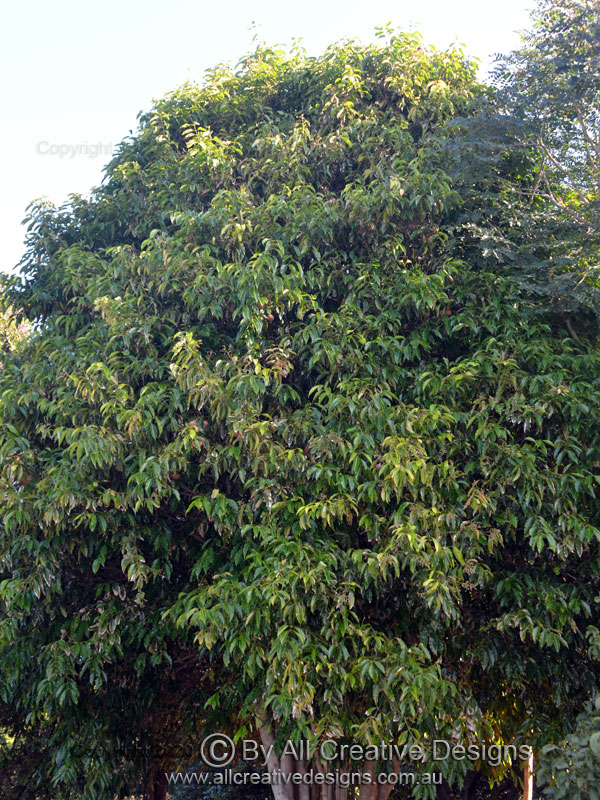
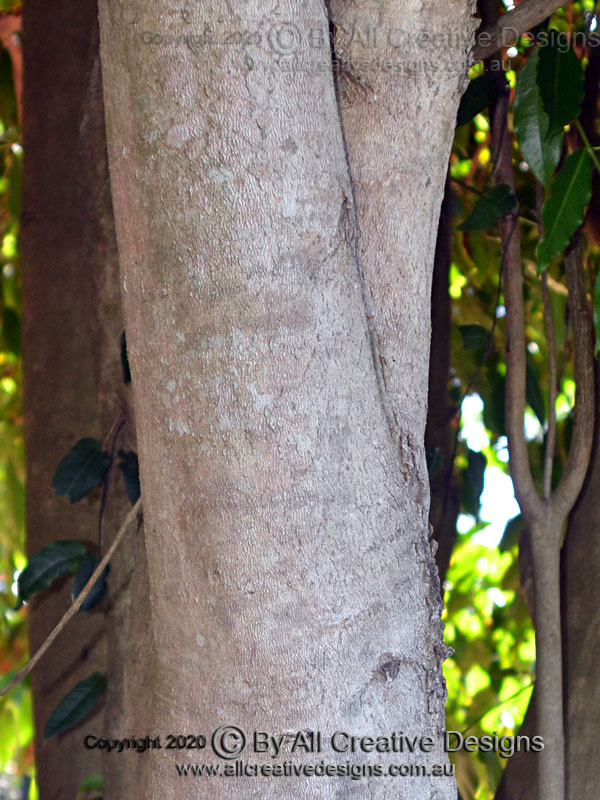
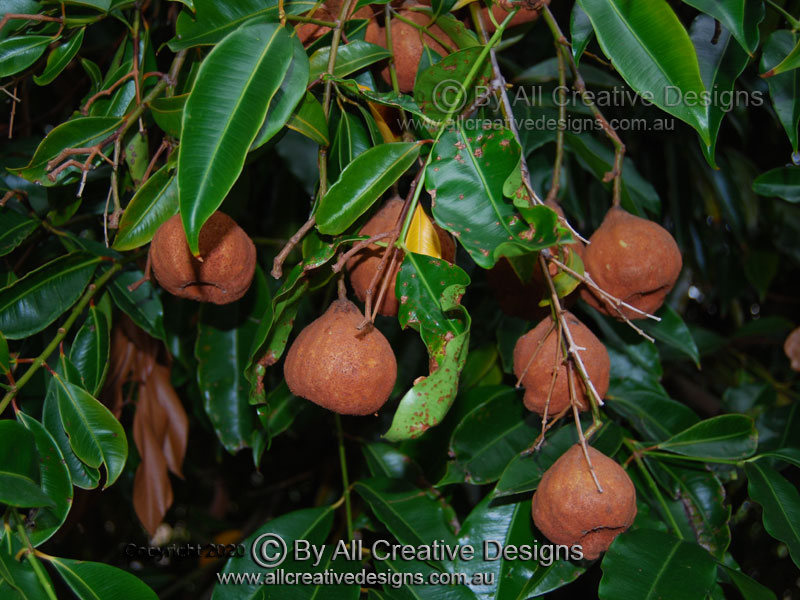
This medium sized tree inhabits lowland tropical rainforests and can reach a height of 25m in its natural environment. The large and distinctive fruit identifies this species. It develops a densely foliated dome-like canopy and is reduced in height when planted in open areas (Image 1). Bark on younger trunks is shades of grey and apart from fine wrinkles relatively smooth to touch. The base of older trunks becomes rough and scaly (2). The brown coloured fruit is pear-shaped (pyriform) to depressed globular (globe-shaped) and up to 75mm long and up to 70mm wide. The dry outer layer (pericarp), surrounding the seeds, has a hard leathery consistency and becomes woody when dried (inset image 4). It has a granular surface texture and is longitudinal ridged. The apex of the fruit is indented or flattened. The fruit is atypical for the genus (Photos 3 & 4). Simple leaves with an opposite arrangement are; up to 17cm long, broad elliptic or ovate (egg-shaped) with broadly undulating (wavy) or sometimes entire margins, hairless, glossy, smooth and leathery. Leaf apex is acuminate ending in a fine tip. Fine lateral veins are plentiful and one intramarginal vein is clearly visible, a second and less prominent intramarginal vein is located very close to the leaf margin. The often yellow or reddish coloured petiole (leaf stalk) is rarely more than 2cm long (5). Distribution: Daintree (north eastern Qld). Note: the common name Water Gum is also used for Syzygium francisii.
(1)
(2)
(3)
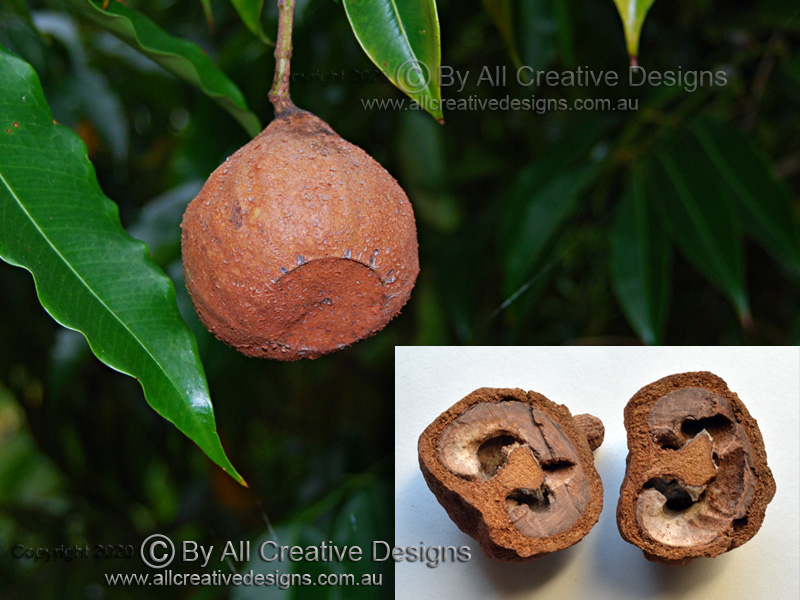
(4)
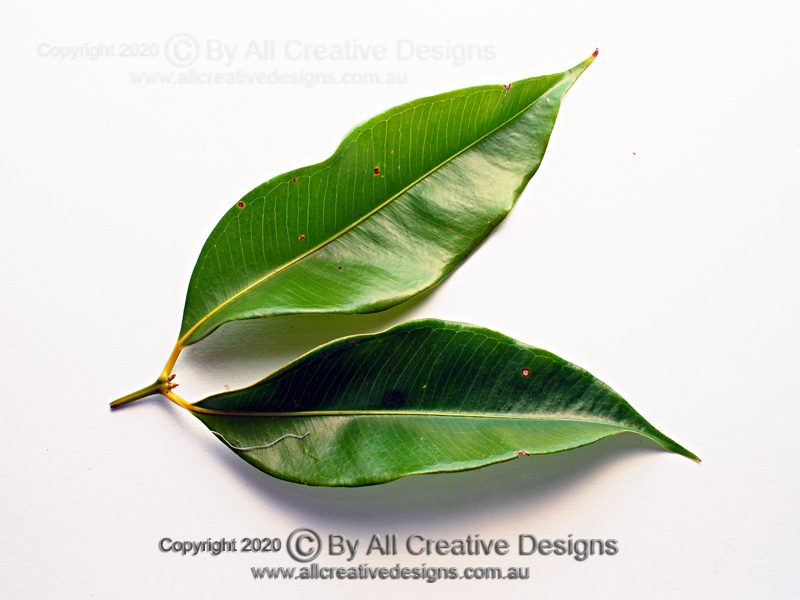
(5)
Weeping Lilly Pilly Syzygium floribundum
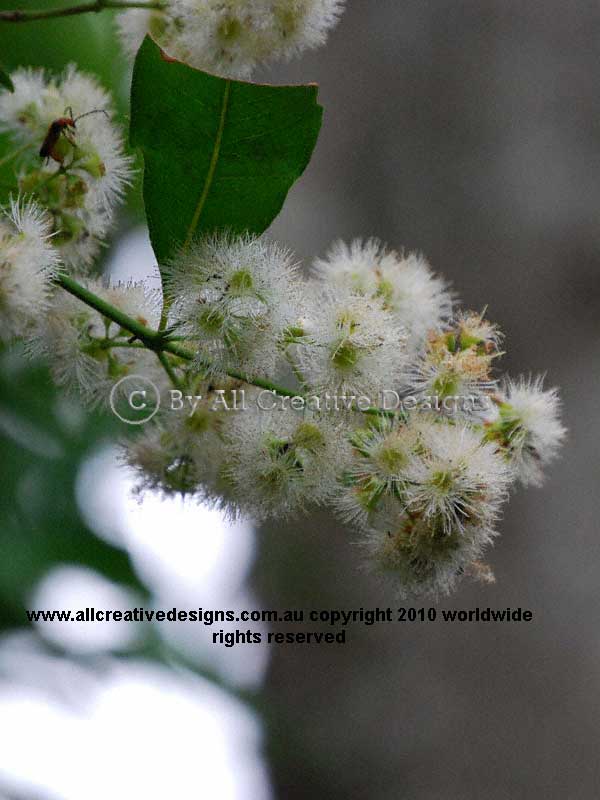
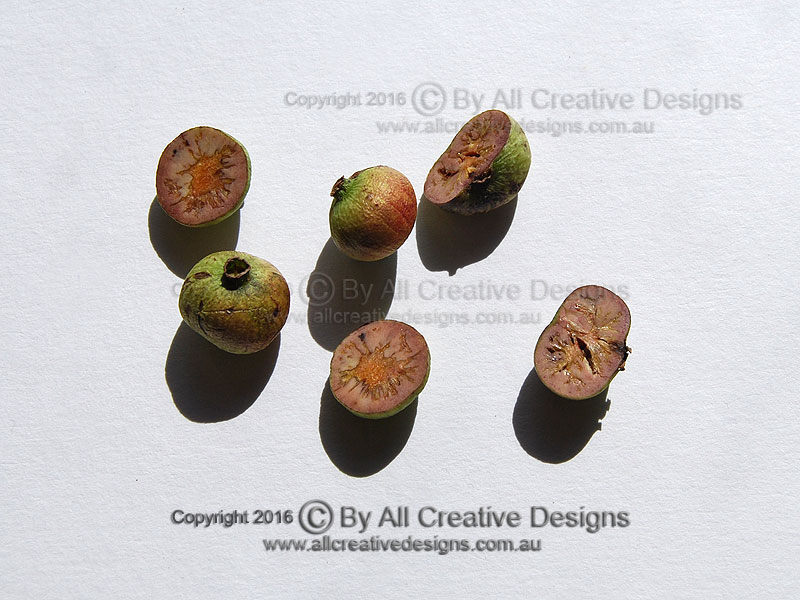
Weeping Lilly Pilly Syzygium floribundum Other names: Weeping Satinash
This species is known for its attractive weeping foliage and abundant flowering, reasons for its popularity in cultivation. Subtropical rainforests and stream banks are preferred natural habitats of this medium sized tree up to 30m high (Photo 1). Bark at the base of the trunk is dark grey in colour, fissured and hard in texture (2). Masses of white to cream coloured flowers are borne on panicles, appearing towards the end or at the very end of young branches. Panicles are up to 20cm long and individual flowers feature numerous stamens less than 1cm long (3). Fruits are small green and pink coloured berries up to 15mm in diameter. They are roughly globe-shaped with a pronounced rim (remains of the calyx) at the apex and ripen in late summer and autumn (4). Simple leaves with an opposite arrangement are; up to 16cm long, elliptic or lanceolate (lance-shaped) with entire or undulating (wavy) in-curved margins; hairless, glossy on upper surface; paler green beneath, strong and rather stiff in texture. Numerous straight lateral veins are visible (5). Distribution: From NSW central coast to Qld.
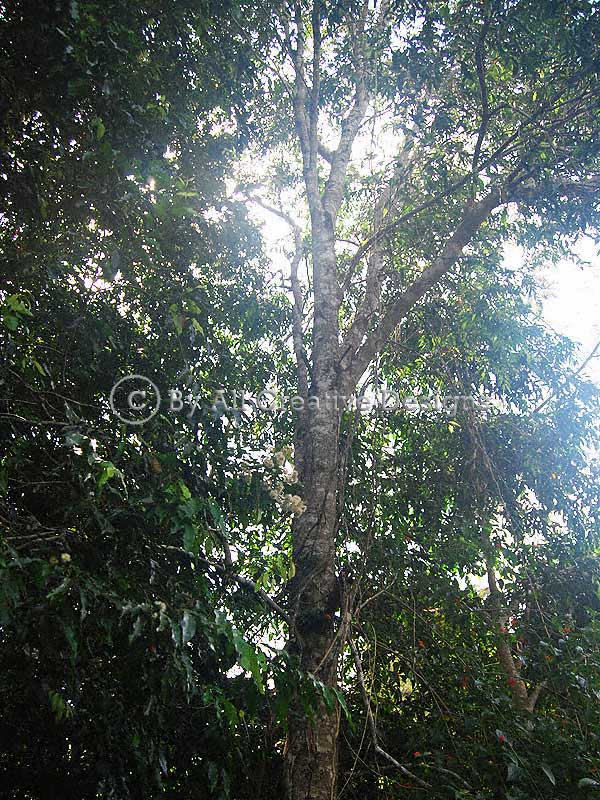
(1)
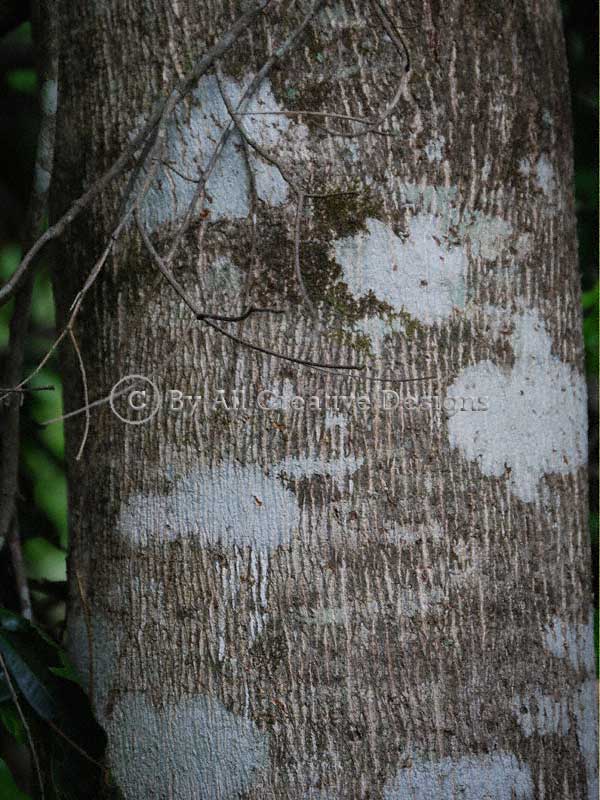
(2)
(3)
(4)

(5)
White Apple Syzygium cormiflorum
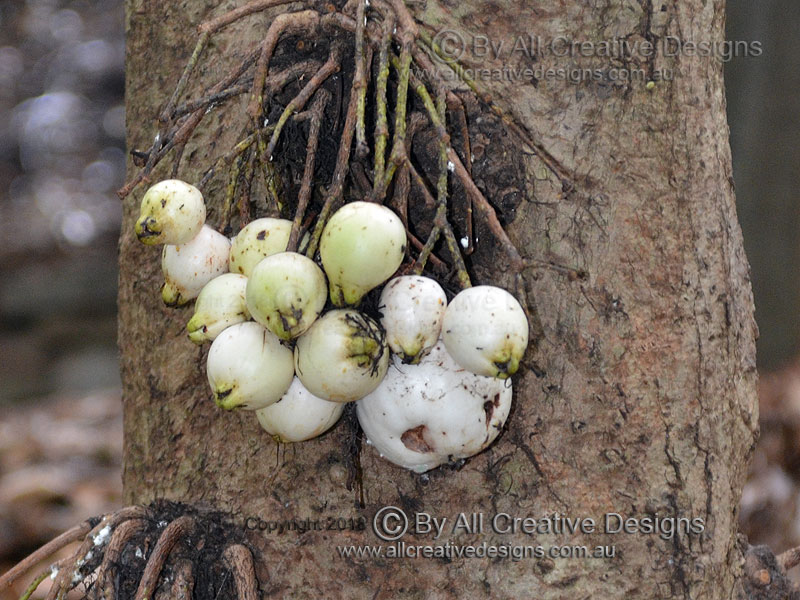
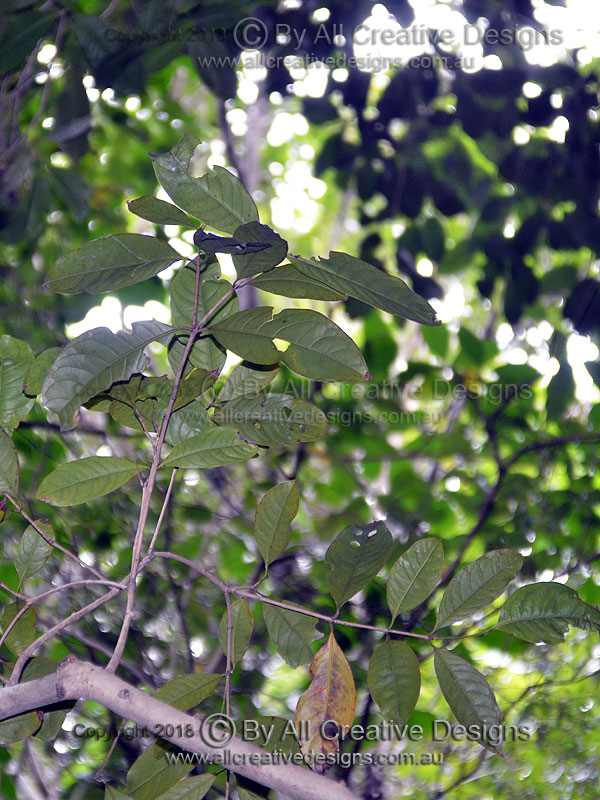
White Apple Syzygium cormiflorum Other names: Bumpy Ash
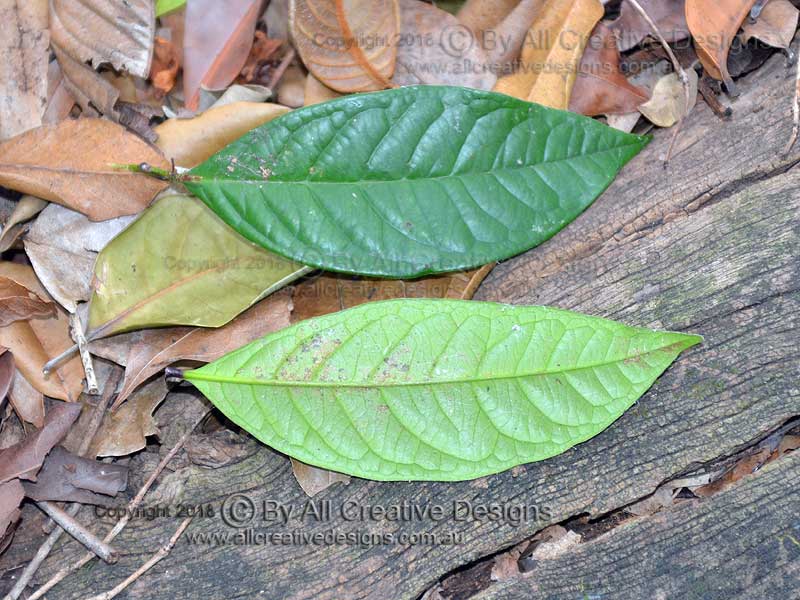
Tropical and drier monsoonal rainforests are habitats for this small understorey tree (Image 1). Bark is grey in colour and finely rough, marked by irregular fine ridges and larger bumps, which develop on older trunks (2). The common name refers to the shape and colour of the fruit, which are very characteristic. The fleshy fruit measures up to 6cm in diameter and resembles an apple or is more rounded in shape. It is borne in dense clusters on the trunk (cauliflorous) or older branches (ramiflorous) and contains a single or sometimes two black seeds. The remains of the flower base (calyx) are visible at the apex (3). Simple leaves with an opposite arrangement are; varied from less than 10 to more than 20cm long, elliptical in shape with entire margins, hairless, strong and somewhat rigid in consistency due to the impressed lateral veins (4 & 5). Distribution: North Qld

(1)

(2)
(3)
(4)
(5)
Wing-stemmed Cherry Syzygium alatoramulum
Wing-stemmed Cherry Syzygium alatoramulum Other names: Tinkling Satinash
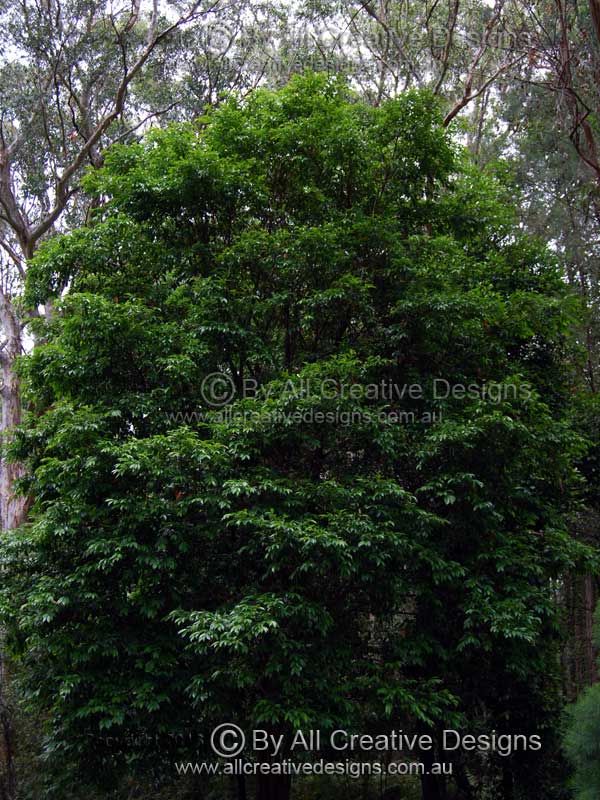
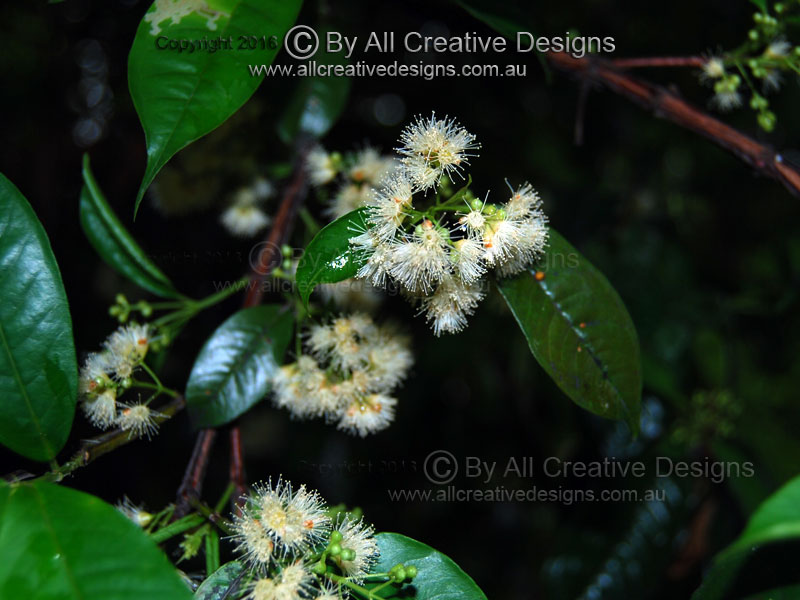
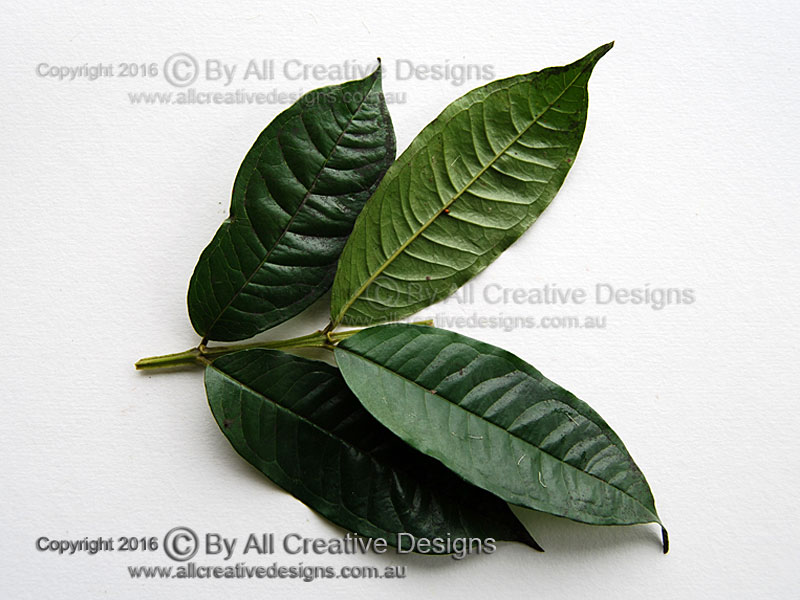
This uncommon and moisture loving tree has a restricted habitat as an understorey species in tropical up- and lowland rainforests. It is a small tree less than 10m tall with a dense canopy (1). Bark on the trunk of older trees is rough, scaly and reddish brown in parts, whereas other areas are smoother and pink (2). Flowers are dominated by numerous pure white stamens less than 1cm long, as the small orb-shaped petals detach soon after opening. Flowers are borne on panicles with up to 3 individuals supported by a single stalk (3). The common name winged-stemmed cherry refers to the 4 prominent thin flanges present on the stems of young branches, which are a good identification characteristic (4). Simple leaves with an opposite arrangement, typical for the genus, are; up to 14cm long, oblong with entire margins, hairless, dark green, glossy on top, pale green beneath, firm and strong in texture. Mid rib and lateral veins are impressed on upper and raised on lower leaf surface. A distinctive (intramarginal) vein runs around the outer edge of the leaf blade (5). Distribution: North-East Qld.
(1)

(2)
(3)

(4)
(5)